In modern pharmaceutical manufacturing, consistent dosage accuracy, high production efficiency, and strict regulatory compliance are the three core benchmarks for solid dosage production lines. An
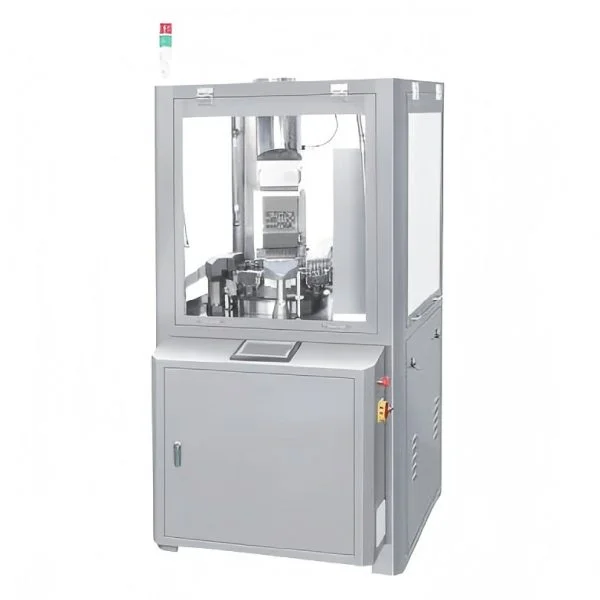
automatic capsule filling machine serves as the core equipment for hard capsule production, replacing manual and semi-automatic filling processes to meet the mass production demands of modern pharmaceutical factories. Unlike semi-automatic models that require frequent manual intervention, a fully automatic capsule filling machine completes capsule sorting, separation, powder filling, pellet filling, capsule locking, and finished product discharge through automated mechanical transmission and precise servo control.
For large-scale pharmaceutical enterprises, choosing a qualified automatic capsule filling machine directly determines production yield, product qualification rate, and GMP audit pass rate. Many manufacturers face common pain points during equipment selection: unclear standard capacity parameters, inaccurate production capacity estimation, unfamiliar GMP compliance details, and mismatched equipment models for production scales. This guide comprehensively sorts out the full technical specifications, standard capacity data, GMP compliance requirements, and scientific selection methods of the automatic capsule filling machine, providing practical technical references for pharmaceutical production line deployment and equipment upgrading. This article also covers the functional differences of the dosator capsule filling machine, a mainstream type of automatic filling equipment, to help enterprises complete targeted selection.
Core Technical Specifications of Automatic Capsule Filling Machine
The technical specifications of an automatic capsule filling machine determine its applicable production scenarios, filling accuracy, and operational stability. All parameter data in this chapter refer to international pharmaceutical equipment industry standards and FDA and EU GMP verified technical parameters, covering mainstream fully automatic models suitable for large-scale pharmaceutical production. The core specifications cover applicable capsule sizes, filling materials, accuracy range, power parameters, and dimensional parameters, which are the basic basis for equipment selection.
Basic Parameter Overview
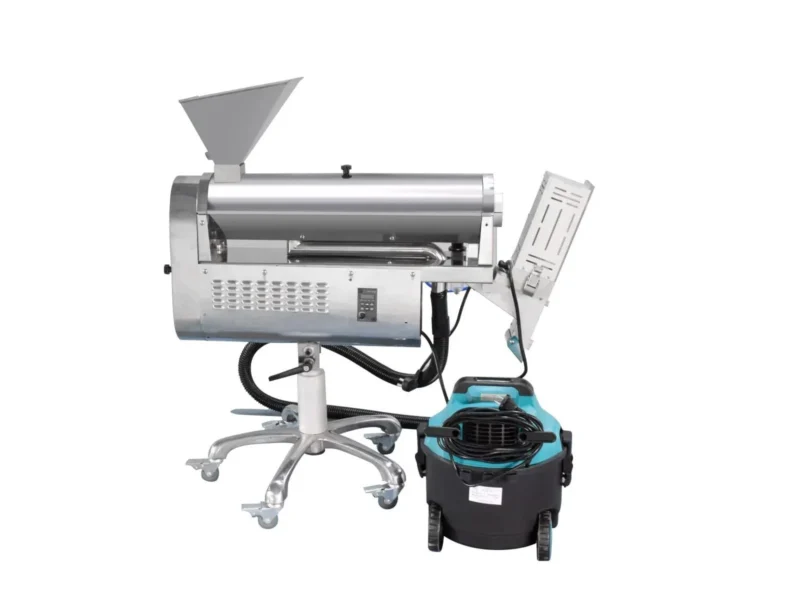
Standard industrial‑grade automatic capsule filling machine supports universal hard capsule sizes from 00# to 5#, covering almost all oral solid capsule specifications on the market. It is compatible with multi‑form filling materials including pharmaceutical powder, fine granules, pellets, and micro‑tablets, meeting the diversified production needs of chemical drugs, traditional Chinese medicine preparations, and health care products. Post‑filling surface treatment can be handled by a capsule polisher machine, which removes surface powder residue and improves finished capsule appearance before packaging. The dosator capsule filling machine, as a mainstream structural type of automatic capsule filling machine, adopts a quantitative dosator suction filling structure, which is more suitable for fine powder and low‑density granular materials with higher filling uniformity.
Detailed Specification Parameter Table
The following table summarizes the full standard specifications of mainstream large-scale automatic capsule filling machine models, covering low, medium, and high-capacity models to adapt to different production scales:
|
Parameter Item
|
Low‑Capacity Automatic Model
|
Medium‑Capacity Automatic Model
|
High‑Capacity Automatic Model
|
|
Applicable Capsule Size
|
1#‑5#
|
0#‑5#
|
00#‑5#
|
|
Theoretical Production Capacity
|
25,000–40,000 capsules/h
|
80,000–120,000 capsules/h
|
150,000–200,000 capsules/h
|
|
Filling Accuracy
|
±3% (single dose)
|
±2% (single dose)
|
±1.5% (single dose)
|
|
Qualified Product Rate
|
≥98.5%
|
≥99.2%
|
≥99.5%
|
|
Rated Power
|
3.5KW
|
5.5KW
|
7.5KW
|
|
Machine Weight
|
850KG
|
1200KG
|
1800KG
|
|
Dimension (L*W*H)
|
1200*850*1600mm
|
1500*1000*1750mm
|
1800*1200*1900mm
|
Core Structural Advantages of Automatic Capsule Filling Machine
Fully automated production is the biggest advantage of the automatic capsule filling machine. Compared with semi-automatic equipment that requires manual capsule placement and material supplementation, the fully automatic model realizes one-stop unmanned operation. Its core structural advantages are concentrated in three key modules, which fundamentally improve production efficiency and product stability:
Automatic Capsule Sorting and Separating Module: Equipped with precision vibrating screening and vacuum separation devices, it automatically screens unqualified capsules and completes the precise separation of capsule cap and body, with a separation success rate of over 99.8%, avoiding empty capsule leakage and misalignment problems.
Precision Quantitative Filling Module: Adopts servo quantitative control technology, matching spiral filling or dosator filling structure according to material characteristics, realizing micro-quantitative precise filling, effectively solving the problem of uneven drug content in batch production.
Intelligent Detection and Locking Module: Built-in photoelectric detection sensor, which automatically identifies unfilled capsules and unqualified locked capsules, and automatically rejects defective products, ensuring the consistency of finished capsule quality.
Accurate Capacity Calculation & Production Scale Matching Method
Production capacity is the core indicator for selecting an automatic capsule filling machine. Many pharmaceutical enterprises only refer to the theoretical capacity of the equipment during selection, resulting in actual production capacity failing to meet the order demand or equipment idle waste. This chapter combines industrial actual production data to sort out scientific capacity calculation formulas and scale matching standards, helping enterprises complete accurate model selection.
Theoretical vs. Actual Production Capacity
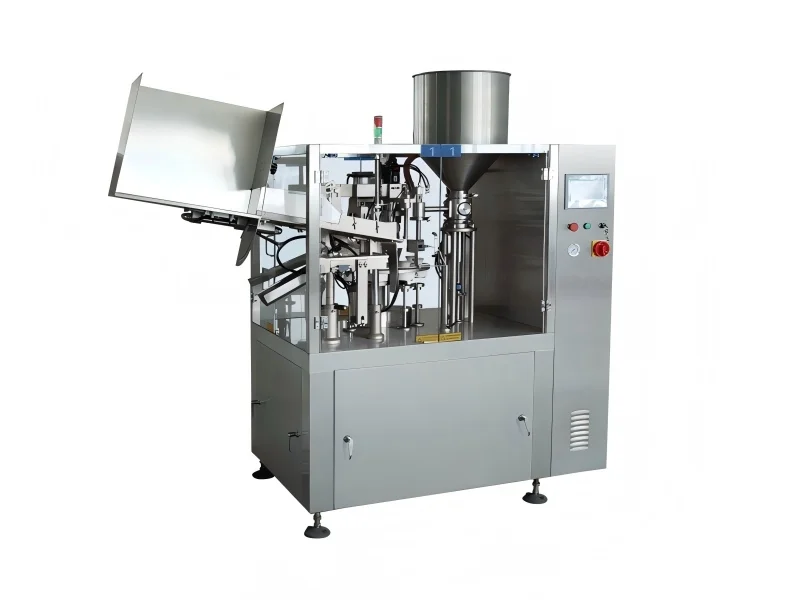
The theoretical capacity of the automatic capsule filling machine refers to the maximum production quantity under no-load and ideal working conditions, while the actual capacity is affected by material fluidity, capsule specification, staff operation proficiency, and equipment maintenance status. For integrated pharmaceutical production lines that also accommodate ancillary processing equipment such as the
Tube Filling and Sealing Machine, overall line coordination further impacts comprehensive operational efficiency. According to pharmaceutical production industry big data, the actual effective capacity of a standard automatic capsule filling machine is 85%–92% of the theoretical capacity.
Standard Capacity Calculation Steps
For large-scale pharmaceutical production lines, enterprises can complete capacity prediction and model selection through the following standardized calculation steps, which are widely adopted in pharmaceutical factory production line design and capacity audit:
Confirm daily effective working hours: Deduct equipment debugging, material replacement, and cleaning time, and confirm the actual effective working hours of the production line (usually 8–10 hours for standard production).
Calculate hourly actual capacity: Multiply the theoretical hourly capacity of the automatic capsule filling machine by the comprehensive efficiency coefficient (0.85–0.92).
Verify annual production capacity: Combine the annual working days of the enterprise to calculate the total annual production volume, and match the equipment model according to the maximum order demand peak value.
Reserve production margin: On the basis of meeting daily demand, reserve 10%–15% capacity margin to cope with order growth and production fluctuation.
Production Scale Matching Rules
Combined with capacity parameters and actual production scenarios, the matching rules for automatic capsule filling machine and pharmaceutical production scale are clear and definite. Small and medium-sized pharmaceutical factories with daily output below 300,000 capsules are suitable for low and medium-capacity models; large-scale pharmaceutical enterprises with daily output exceeding 1 million capsules need to be equipped with high-capacity automatic models or multi-unit parallel production lines to meet batch delivery requirements.
GMP Compliance Requirements for Automatic Capsule Filling Machine
Pharmaceutical production equipment must meet strict GMP (Good Manufacturing Practice) standards, and the compliance of the automatic capsule filling machine is a key assessment item in pharmaceutical factory GMP certification and annual audit. Non-compliant equipment will lead to audit failure, product recall, and production suspension rectification. All compliance requirements in this chapter comply with China GMP (2010 Revision), EU GMP, and FDA cGMP standards, covering material, structure, operation, and cleaning compliance.
Equipment Material Compliance
All contact parts of the automatic capsule filling machine with drugs must adopt 316L medical-grade stainless steel, which has excellent corrosion resistance, no chemical reaction with pharmaceutical raw materials, and no metal residue. The non-contact outer shell adopts 304 stainless steel, which is dust-proof and easy to clean. It is forbidden to use unqualified carbon steel or ordinary alloy materials to avoid cross-contamination and affect drug safety.
Structural Design Compliance
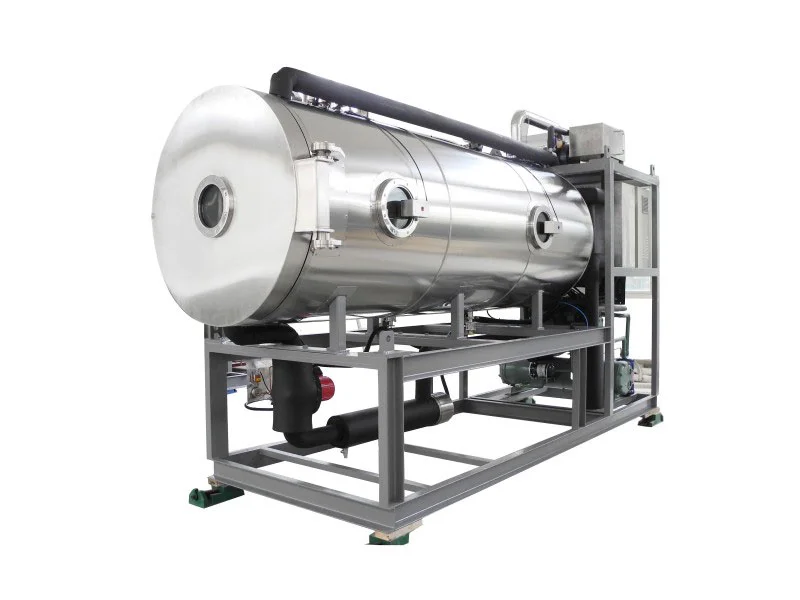
GMP standard automatic capsule filling machine must adopt a fully enclosed dust-proof structure to prevent powder splashing and cross-contamination in the production process. The equipment structure is designed with no dead corners, which is convenient for full disassembly and cleaning. In addition, the equipment is equipped with a dust recovery system to collect floating drug powder, which not only meets environmental protection requirements but also reduces raw material waste, conforming to the energy-saving and environmental protection standards of modern pharmaceutical production. Similar high-precision pharmaceutical processing equipment such as the
Freeze Dryer also adopts sealed, easy-clean structural designs, ensuring consistent hygiene and compliance standards across the entire pharmaceutical manufacturing workflow.
Operation and Record Compliance
The intelligent control system of the automatic capsule filling machine needs to realize automatic data recording, including production time, filling quantity, defective product rate, and equipment operation parameters. All production data can be stored and exported for a long time, meeting GMP traceability requirements. The equipment is equipped with operation authority management to prevent unauthorized parameter modification and ensure the stability and reproducibility of the production process.
Industrial Application & Model Selection Guidelines
The automatic capsule filling machine is widely used in large-scale production of chemical pharmaceuticals, traditional Chinese medicine preparations, functional health care products, and veterinary drugs. Different production scenarios and material characteristics correspond to different equipment models and parameter configurations. Combined with the above capacity and compliance parameters, enterprises can complete efficient and accurate selection to avoid over-investment or insufficient production capacity.
For powder-based traditional Chinese medicine and chemical drugs with fine particle size and low fluidity, the dosator capsule filling machine is the preferred type of automatic capsule filling machine. Its quantitative dosator suction structure can effectively avoid material bridging and uneven filling, ensuring stable filling accuracy in long-term continuous production. For granular materials with good fluidity, high-speed spiral filling automatic models can be selected to further improve production efficiency.
FAQ