


Selecting the right pill capsule machine is one of the most consequential capital decisions a pharmaceutical or nutraceutical manufacturer will make. The global capsule filling machine market was valued at approximately $1.2 billion in 2024 and is projected to reach $1.8 billion by 2030. Yet many buyers still select equipment based on purchase price alone rather than matching machine class to actual production volume. This article classifies the full pill capsule machine series by daily production output, providing a clear gradient framework—from manual entry-level units to high-speed automatic systems—so you can match the right machine to your specific throughput requirements.
The Pill Capsule Machine Output Gradient: A Three-Tier Classification
The pill capsule machine market divides into three primary automation levels: manual capsule fillers, semi-automatic capsule filling machines, and fully automatic capsule filling machines. Each tier corresponds to a distinct production scale, and understanding where your operation falls on this gradient is the first step toward choosing equipment that delivers real value—but it is equally important to consider upstream processes; for many powder formulations, a granulation machine is essential to improve flowability and ensure uniform filling, as poor powder flow can compromise even the best capsule filler’s dose accuracy.
Pill Capsule Machine Output Comparison by Class
| Machine Class | Typical Output (capsules/hour) | Best For | Investment Level |
|---|---|---|---|
| Manual capsule filler | 2,000 – 4,000 | Startups, R&D labs, small custom batches | Low (hundreds of dollars) |
| Semi automatic capsule filling machine | 10,000 – 30,000+ | Growing brands, small/medium manufacturers | Medium (thousands to tens of thousands) |
| Fully automatic capsule filling machine | 30,000 – 100,000+ (up to 450,000+) | High-volume facilities, established brands | High (tens of thousands and above) |
Daily Production Capacity: The Key Selection Criterion
The output gradient above translates directly into daily production capacity. A manual pill capsule machine typically produces up to 4,000 capsules per hour—enough for a startup testing market demand or an R&D lab running formulation trials. A semi-automatic capsule filling machine bridges the gap at 10,000 to 30,000+ capsules per hour, serving growing brands and small-to-medium manufacturers. Fully automatic systems handle 30,000 to over 100,000 capsules per hour, scaling to industrial production levels.
Manual Pill Capsule Machine: Entry-Level Production
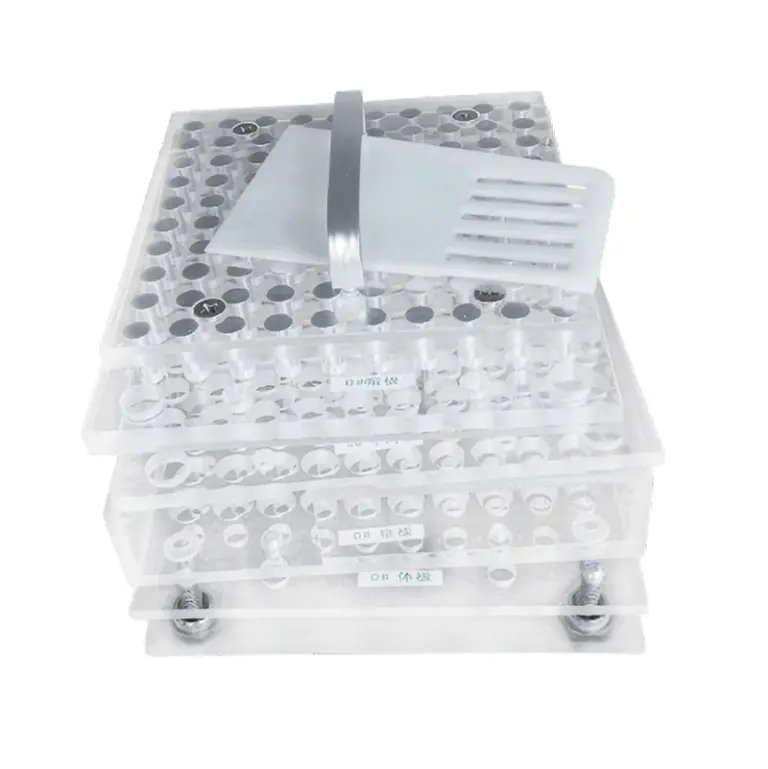
The manual capsule filler represents the most accessible entry point into mechanized encapsulation. These benchtop devices use plates—typically 100 to 400 holes—to align, fill, and close capsules by hand.
When a Manual Pill Capsule Machine Makes Sense
A manual pill capsule machine is usually the right choice when:
You are launching your first product and still testing market demand
You produce hundreds to a few thousand capsules per batch
You run multiple small SKUs or custom formulas that change frequently
You want to keep your equipment budget as low as possible
You have limited space and prefer a simple, no-power-required setup
Realistic Output Expectations
A well-organized operator with a 100-hole manual capsule filler can typically achieve 2,000 to 2,500 capsules per hour. With practice, optimized workflow, and free-flowing powders, some teams can push closer to 4,000 capsules per hour. Manual capsule fillers are available with capacities of 100, 200, 300, or 400 capsules per cycle, with experienced operators achieving outputs of 3,200 to 4,000 capsules per hour depending on the model. However, output volume is only part of the equation; post-filling processes such as a capsule polisher machine—which removes surface dust, powder residues, and static charge—are equally critical to delivering a visually clean, market-ready product, and should be factored into your total workflow planning.
Key advantages of manual capsule fillers include:
Lowest upfront investment—ideal for startups and small labs
Compact footprint—fits on a bench in a small room
No electricity required—flexible for different environments
Fast changeovers—perfect for custom formulas and small runs
However, limitations are significant:
Labor-intensive—operators get tired, and speed is limited
Difficult to scale beyond 100,000–200,000 capsules per month with just manual fillers
Fill weight consistency is operator-dependent
FAQ
What is the typical output range for each class of pill capsule machine?
Manual capsule fillers produce 2,000–4,000 capsules per hour. Semi-automatic capsule filling machines deliver 10,000–30,000+ capsules per hour. Fully automatic systems range from 30,000 to over 100,000 capsules per hour, with high-speed models reaching 450,000+.
When should a business upgrade from a manual capsule filler to a semi-automatic capsule filling machine?
When daily production consistently exceeds what manual methods can sustain—typically above 10,000–15,000 capsules per day—and labor costs or operator fatigue become limiting factors.
How does changeover time affect pill capsule machine selection?
Changeover frequency is as important as rated speed. A machine with faster changeovers can outproduce a higher-speed machine with long changeovers when running multiple SKUs. Semi-automatic machines typically change over in 5–8 minutes, while fully automatic systems may require significantly longer.