


Capsule polisher parts are the individual components that work together to remove loose powder, improve capsule surface cleanliness, transport capsules, and control dust during pharmaceutical production. Understanding capsule polisher parts helps manufacturers evaluate equipment structure, maintenance requirements, cleaning procedures, and overall process suitability. Although the exact configuration varies by machine design, most capsule polisher parts perform several basic functions: feeding, conveying, polishing, dust removal, discharge, and mechanical or electrical control.
For manufacturers using a capsule polisher machine, knowing the role of each component is also useful when troubleshooting performance issues. A worn brush, restricted dust path, poorly adjusted feeding section, or improperly maintained drive system can affect the consistency of the polishing process.
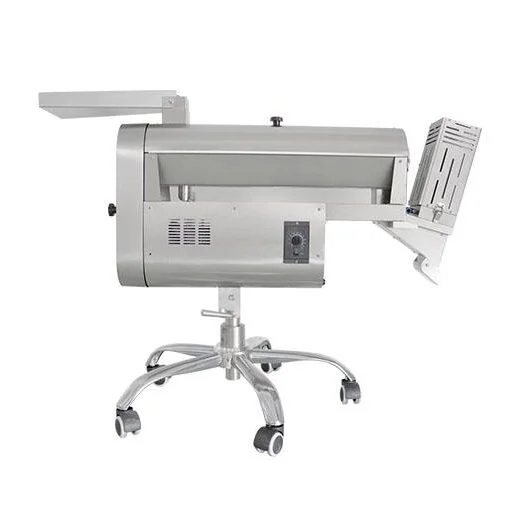
Capsule Polisher Parts: Main Components
The basic structure of capsule polisher parts normally includes a feeding section, polishing chamber, rotating brush or polishing element, dust-removal system, discharge section, drive assembly, and supporting frame. Some equipment may also include inspection or rejection components.
The arrangement of these capsule polisher parts may differ between horizontal, vertical, and integrated designs. However, the basic principle remains similar: capsules enter the processing area, move through the polishing section, undergo surface cleaning, and leave through the discharge section.
Capsule Polisher Parts: Feeding and Conveying System
The feeding system is one of the first capsule polisher parts involved in the process. Its basic purpose is to guide filled capsules from the upstream production equipment into the polishing chamber. Similar to material handling in a freeze dryer, stable and controlled product transfer is important for maintaining consistent processing conditions.
A properly designed feeding section helps maintain stable material flow. If capsules enter too quickly, the polishing chamber may become overloaded. If the feeding rate is too low or inconsistent, machine utilization can be affected.
Common capsule polisher parts in this section may include an inlet chute, hopper, guide structure, or conveyor connection. The exact design depends on how the polisher is integrated with the surrounding production line.
The conveying function is equally important. Capsules need to move through the polishing area without excessive accumulation or unnecessary mechanical stress. The movement may be generated by a rotating brush, spiral structure, chamber inclination, or a combination of mechanical actions.
Capsule Polisher Parts: Polishing Brush and Chamber
The polishing brush is one of the most important capsule polisher parts because it directly contributes to surface cleaning. During operation, the rotating brush contacts the outer surface of filled capsules and helps remove powder particles remaining after capsule filling.
The polishing chamber surrounds the processing area and guides capsule movement. Depending on the equipment design, the chamber may include a mesh or other internal surface that supports powder removal while allowing capsules to move forward.
These capsule polisher parts need to be suitable for the intended process and product. FDA CGMP requirements state that manufacturing equipment should be appropriately designed for its intended use and for cleaning and maintenance. Product-contact surfaces should also be constructed so they do not adversely affect drug-product quality.
Key functions of the polishing section include:
- Removing loose powder from capsule surfaces
- Supporting consistent capsule movement
- Reducing visible residue before inspection or packaging
- Maintaining controlled contact between capsules and polishing elements
For an automatic capsule polisher, these capsule polisher parts are typically designed for continuous operation, reducing the need for manual capsule handling during the polishing stage.
Capsule Polisher Parts: Dust Removal System
Dust removal is another essential function among capsule polisher parts. As the brush removes loose powder, particles must be collected or extracted from the processing area rather than simply remaining around the capsules.
A typical dust-removal arrangement may include a vacuum connection, suction path, dust outlet, or collection unit. The vacuum system creates airflow that helps remove powder released during polishing.
The effectiveness of these capsule polisher parts depends on proper airflow, clean suction paths, and suitable maintenance. If the dust-removal path becomes blocked, the polishing chamber may accumulate powder, potentially affecting both cleaning performance and operating conditions.
For pharmaceutical equipment, cleaning and maintenance are important CGMP considerations. FDA guidance states that equipment should be cleaned and maintained at appropriate intervals to prevent contamination and equipment malfunctions.
Capsule Polisher Parts: Drive and Control Components
Mechanical capsule polisher parts also include the drive assembly. The drive system provides the power required to rotate the polishing brush or other moving elements.
Typical components may include a motor, coupling, bearing arrangement, shaft, and transmission components. These parts work together to maintain stable mechanical movement during operation.
The control system is responsible for operating the equipment according to its designed parameters. Depending on the machine, controls may include a motor starter, variable-speed control, switches, sensors, or a programmable control interface.
When evaluating capsule polisher parts, manufacturers should consider whether these components are accessible for inspection, cleaning, adjustment, and maintenance. FDA CGMP principles place emphasis on equipment design, installation, operation, cleaning, and maintenance rather than simply on the machine’s basic operating capability.
Capsule Polisher Parts: Discharge and Supporting Structure
The discharge section is another group of capsule polisher parts that should not be overlooked. After polishing and dust removal, cleaned capsules need to exit the machine smoothly and continue to the next processing stage. In an automatic capsule polishing sorter machine, the discharge section may also support the transfer of processed capsules toward subsequent inspection or sorting operations.
A suitable discharge structure helps reduce unnecessary accumulation and supports continuous material transfer. Depending on the production line, the outlet may connect directly to inspection, sorting, conveying, or packaging equipment.
The supporting frame forms the mechanical foundation for other capsule polisher parts. It holds the chamber, motor, drive components, and related assemblies in their intended positions.
When selecting equipment, manufacturers should consider not only production capacity but also whether the complete assembly is convenient to clean, inspect, disassemble, and maintain.
Capsule Polisher Parts: How the Components Work Together
The value of individual capsule polisher parts becomes clearer when they are viewed as one working system. The basic operating sequence can be summarized as follows:
- Filled capsules enter through the feeding section.
- The conveying mechanism moves capsules through the polishing chamber.
- The rotating brush or polishing element removes loose surface powder.
- The dust-removal system extracts particles from the processing area.
- Polished capsules leave through the discharge section.
- The control and drive systems maintain the required machine operation.
Each group of capsule polisher parts therefore has a different responsibility, but the components must work together to achieve stable processing.
.jpg)
Capsule Polisher Parts: Selection and Maintenance
When assessing capsule polisher parts, manufacturers should look beyond individual component names. The important question is whether the complete assembly supports the intended pharmaceutical process.
Important considerations include:
- Product-contact materials and surface condition
- Ease of disassembly and cleaning
- Brush replacement and maintenance
- Accessibility of dust-removal paths
- Drive-system reliability
- Compatibility with the production line
- Availability of replacement components
- Operating and inspection procedures
A well-designed set of capsule polisher parts can simplify routine maintenance and help support consistent equipment performance. FDA guidance also emphasizes that manufacturers are responsible for selecting equipment appropriate for their particular process requirements and applicable CGMP expectations.
Capsule Polisher Parts: Final Overview
Capsule polisher parts are not limited to the visible polishing brush. The complete system includes feeding, conveying, polishing, dust removal, discharge, drive, control, and supporting components. Each part performs a basic function that contributes to the overall capsule polishing process.
Understanding capsule polisher parts allows pharmaceutical manufacturers to evaluate equipment more systematically. Instead of focusing only on output capacity, buyers can examine how each component contributes to cleaning, material handling, dust control, maintenance, and integration with the wider production line.
FAQ
What are the main capsule polisher parts?
The main capsule polisher parts generally include the feeding section, polishing brush, chamber, dust-removal system, discharge section, drive assembly, and control system.
Which capsule polisher parts directly remove powder?
The polishing brush or other polishing element removes loose powder from capsule surfaces, while the dust-removal system extracts the released particles.
Do automatic capsule polisher machines use the same parts?
The basic capsule polisher parts are similar, but automatic capsule polisher equipment may add more advanced controls, sensors, conveying arrangements, or integrated inspection and rejection functions.