


For pharmaceutical startups, R&D laboratories, compounding pharmacies, and small-to-medium manufacturers, the decision between a semi automatic capsule filling machine and a fully automatic alternative is one of the most consequential capital equipment choices they will make. The wrong selection can mean overpaying for capacity you do not need—or underinvesting in equipment that cannot keep up with growth. This article provides a data-driven analysis of where a semi automatic capsule filling machine delivers the greatest value, which customer segments benefit most, and how its cost structure compares to fully automatic systems.
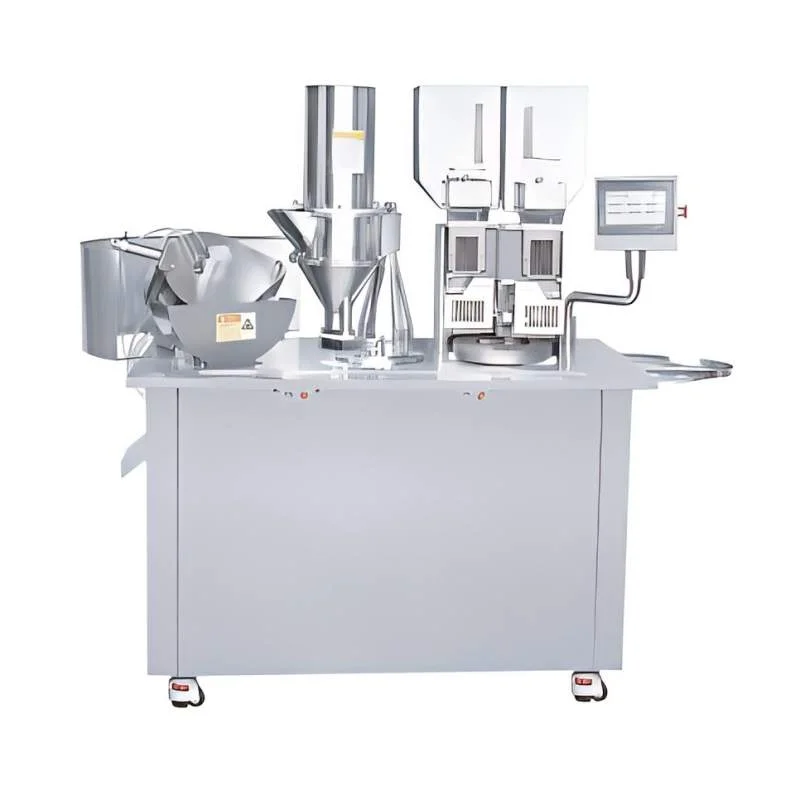
What Is a Semi Automatic Capsule Filling Machine and How Does It Work?
A semi automatic capsule filling machine occupies the middle ground between manual capsule filler tools and fully automated production lines. It automates the precision-critical steps—capsule separation, powder dosing, and locking—while requiring operator involvement for loading empty capsules into the magazine or tray and transferring trays between stations.
The working sequence typically follows this pattern: empty hard gelatin or HPMC capsules are loaded into the feeding tray, where an orientation system aligns them uniformly. A vacuum-assisted mechanism separates the capsule bodies from their caps. The lower bodies then move to the filling station. Prior to filling, the powder formulation is thoroughly homogenized in a mixing machine to ensure uniform particle distribution and blend consistency—a critical prerequisite for dose accuracy. At the filling station, a precision auger and powder-feeding system deliver an exact dose into each capsule. Finally, the machine rejoins the upper and lower sections through a locking mechanism. Filling accuracy typically falls within ±3% of the target dose.
This hybrid design—automated precision combined with manual tray handling—is precisely what makes the semi automatic capsule filling machine suitable for specific production environments while less ideal for others.
Suitable Scenarios for the Semi Automatic Capsule Filling Machine
Understanding where a semi automatic capsule filling machine excels requires examining the production environments where its specific capabilities align with operational needs.
Laboratory R&D and Formulation Development
Research and development laboratories represent one of the most natural applications for a semi automatic capsule filling machine. These environments typically handle batch sizes ranging from as few as 50 capsules up to about 500 per run. The ability to run small batches with minimal material waste—as little as 50g needed for fill testing—makes these machines invaluable for formulation trials.
R&D labs frequently switch between different formulations, excipient blends, and capsule sizes. A semi automatic capsule filling machine supports rapid changeovers, with mold replacement and adjustment time reduced to as little as 5 to 8 minutes. This flexibility is essential when comparing multiple formulations, optimizing flow properties, or preparing blinded samples for preclinical studies.
Quiet operation is another advantage for laboratory settings—many semi-automatic models operate at less than 60dB, making them suitable for noise-sensitive research environments.
Small-Batch and Pilot Production
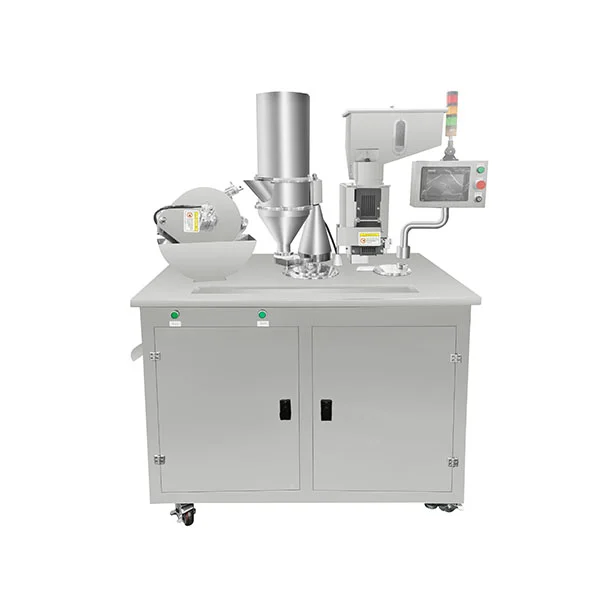
Pilot production lines and small-batch manufacturing operations benefit from the semi automatic capsule filling machine’s ability to bridge the gap between manual methods and full automation. These machines typically deliver 10,000 to 25,000 capsules per hour, depending on capsule size and operator efficiency.
For businesses running multiple SKUs or custom formulations that change frequently, the semi automatic capsule filling machine offers a practical upgrade from manual filling. When manual filling becomes the production bottleneck but runs remain short enough that changeover speed matters more than raw throughput, semi-automatic equipment is often the optimal choice.
Compounding Pharmacies and Clinical Trial Preparation
Compounding pharmacies preparing personalized medications and facilities producing clinical trial materials require precision, traceability, and flexibility—all strengths of the semi automatic capsule filling machine. These operations typically produce small-to-medium batches with strict quality requirements, making the semi automatic capsule filling machine’s balance of accuracy and adaptability particularly valuable.
Startups and Growing Supplement Brands
For supplement brands and pharmaceutical startups in their early growth stages, the semi automatic capsule filling machine provides an accessible entry point into mechanized production. The lower upfront investment allows new businesses to establish market presence and validate product demand before committing to expensive automated lines.
The scalability of the semi automatic capsule filling machine is another important consideration: businesses can start with semi-automatic equipment and upgrade to fully automatic systems as demand grows, avoiding overcommitment to high-capacity equipment before establishing market needs.
Semi Automatic Capsule Filling Machine Cost-Efficiency Analysis
The cost-efficiency equation for a semi automatic capsule filling machine involves multiple variables beyond the initial purchase price. A comprehensive analysis must consider capital expenditure, operational costs, labor requirements, and total cost of ownership. The same holistic evaluation applies when assessing a tablet press—another key piece of solid-dosage equipment—where factors such as tooling wear, punch-and-die maintenance, and compression speed directly influence the long-term financial picture.
Initial Investment Comparison
The price gap between semi-automatic and fully automatic capsule filling machines is substantial, though perhaps narrower than many buyers expect. In 2026, a semi automatic capsule filling machine from an established manufacturer typically runs USD 4,500 to 8,000 FOB, with specific models priced around USD 9,500 including a vacuum pump and one mold set. Fully automatic machines start at approximately USD 19,000 for the entry-level 54,000–72,000 capsules/hour class, with mid-volume automatic systems ranging from USD 17,500 to 22,000.
| Machine Class | Output (capsules/hour) | 2026 Price Range (USD) | Typical Buyer |
|---|---|---|---|
| Manual capsule filler | ≤800 | $200–1,500 | Labs, compounding |
| Semi automatic capsule filling machine | ≤20,000 | $4,500–8,000 | Startups, pilot production |
| Fully automatic (48,000/hr class) | 48,000 | $17,500–22,000 | Mid-volume pharma, nutraceutical |
| Fully automatic (72,000/hr class) | 72,000 | $24,000–32,000 | Growing CMOs, multi-shift plants |
| Industrial high-speed | 100,000–150,000+ | $45,000–80,000+ | Large-scale manufacturers |
The semi automatic capsule filling machine’s upfront cost advantage is significant—typically one-third to one-half the price of an entry-level fully automatic system. For startups and small operations with limited capital, this lower barrier to entry is often the deciding factor.
Operational Cost Considerations
While the semi automatic capsule filling machine has a lower initial investment, its operational cost structure differs markedly from fully automatic systems.
Labor Requirements: A semi automatic capsule filling machine typically requires 1–2 dedicated operators per machine. The operator loads capsule trays and transfers them between separation, filling, and closing stations. Fully automatic machines, by contrast, require only hopper loading and can be supervised by one operator shared across the line.
Real Output vs. Rated Capacity: The rated output of a semi automatic capsule filling machine—typically up to 20,000 capsules/hour—is operator-dependent and drops with fatigue over a shift. Fully automatic machines maintain rated speed continuously. This means the effective hourly output gap is often 3–4 times in favor of automatic systems.
Dosing Consistency: The semi automatic capsule filling machine uses auger filling into tray-held bodies, with consistency dependent on operator technique. Fully automatic systems employ 5-stage tamping-pin slug dosing that maintains ≤±3% dosage difference consistently. This consistency difference has regulatory implications, particularly for GMP-compliant facilities.
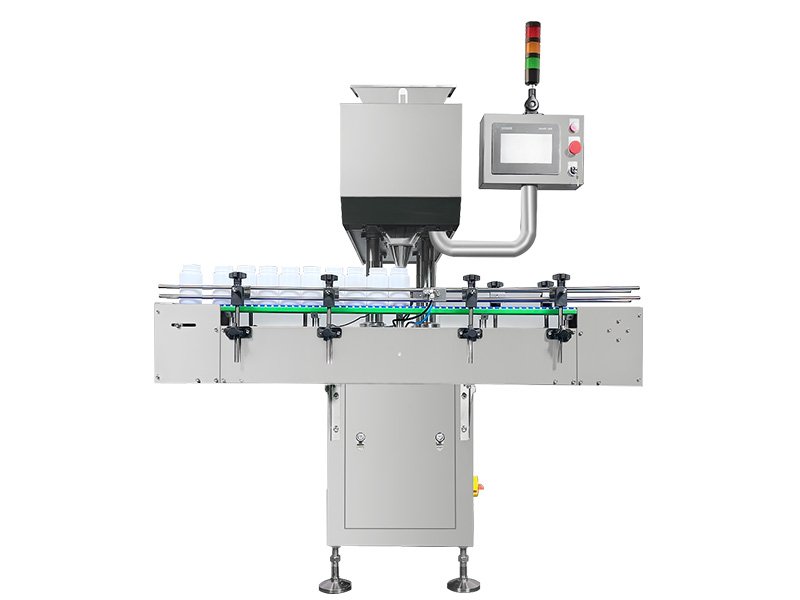
Maintenance Costs: Semi automatic capsule filling machines have fewer complex components, resulting in lower maintenance costs and reduced downtime. The simpler mechanical design means repairs and parts replacement are generally more affordable than for fully automatic systems with sophisticated electronics, servo motors, and precision-machined parts. The same cost–complexity trade-off applies to a pill counting machine: mechanical rotary counters are cheaper to service and require basic spare parts, whereas high-speed optical counting units demand specialized calibration and sensor maintenance, but justify the expense through vastly superior throughput in post-packaging operations.
Break-Even Analysis and ROI
The practical rule of thumb for choosing between semi-automatic and fully automatic equipment centers on daily volume. Below approximately 150,000 capsules per day, a semi automatic capsule filling machine is usually the better buy. Above that threshold, the automatic machine pays back the price difference within the first year through labor savings and tighter fill-weight consistency.
For businesses producing 50,000 to 100,000 capsules daily, the semi automatic capsule filling machine often delivers the optimal balance of cost and capacity. The initial investment is recoverable within months rather than years, and the flexibility to handle multiple SKUs without lengthy changeovers adds operational value that pure cost analysis may not capture.
Semi Automatic Capsule Filling Machine vs. Fully Automatic: A Side-by-Side Comparison
The choice between a semi automatic capsule filling machine and a fully automatic system involves trade-offs across multiple dimensions. The following comparison clarifies the key decision factors.
| Criteria | Semi Automatic Capsule Filling Machine | Fully Automatic (NJP-1200C Class) |
|---|---|---|
| Rated output | Up to 20,000 capsules/hour | 54,000–72,000 capsules/hour |
| Real sustained output | Operator-dependent; drops with fatigue | Holds rated speed continuously |
| Operator role | Loads trays; transfers between stations | Loads hoppers only |
| Operators required | 1–2 dedicated per machine | 1 shared across the line |
| Dosing method | Auger fill into tray-held bodies | 5-stage tamping-pin slug dosing |
| Dosing consistency | Technique-dependent | ≤±3% dosage difference |
| Capsule sizes | 00#–4# | 00#–5# + safety capsules A–E |
| Defective handling | Manual inspection | Automatic rejection |
| FOB China price | From US$9,500 | From US$19,000 |
| Best for | <150,000 capsules/day, startups, pilot batches | 150,000+ capsules/day, high-volume production |
When to Choose a Semi Automatic Capsule Filling Machine
Based on the cost-efficiency analysis and scenario evaluation, a semi automatic capsule filling machine is the optimal choice for:
R&D laboratories conducting formulation development with batch sizes under 500 capsules
Pilot production lines requiring flexibility for multiple product variations
Compounding pharmacies preparing personalized medications in small batches
Startup supplement brands with limited capital and uncertain demand
Small-to-medium manufacturers producing under 150,000 capsules daily with frequent changeovers
Academic and research institutions with teaching and experimental applications
The common thread across these scenarios is the need for flexibility, moderate throughput, and capital efficiency over maximum production speed.
FAQ
Can a semi automatic capsule filling machine handle different capsule sizes, and how long does size changeover take?
Yes, most semi automatic capsule filling machines support capsule sizes from 00# to 4#. Changeover between sizes typically takes 5 to 8 minutes for an experienced operator, significantly faster than fully automatic systems that may require 60–90 minutes for changeover and cleaning.
What is the typical yield rate of a semi automatic capsule filling machine?
Quality semi automatic capsule filling machines achieve yield rates exceeding 97 percent. This high yield rate dramatically reduces material waste compared to hand-filling methods, with some models requiring as little as 50g of material for fill testing.
Is a semi automatic capsule filling machine GMP-compliant?
Yes, reputable semi automatic capsule filling machines are available with cGMP compliance, CE certification, and ISO 9001 manufacturing standards. They are suitable for use in GMP-compliant facilities, including R&D laboratories and compounding pharmacies. However, facilities with strict regulatory requirements should verify that the specific model meets their compliance needs.