


In pharmaceutical production, equipment cleaning is not simply a routine maintenance activity. For a capsule polisher machine installed in a GMP workshop, cleaning and sanitization directly affect product quality, contamination control, and production consistency.
A capsule polisher machine comes into direct or indirect contact with filled capsules during powder removal, conveying, polishing, sorting, and discharge. Powder residues may accumulate around brushes, conveying channels, product-contact surfaces, inspection areas, and discharge components. If these residues are not properly removed, they may become a source of product carryover or microbial contamination.
A complete capsule polisher machine cleaning procedure should therefore be designed around the actual equipment structure, product characteristics, cleaning agents, production schedule, and contamination risks. FDA requirements state that equipment must be cleaned and maintained at appropriate intervals to prevent contamination that could affect the safety, identity, strength, quality, or purity of drug products.
For a GMP workshop, the objective is not simply to make the capsule polisher machine look clean. The cleaning process should be reproducible, documented, appropriate for the equipment, and supported by established acceptance criteria.

Capsule Polisher Machine GMP Cleaning Requirements
The cleaning requirements for a capsule polisher machine should be incorporated into the site’s written SOP system. The procedure should identify who performs the cleaning, which parts are removed, which cleaning materials are permitted, how the equipment is inspected, and how clean status is released.
FDA GMP guidance emphasizes written cleaning procedures, cleaning schedules, appropriate sanitization, equipment inspection, and protection of cleaned equipment from subsequent contamination.
A practical capsule polisher machine cleaning SOP should define:
- Equipment identification and cleanliness status
- Cleaning frequency and triggering conditions
- Product-contact components
- Disassembly and reassembly requirements
- Approved cleaning agents
- Rinsing and drying procedures
- Visual inspection requirements
- Sanitization requirements where applicable
- Cleaning verification or validation requirements
- Documentation and release procedures
The cleaning frequency should be determined according to the production process and contamination risk. A capsule polisher machine used for different products generally requires particular attention during product changeover because residues from one product should not be carried into another.
Capsule Polisher Machine Cleaning Responsibilities
Responsibility should be clearly assigned. Operators may perform routine cleaning, while production supervisors or quality personnel may be responsible for inspection and release according to the site’s quality system.
The SOP should also define who is authorized to disassemble the capsule polisher machine. Incorrect disassembly can damage components or create additional contamination risks. Similar responsibility controls may also apply to other pharmaceutical equipment, such as an oral liquid filling machine, where incorrect handling can affect cleaning effectiveness and product quality.
Personnel should understand the difference between cleaning, sanitization, and sterilization. These terms should not be treated as interchangeable. The required level of control depends on the product, process, equipment, and applicable GMP requirements.
Capsule Polisher Machine Cleaning Preparation
Before cleaning a capsule polisher machine, production should be stopped according to the approved operating procedure. Remaining capsules and visible powder should be removed from the equipment and surrounding area, including accessible areas of a vertical capsule polishing machine when applicable.
The operator should verify that the previous batch has been completed and that materials, labels, and containers associated with the previous production campaign have been removed or appropriately controlled.
A capsule polisher machine should not be cleaned while unidentified product remains inside the product path. The cleaning area should also be organized to prevent clean components from contacting dirty surfaces.
Before starting, operators should prepare:
- Approved cleaning tools and materials.
- Appropriate personal protective equipment according to the site’s risk assessment.
- Suitable containers for removed capsule polisher parts.
- Approved cleaning and sanitizing agents.
- Clean drying materials or controlled drying equipment.
- Required cleaning records and equipment-status labels.
The exact cleaning agent, concentration, contact time, and water quality should follow the validated or approved site procedure rather than relying on a generic concentration.
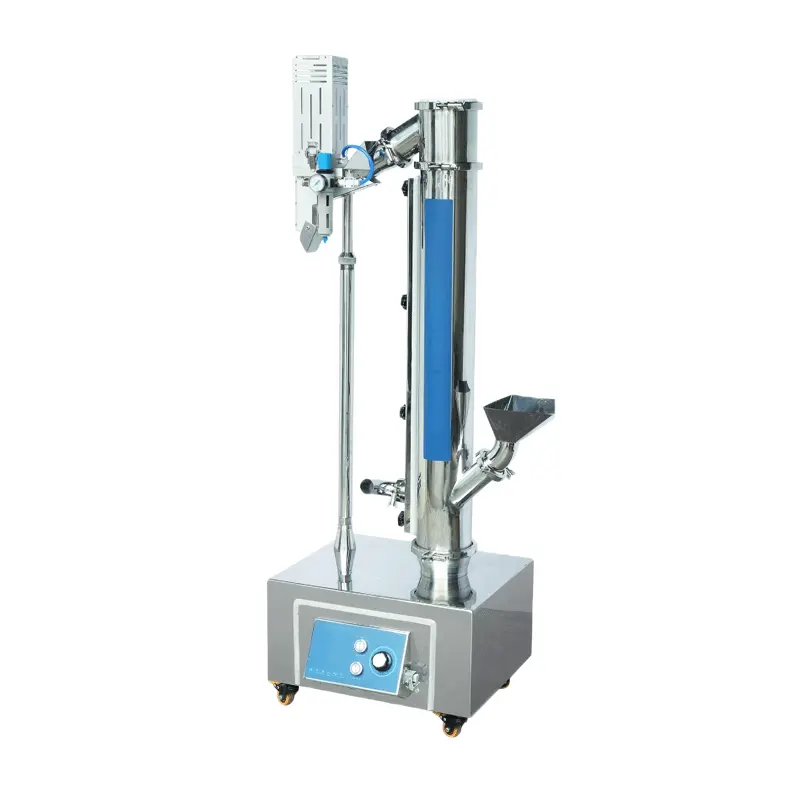
Capsule Polisher Machine Pre-Cleaning Inspection
A visual inspection should be performed before and after cleaning.
During pre-cleaning, operators should look for powder accumulation around:
- Feeding areas
- Brushes or polishing components
- Capsule conveying channels
- Inspection or sorting sections
- Discharge areas
- Seals, joints, and difficult-to-access locations
- Product-contact surfaces
This inspection helps identify areas where the capsule polisher machine may require additional manual cleaning.
The maximum permitted time between production and cleaning should also be defined when applicable. FDA cleaning guidance specifically recognizes the importance of controlling the time between processing and cleaning because dried residues can become more difficult to remove.
Capsule Polisher Machine Disassembly Procedure
Disassembly is one of the most important stages of capsule polisher machine cleaning. Product-contact areas that cannot be adequately cleaned while assembled should be accessible for inspection and manual cleaning.
The exact disassembly sequence depends on the capsule polisher machine design. The SOP should therefore use equipment-specific instructions rather than a generic sequence.
Typical removable capsule polisher parts may include conveying components, brushes, screens, guides, collection components, and other product-contact elements.
Each capsule polisher part should be handled carefully to prevent scratches, deformation, or accidental contamination.
Small components should be placed in identified clean containers after removal. Components from different cleaning stages should not be mixed without appropriate identification.
Capsule Polisher Parts Requiring Special Attention
Not every capsule polisher part presents the same cleaning challenge. Smooth stainless-steel surfaces may be relatively easy to inspect, while joints, seals, brushes, narrow channels, and textured surfaces may retain powder more easily.
A risk-based approach can help determine which capsule polisher parts require additional cleaning attention.
| Capsule polisher part | Main cleaning concern | Inspection focus |
|---|---|---|
| Feeding section | Powder accumulation | Corners and inlet |
| Polishing section | Powder and capsule residue | Brushes and contact surfaces |
| Conveying path | Residue retention | Channels and guides |
| Sorting section | Product carryover | Inspection and rejection path |
| Discharge section | Residual capsules or powder | Outlet and collection area |
The table should be adapted to the actual machine configuration and validated cleaning procedure.
Capsule Polisher Machine Rinsing and Drying
Rinsing is essential when the cleaning procedure uses a detergent or other cleaning agent. Residual cleaning chemicals should not remain on product-contact surfaces at levels that could affect product quality.
The capsule polisher machine should be inspected after rinsing to confirm that visible residues have been removed.
Drying is equally important. Moisture remaining inside equipment can create conditions that support microbial proliferation or affect subsequent production.
FDA inspection guidance specifically notes that equipment should be dried before storage and that stagnant water should not remain in equipment after cleaning.
For this reason, a capsule polisher machine should not be closed or stored while internal areas remain unnecessarily wet.
Capsule Polisher Machine Drying Control
Drying procedures should specify the acceptable method and conditions. Depending on the equipment design, controlled air, clean drying materials, or another approved method may be used.
Operators should pay particular attention to:
- Internal conveying channels
- Recessed areas
- Seals and joints
- Removable capsule polisher parts
- Areas below brushes
- Discharge and collection sections
After drying, components should be protected from environmental contamination until reassembly.
Capsule Polisher Machine Sanitization Procedure
Cleaning and sanitization serve different purposes. Cleaning removes residues and contaminants from surfaces, while sanitization is intended to reduce microbial contamination to an appropriate level.
Whether a capsule polisher machine requires routine sanitization depends on the product, process, facility, and established GMP control strategy.
Where sanitization is required, the procedure should specify the approved sanitizing agent, concentration, application method, contact time, rinsing requirements if applicable, and drying conditions.
A sanitization step should not be used as a substitute for inadequate cleaning. Residual powder or product material can interfere with the effectiveness of subsequent sanitation.
Capsule Polisher Machine Sanitization Verification
The effectiveness of sanitization should be evaluated according to the site’s established procedures. Where microbial control is a critical requirement, the facility should define suitable monitoring and acceptance criteria.
The European GMP framework identifies effective cleaning, equipment design, product-contact-part control, and other technical and organizational measures as important tools for reducing cross-contamination risk.
For a capsule polisher machine, sanitization should therefore be considered part of an overall contamination-control strategy rather than an isolated cleaning step, particularly when using an automatic capsule polishing sorter machine with multiple product-contact and sorting components.
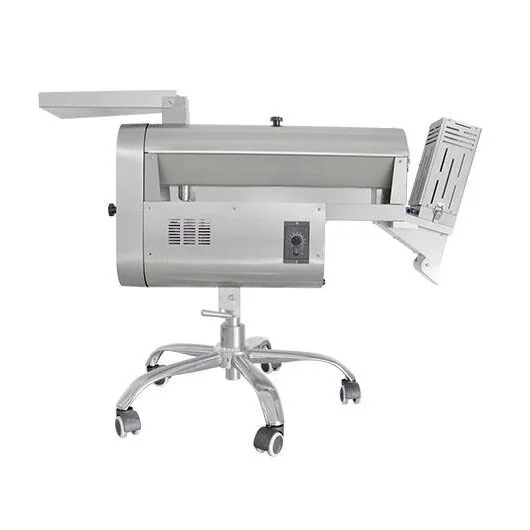
Capsule Polisher Machine Cleaning Validation
Cleaning validation provides documented evidence that an established cleaning procedure can consistently remove residues to predetermined acceptable levels.
For a capsule polisher machine used in multiproduct manufacturing, cleaning validation should consider the actual equipment design and realistic production conditions.
The validation protocol may address:
| Validation element | Typical consideration |
|---|---|
| Equipment | Complete product-contact path |
| Residue | Product and cleaning-agent residues |
| Sampling | Swab, rinse, or suitable alternative |
| Analytical method | Appropriate sensitivity |
| Acceptance criteria | Scientifically justified limits |
| Cleaning cycle | Defined and reproducible procedure |
| Documentation | Protocol, results, and approval |
FDA guidance notes that sampling may include swabbing, rinsing, or alternative approaches as appropriate, and that analytical methods should be sufficiently sensitive for the residues being evaluated.
A capsule polisher machine should not automatically be considered validated simply because the equipment has passed a visual inspection.
Capsule Polisher Machine Cleaning Verification
Routine cleaning verification may include visual inspection and, where justified by the site’s risk assessment, analytical or microbiological monitoring.
Visual inspection is useful for detecting visible powder and localized contamination. However, visual inspection alone cannot demonstrate the absence of every type of residue.
The inspection should cover difficult-to-access capsule polisher parts and areas where product can accumulate.
The FDA recognizes visual examination as useful for detecting gross contamination, while validated analytical approaches may be required to demonstrate residue control against defined acceptance criteria.
Capsule Polisher Machine Maintenance After Cleaning
Cleaning and maintenance should be coordinated because worn or damaged components can make effective cleaning more difficult.
Operators should inspect capsule polisher parts for wear, deformation, cracks, loose connections, or other conditions that could affect cleaning or product handling.
An automatic capsule polisher may contain automated conveying, inspection, or control functions that require additional attention during maintenance. However, automated operation does not remove the need for controlled manual inspection of product-contact areas. Similar maintenance principles should also be considered for related equipment, such as a capsule filling machine, to maintain proper hygiene and product handling conditions.
Maintenance tools and replacement components should also be controlled to avoid introducing foreign material into the capsule polisher machine.
Capsule Polisher Machine Final GMP Checklist
Before releasing the equipment for production, the responsible personnel can use a site-approved checklist covering the following points:
- Previous product removed
- All designated capsule polisher parts cleaned
- No visible powder or residue
- Cleaning agent removed
- Equipment adequately dried
- Sanitization completed where required
- Correct components reassembled
- Product-contact surfaces inspected
- Clean-status identification applied
- Cleaning records completed
- Deviations documented where applicable
This checklist should supplement, not replace, the approved GMP SOP and validated cleaning process.
Capsule Polisher Machine GMP Cleaning Best Practices
A strong cleaning program combines equipment design, operator training, documented procedures, inspection, validation, and ongoing monitoring.
For a GMP workshop, the most practical principles are:
- Follow an equipment-specific capsule polisher machine SOP.
- Clean all defined product-contact surfaces, not only the visibly accessible areas.
- Disassemble designated capsule polisher parts according to the approved procedure.
- Use only approved cleaning and sanitizing materials.
- Control the time between production and cleaning when required.
- Dry the capsule polisher machine thoroughly before storage or production.
- Verify cleanliness before equipment release.
- Maintain complete cleaning and maintenance records.
A well-designed capsule polisher machine cleaning system reduces the possibility that powder, residues, microorganisms, or foreign materials will remain in the product path.
FAQ
How often should a capsule polisher machine be cleaned?
Cleaning frequency depends on the product, production campaign, equipment use, residue characteristics, and contamination risk. The frequency should be defined in the approved GMP cleaning SOP.
Should capsule polisher parts be removed during cleaning?
Designated product-contact capsule polisher parts should be removed when the approved procedure requires disassembly for effective cleaning and inspection. The exact components depend on the equipment design.
Is cleaning validation required for a capsule polisher machine?
Where the equipment is used in circumstances where residue carryover could affect product quality, a scientifically justified cleaning-validation program may be required. The scope should be determined by the site’s quality and risk-assessment procedures.