


When pharmaceutical manufacturers search for tablet production equipment, two terms often appear: tablet press machine and tablet compression machine. At first glance, these names may seem to describe two different types of pharmaceutical equipment. In practice, however, the difference is often related to terminology rather than a completely different mechanical principle.
For procurement teams, understanding this terminology is important. Different suppliers may use different names for equipment that performs a similar tablet-forming process. At the same time, machines marketed under either term can have significant differences in production capacity, compression performance, tooling, automation, cleaning design, and process control.
A tablet press machine generally refers to equipment that forms tablets by compressing a measured quantity of powder or granulated material inside a die. The term tablet compression machine is also commonly used to describe equipment performing this same basic function.
Therefore, buyers should not make purchasing decisions based only on the equipment name. The more reliable approach is to understand the terminology first and then compare the actual technical specifications.
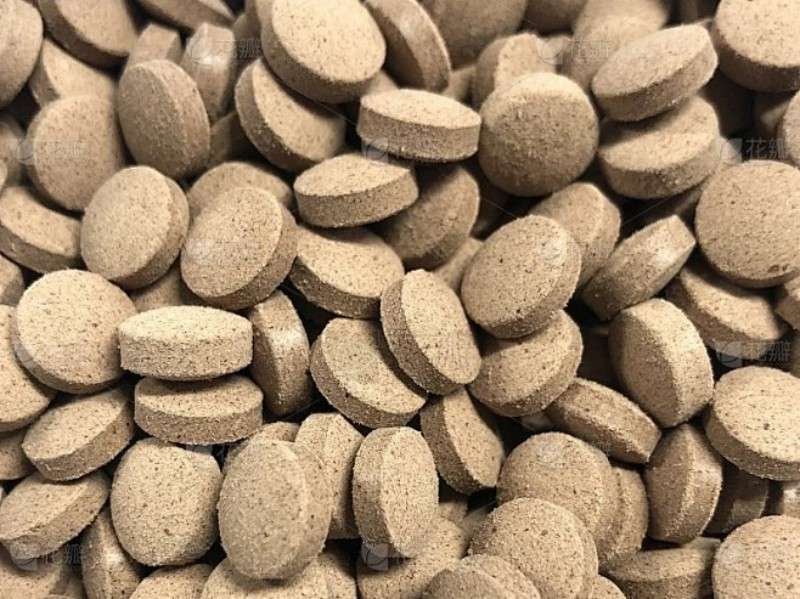
What Is a Tablet Press Machine in Pharmaceutical Production
A tablet press machine is a mechanical system designed to transform powder or granulated material into tablets through controlled feeding, compression, and ejection. It is widely used in pharmaceutical solid-dose production and can also be applied to nutraceutical, food, and other tablet manufacturing processes.
The basic operation begins with the feeding of powder or granules into the machine. The material enters the dies, where the lower punch establishes the required filling volume. Compression is then applied through the upper and lower punches. After compression, the finished tablet is lifted and discharged from the compression area.
A typical tablet press machine may include:
- Feed hopper and feeding mechanism
- Upper and lower punches
- Dies
- Turret or compression mechanism
- Precompression and main compression stations
- Tablet discharge system
- Control and monitoring system
- Safety protection and interlocking components
The actual configuration depends on the machine model and intended application. A machine for product development may have a very different structure from equipment designed for high-volume commercial production.
Modern equipment can also incorporate force monitoring, automatic weight adjustment, overload protection, production data recording, and other process-control functions.
What Does Tablet Compression Machine Mean
The term tablet compression machine places greater emphasis on the compression operation used to form the tablet. In pharmaceutical equipment catalogs, technical documents, and supplier websites, it may be used as another name for a tablet press machine.
This is why the terminology can create confusion during equipment sourcing.
One manufacturer may list its equipment as a tablet press machine, while another may use tablet compression machine for equipment with a similar operating principle. The terminology itself does not necessarily indicate a different machine category.
For procurement, the actual specifications provide a more useful basis for comparison.
| Evaluation Point | Tablet Press Machine | Tablet Compression Machine |
|---|---|---|
| Main function | Tablet formation by compression | Tablet formation by compression |
| Material | Powder or granules | Powder or granules |
| Feeding | Controlled material feeding | Controlled material feeding |
| Compression | Precompression and/or main compression | Precompression and/or main compression |
| Tooling | Punches and dies | Punches and dies |
| Applications | Pharmaceutical and other tablet production | Pharmaceutical and other tablet production |
| Technical difference | Depends on model | Depends on model |
How Does a Tablet Press Machine Differ From a Tablet Compression Machine
The clearest way to understand the difference is to separate equipment terminology from actual machine performance.
In many cases, a tablet press machine and a tablet compression machine can describe the same general type of production equipment. Both use controlled mechanical compression to form tablets from powder or granulated material.
However, this does not mean that all machines described using these terms are technically identical.
Individual models may differ in:
- Production capacity
- Number of tooling stations
- Compression force
- Precompression configuration
- Feeding technology
- Tablet size range
- Tooling compatibility
- Automation level
- Cleaning accessibility
- Process monitoring
For example, one tablet press machine may be designed for laboratory-scale development, while another is designed for continuous commercial production. Both machines may also be described as tablet compression machines.
Tablet Press Machine Naming Depends on Market Context
Equipment terminology can vary between manufacturers, distributors, technical writers, and different markets. Search behavior can also influence product naming because suppliers often use multiple industry terms to help potential buyers find their equipment.
For this reason, the product title should be considered an initial search reference rather than a complete technical definition.
Before requesting a quotation, procurement teams should confirm the actual specifications, including:
- Intended application and production scale.
- Normal and maximum production capacity.
- Maximum tablet diameter and thickness.
- Compression-force range.
- Feeding system and formulation requirements.
- Tooling standards and compatibility.
- Cleaning and changeover requirements.
- Documentation and qualification support.
This approach helps buyers avoid confusing different product names with actual technical differences.
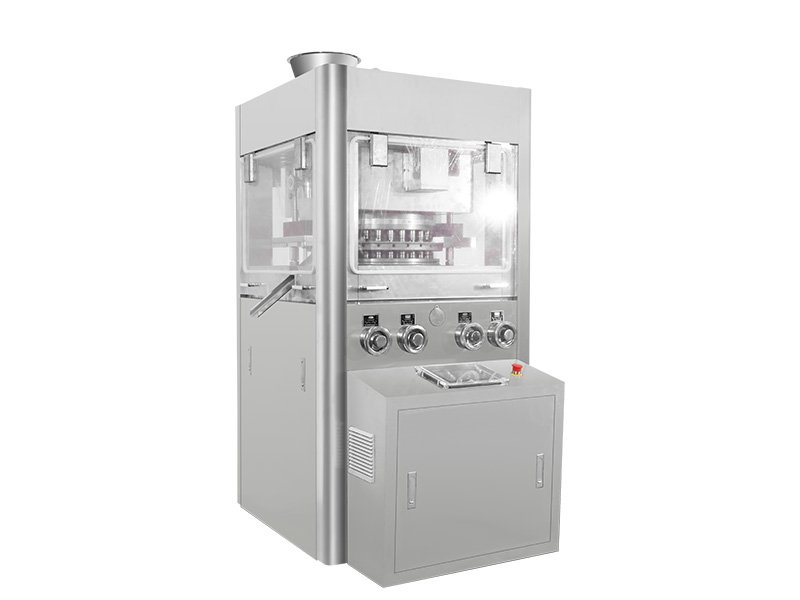
Tablet Press Machine Performance Depends on Configuration
Although the terminology may overlap, the performance of each tablet press machine depends heavily on its mechanical and control configuration.
Production capacity is one of the first specifications buyers normally review. Theoretical output can be related to factors such as the number of tooling stations and turret speed. However, actual production output can be affected by formulation properties, machine settings, stoppages, rejects, cleaning, changeovers, and other operating conditions. Upstream or related equipment, such as a freeze dryer, may also influence the overall production workflow and equipment requirements.
Compression performance is equally important. Powder flow, particle-size distribution, moisture, bulk density, lubrication, and compressibility can all influence tablet formation.
Therefore, a machine should be evaluated against the actual product and manufacturing process rather than selected solely according to its maximum advertised output.
Tablet Press Machine Feeding and Compression
The feeding system controls how consistently powder or granules enter the dies. Stable die filling is important because variation in fill volume can contribute to tablet-weight differences.
Compression conditions also affect tablet thickness, hardness, friability, appearance, and mechanical strength. Depending on the design, a tablet press machine may provide precompression, main compression, compression-force monitoring, and automatic adjustment.
The appropriate configuration depends on the formulation and required production process.
A machine with advanced control functions may provide more process information, but these functions should support an established manufacturing process rather than replace proper formulation development and process validation.
Tablet Press Machine and Tablet Compression Machine: GMP Considerations
The terminology used to describe a machine does not determine whether the equipment is suitable for GMP manufacturing.
GMP considerations should focus on the actual equipment design, product-contact materials, cleaning accessibility, maintenance, contamination control, documentation, and qualification activities.
For a pharmaceutical tablet press machine, product-contact components should be suitable for the formulation and cleaning environment. Equipment should also be designed so that relevant parts can be inspected, cleaned, and maintained appropriately. Similar considerations may apply to connected equipment, such as a capsule polisher machine, where accessible product-contact surfaces can support effective cleaning and maintenance.
Manufacturers should consider potential powder accumulation areas, accessibility around product-contact components, and the ability to perform effective cleaning during product changeover.
Tablet Press Machine Documentation and Qualification
Equipment documentation is another important consideration during pharmaceutical equipment procurement.
Depending on the manufacturing environment and qualification strategy, buyers may require technical specifications, equipment drawings, material information, operating manuals, maintenance procedures, testing records, and qualification-related documentation. For a rotary tablet press machine, these documents can also help procurement and technical teams verify the equipment configuration and operating requirements before installation.
A tablet press machine should therefore be considered as part of a controlled manufacturing system rather than simply as a mechanical device.
Procurement teams should confirm what documentation the supplier can provide before finalizing the purchase. This can reduce delays during installation, commissioning, qualification, and operator training.
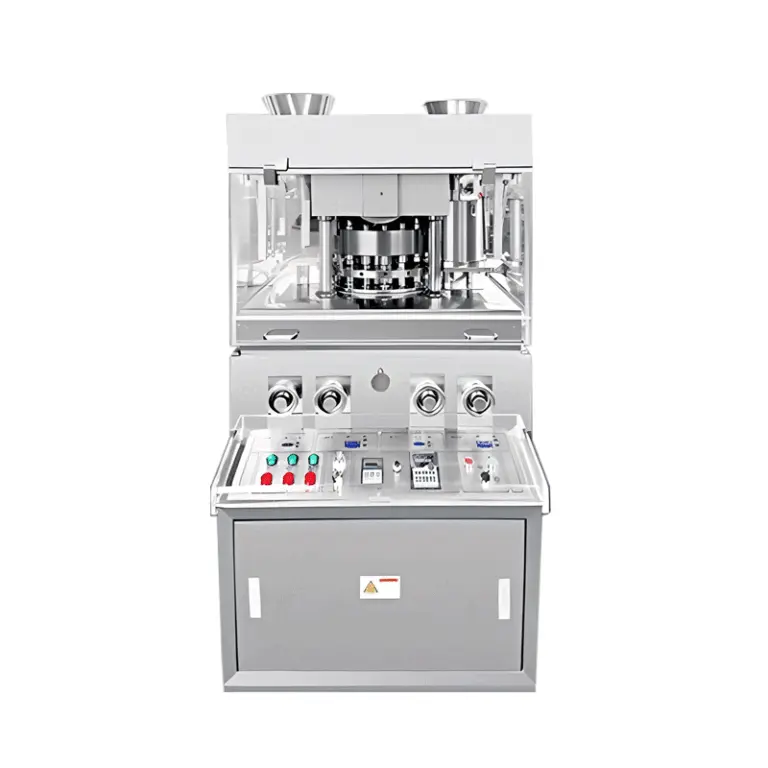
Tablet Press Machine Tooling and Product Flexibility
Tooling is another major factor when comparing tablet production equipment.
Punches and dies determine tablet shape, dimensions, embossing possibilities, and certain production limitations. A tablet press machine intended to manufacture multiple products may require greater tooling flexibility than equipment dedicated to a single tablet specification.
Buyers should check:
- Maximum and minimum tablet diameter
- Maximum tablet thickness
- Punch and die dimensions
- Tablet shape options
- Embossing requirements
- Tooling changeover procedures
- Tooling identification and storage
- Availability of replacement tooling
The term tablet compression machine does not provide enough information to determine which tooling configuration is available.
For this reason, tooling specifications should always be reviewed separately when comparing suppliers.
Tablet Press Machine Cleaning and Maintenance
Cleaning and maintenance can have a direct impact on the suitability of a machine for pharmaceutical production.
A tablet press machine should provide reasonable access to product-contact areas and components that require regular cleaning or inspection. This is particularly important for facilities manufacturing several products on the same equipment. Related downstream equipment, such as a tablet deduster, should also be considered when reviewing cleaning access and maintenance requirements across the tablet production line.
Residual powder from a previous batch can create contamination and cross-contamination concerns if cleaning is not properly controlled. Equipment design can therefore influence the efficiency and repeatability of cleaning procedures.
Maintenance requirements should also be reviewed before purchase.
Important considerations include:
- Accessibility of wear components
- Lubrication requirements
- Punch and die inspection
- Replacement-part availability
- Preventive-maintenance intervals
- Maintenance documentation
- Operator and maintenance training
A machine that is easy to maintain can help reduce unnecessary downtime and support more consistent production planning.
Tablet Press Machine Selection: What Should Buyers Compare
| Selection Factor | What Buyers Should Verify |
|---|---|
| Production capacity | Normal and maximum output |
| Compression | Precompression, main compression, force range |
| Feeding | Feeding consistency and formulation suitability |
| Tooling | Punch and die standards and dimensions |
| Automation | Controls, monitoring, alarms, and recipe functions |
| Cleaning | Product-contact access and changeover procedures |
| Materials | Product-contact materials and surface condition |
| GMP support | Documentation and qualification-related information |
| Maintenance | Wear parts, access, and service requirements |
| Future production | Product range and possible capacity expansion |
Final Understanding of Tablet Press Machine Terminology
The main difference between a tablet press machine and a tablet compression machine is often terminology rather than a fundamentally different compression technology.
Both terms can refer to equipment that feeds powder or granulated material into dies and applies controlled compression to produce tablets. However, individual machines can vary substantially in capacity, compression performance, feeding systems, tooling flexibility, automation, cleaning design, and documentation.
For pharmaceutical procurement, these technical characteristics are more important than the equipment name itself.
The most reliable approach is therefore to use both terms when researching suppliers but compare actual specifications before making a purchasing decision. Buyers should pay particular attention to product requirements, production capacity, tooling, compression conditions, cleaning, maintenance, GMP-related design, and qualification documentation.
Understanding this terminology can make equipment searches more precise and help procurement teams identify the machine configuration that actually matches their manufacturing process.
FAQ
Is a tablet press machine the same as a tablet compression machine?
In many pharmaceutical equipment contexts, the two terms describe the same general type of tablet-forming equipment. The actual technical characteristics depend on the specific machine model.
Which specifications should I compare when buying a tablet press machine?
Compare production capacity, compression force, feeding performance, tablet dimensions, tooling compatibility, automation, cleaning access, product-contact materials, documentation, and maintenance requirements.
Does the term tablet compression machine indicate GMP compliance?
No. GMP suitability depends on the machine’s design, materials, cleaning provisions, documentation, qualification, and controlled use within the manufacturing process. The equipment name alone does not establish GMP compliance.