


A capsule polisher machine is generally used after capsule filling to remove loose powder and residue from the outer surface of filled capsules. Its basic operation includes equipment inspection, startup, capsule feeding, polishing, monitoring, discharge, shutdown, and cleaning.
Although the exact controls vary by equipment design, operators should always follow the machine manufacturer’s instructions, established SOPs, and applicable GMP requirements. A clear operating sequence helps maintain stable material flow and consistent polishing performance.
.jpg)
Capsule Polisher Machine: Pre-Operation Check
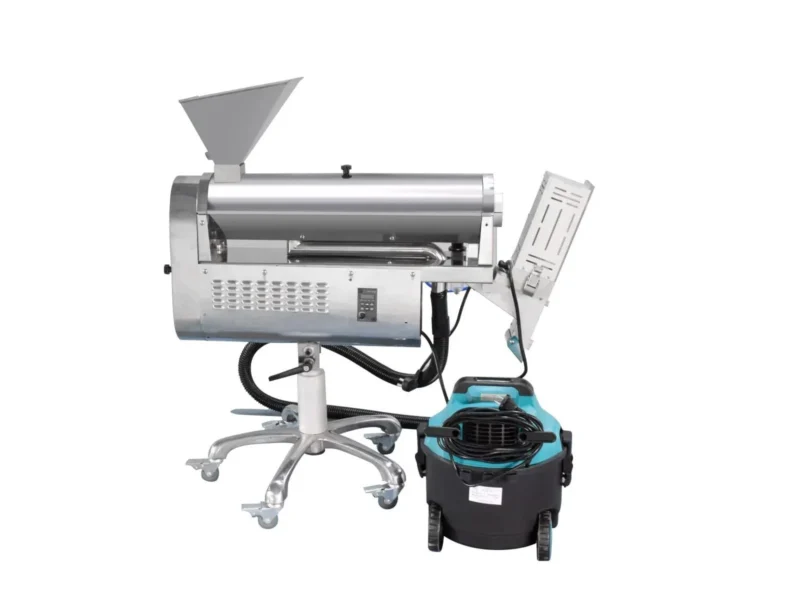
Before starting the capsule polisher machine, operators should confirm that the equipment is clean, correctly assembled, and ready for production. The main capsule polisher parts, including the feeding section, polishing brush, chamber, discharge outlet, and dust-removal system, should be checked.
The operator should also confirm:
- The machine is clean and free from previous product residue.
- The polishing and conveying components are correctly installed.
- The dust-removal system is properly connected.
- Electrical and safety devices are in normal condition.
- Upstream and downstream equipment are ready for operation.
FDA CGMP requirements emphasize that pharmaceutical manufacturing equipment should be suitable for its intended use and appropriately maintained and cleaned.
Capsule Polisher Machine: Startup and Feeding
After completing the inspection, start the capsule polisher machine according to the established operating procedure. The main power, drive system, and dust-removal system should be activated as required by the equipment design.
Before feeding capsules, confirm that the machine is running smoothly. Operators should check for abnormal noise, vibration, or other unexpected conditions.
The basic startup sequence is:
- Check equipment cleanliness and assembly.
- Confirm the dust-removal connection.
- Switch on the main power.
- Start the polishing mechanism.
- Confirm stable operation.
- Begin feeding filled capsules at a controlled rate.
Stable feeding is important. Excessive feeding can cause capsule accumulation inside the polishing chamber, while an inconsistent feed rate may interrupt continuous operation.
Capsule Polisher Machine: Polishing and Monitoring
During normal operation, filled capsules move through the polishing chamber while the polishing mechanism removes loose powder from their outer surfaces. Depending on the design, the capsule polisher machine may use rotating brushes or other mechanical structures to support capsule movement and surface cleaning.
The dust-removal system works alongside the polishing mechanism by extracting particles released during processing.
Operators should monitor the capsule polisher machine throughout production. Particular attention should be given to:
- Capsule flow and accumulation
- Polishing mechanism operation
- Dust-removal performance
- Abnormal noise or vibration
- Powder buildup
- Smooth transfer to the next stage
If the machine is integrated with a capsule polisher and sorter, operators should also follow the specific requirements for the sorting and rejection functions.
Capsule Polisher Machine: Discharge and Shutdown
After polishing, capsules move toward the discharge section. The outlet should allow capsules to leave the capsule polisher machine smoothly and continue to the next production stage, such as inspection, sorting, conveying, or packaging. In a vertical capsule polishing machine, the discharge design also helps guide polished capsules efficiently toward downstream equipment.
When production is finished, stop capsule feeding first and allow the remaining capsules inside the machine to exit. Then shut down the equipment according to the established procedure.
After shutdown, the relevant capsule polisher parts should be inspected and cleaned according to the applicable cleaning SOP. Proper cleaning and maintenance are important for preventing residue buildup and supporting reliable equipment operation.
Capsule Polisher Machine: Basic Operation Steps
Capsule Polisher Machine: Final Overview
The basic operation of a capsule polisher machine follows a simple process: check the equipment, start the system, feed capsules, perform polishing, monitor operation, discharge capsules, and complete shutdown and cleaning. For applications involving filled gelatin capsules, a gelatin capsule polisher follows the same basic operating sequence to support effective surface cleaning.
Following the correct operating sequence helps maintain stable capsule handling and supports consistent polishing results. For actual production, the machine-specific SOP and validated procedures should always take priority.
FAQ
What should be checked before starting?
Check cleanliness, capsule polisher parts, safety devices, electrical connections, and the dust-removal system.
How should capsules be fed?
Capsules should be introduced at a controlled and stable rate within the machine’s specified operating range.
When should the machine be cleaned?
Cleaning should follow the applicable SOP, including required cleaning after production or product changeover.