


A capsule polisher and sorter combines two important post-filling operations into one production unit. Instead of moving filled capsules from a separate polishing machine to a separate inspection or sorting machine, a capsule polisher and sorter can polish the capsule surface and remove predefined defective capsules within a connected process.
For pharmaceutical manufacturers, the value of a capsule polisher and sorter is not limited to saving floor space. The more important questions are how the integrated configuration affects equipment investment, labor requirements, production efficiency, material transfer, cleaning, validation, and future production expansion.
A conventional line may use a standalone capsule polisher followed by a separate capsule sorting polisher or inspection system. This configuration can provide flexibility because each machine can be selected and adjusted independently. However, it also introduces additional transfer points, controls, connections, and operating steps.
The practical choice therefore depends on production volume, capsule specifications, quality requirements, available space, automation level, and the manufacturer’s long-term production strategy.
.jpg)
What Is an Integrated System?
A capsule polisher and sorter is designed to combine capsule surface polishing and capsule defect removal in a coordinated system. The polishing section generally removes loose powder and improves capsule cleanliness, while the sorting section is designed to separate capsules that meet predefined rejection criteria.
The exact functions vary according to machine design. The term “sorter” should not automatically be interpreted as a complete vision-inspection system. Manufacturers should confirm which defects can actually be detected, how rejection is performed, and what operating conditions are required.
Main Functions
The polishing section may use brushes, conveying surfaces, air assistance, or other product-contact components depending on the machine configuration. The sorting section may address visibly defective capsules, damaged shells, improperly closed capsules, empty capsules, or other predefined defects.
Because capsule products can differ significantly in size, shell material, fill weight, and formulation, the actual performance of a capsule polisher and sorter should be confirmed using representative production samples rather than relying only on nominal specifications.
Main Process
A typical process can be summarized as:
- Filled capsules enter the feeding system.
- The capsules are conveyed through the polishing section.
- Loose powder and surface residues are removed.
- Capsules pass through the sorting or inspection section.
- Defective capsules are rejected.
- Accepted capsules continue toward downstream equipment.
This arrangement can reduce the number of separate material-handling stages. It also allows manufacturers to design a more continuous process between capsule filling and downstream packaging or inspection.
.jpg)
Capsule Polisher And Sorter: Integrated vs Separate Equipment
The main investment question is whether to purchase one integrated capsule polisher and sorter or two independent machines, such as a gelatin capsule polisher and a separate sorting unit.
A separate configuration normally requires a standalone polishing machine and an independent sorting or inspection machine. This provides modularity. If the manufacturer later changes the inspection requirement, the sorting equipment can potentially be upgraded without replacing the polishing machine.
An integrated capsule polisher and sorter, by comparison, places both operations within one coordinated system. The initial equipment package may simplify the production layout and reduce the number of independent interfaces.
The difference can be considered across several practical factors:
| Factor | Integrated System | Separate Equipment |
|---|---|---|
| Equipment scope | One integrated system | Two or more machines |
| Floor space | Generally lower | Generally higher |
| Material transfer | Fewer transfer stages | Additional transfer stage |
| Operator interaction | Potentially lower | Usually higher |
| Control | More centralized | Multiple controls |
| Flexibility | More integrated | More modular |
| Expansion | Depends on design | Individual units can be upgraded |
| Installation | One coordinated installation | Multiple installations |
These differences do not mean that an integrated system is always less expensive. The total investment should include equipment purchase, installation, utilities, controls, commissioning, operator training, maintenance, cleaning, and validation activities.
Capsule Polisher And Sorter: Investment Differences
Purchase price is only one part of the total cost of a capsule-processing system.
With separate equipment, manufacturers may need to purchase individual machines, conveyors, transfer components, electrical interfaces, control systems, and supporting structures. Installation also has to account for the physical connection between the polishing and sorting stages.
An integrated capsule polisher and sorter can reduce some of these requirements because the two functions are designed to operate as a connected unit. Depending on the configuration, fewer external conveyors and transfer mechanisms may be necessary.
However, the integrated machine can have a higher unit price than a basic standalone polisher. The correct comparison is therefore not “one machine versus two machine prices.” It is a comparison of the complete installed system.
Total Cost Factors
A useful total-cost evaluation should include:
- Equipment purchase and optional modules
- Installation and commissioning
- Electrical and utility connections
- Conveying and transfer components
- Operator requirements
- Cleaning and changeover time
- Preventive maintenance
- Validation and documentation
- Floor-space requirements
- Future expansion costs
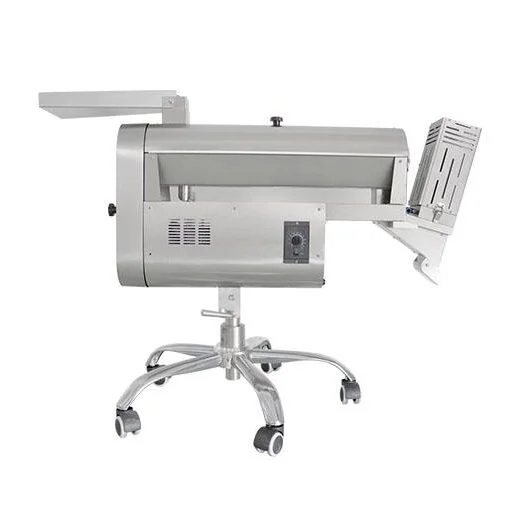
For a high-volume pharmaceutical facility, small differences in operating time with an Automatic Capsule Polishing Sorter Machine can become significant over hundreds of production batches. For a smaller facility, however, the flexibility of separate equipment may sometimes be more important than maximum integration.
Production Efficiency Benefits
The strongest argument for an integrated capsule polisher and sorter is often process efficiency.
When separate machines are used, capsules must move from the polishing stage to the sorting stage. This transfer may be automatic, but it still introduces another interface. Depending on the layout, operators may need to monitor conveyors, containers, transfer points, or intermediate accumulation areas.
An integrated capsule polisher and sorter can shorten this material path. Capsules can move directly from polishing toward sorting without requiring an independent intermediate transfer stage.
Capsule Polisher And Sorter: Handling Advantages
This can offer several operational advantages:
- Reduced manual handling
- Fewer intermediate collection points
- More continuous capsule flow
- Lower risk of handling-related disruption
- Simplified production-line layout
- Potentially shorter changeover activities
The efficiency benefit should not be measured only by the machine’s maximum capsule-per-minute specification. Actual output depends on capsule dimensions, product characteristics, machine settings, rejection rate, feeding stability, and downstream capacity.
If the sorting section has a lower practical capacity than the polishing section, the integrated system may still be limited by the slower operation. Therefore, manufacturers should evaluate the complete production flow rather than selecting equipment based only on the highest advertised speed.
Labor And Handling Efficiency
Labor requirements can also influence the economics of integration.
A separate polishing and sorting configuration may require additional operator attention, especially when intermediate containers or transfer systems are used. Operators may need to monitor material flow between machines and respond to blockages or interruptions at multiple points.
An integrated capsule polisher and sorter can centralize these operations. This does not necessarily eliminate operators, because pharmaceutical production still requires trained personnel for setup, monitoring, cleaning, inspection, documentation, and maintenance.
The advantage is that operator time can potentially be redirected from routine material handling toward higher-value production-control activities.
This is particularly relevant when manufacturers are moving toward more automated capsule-processing lines. Integration can reduce unnecessary manual interfaces between sequential operations.
Capsule Polisher And Sorter: Cleaning And GMP Considerations
Cleaning is a major consideration for any capsule-processing equipment.
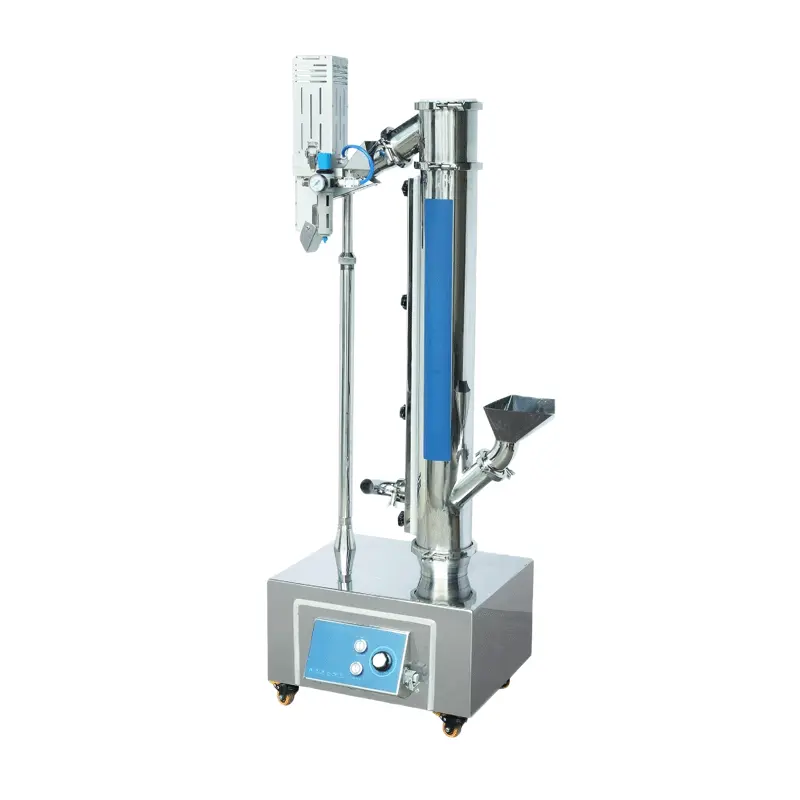
Powder can accumulate around brushes, conveying components, product-contact surfaces, collection areas, and difficult-to-access sections. A capsule polisher and sorter should therefore be designed so that relevant areas can be inspected, cleaned, and maintained effectively.
FDA guidance emphasizes that pharmaceutical manufacturing equipment must be cleaned and maintained at appropriate intervals to prevent contamination or other effects that could alter product quality.
For an integrated capsule polisher and sorter, cleaning assessment should consider the complete product-contact path, including components similar to those found in a vertical capsule polishing machine, rather than only the polishing section.
Cleaning Points
Important questions include:
- Which parts require routine disassembly?
- Can product-contact surfaces be visually inspected?
- Are brushes and conveying components easy to remove?
- Are there enclosed areas where powder can accumulate?
- How long does routine cleaning take?
- Can cleaning procedures be reproduced between batches?
Integration can reduce the number of external transfer interfaces, but it does not automatically make cleaning easier. A poorly designed integrated machine may contain more complex internal pathways. Manufacturers should therefore evaluate accessibility and cleaning procedures during equipment selection.
Validation And Quality Control
Integration also changes how qualification and validation activities should be planned.
When separate equipment is used, each machine can have its own qualification and operating documentation. The interface between machines must then be evaluated as part of the overall process.
With an integrated capsule polisher and sorter, the two functions are physically and operationally connected. This can simplify certain process interfaces, but the combined system still needs to demonstrate that it performs consistently within the intended operating range.
FDA process-validation guidance describes process validation as a lifecycle approach for establishing that a manufacturing process can consistently produce results meeting predetermined requirements.
Production Trials
For equipment selection, manufacturers should consider more than factory acceptance testing. Production trials should evaluate actual capsule flow, polishing performance, sorting accuracy, rejection behavior, cleaning procedures, and downstream compatibility.
Capsule Polisher And Sorter: When Separate Machines May Be Preferred
Despite the advantages of integration, separate equipment can remain practical for some production environments.
A manufacturer with multiple product lines may prefer modular equipment because the polishing and sorting functions can be configured independently. If production requirements change frequently, separate machines can provide greater flexibility for line rearrangement or future upgrades, especially when other equipment, such as a mixing machine, is also configured independently.
For example, a manufacturer may already own a high-capacity capsule polisher but later require a more advanced inspection system. Purchasing a separate sorting machine may be more economical than replacing an existing polishing system.
Separate equipment may also be useful when different production lines require different sorting technologies or capacities.
The decision should therefore consider existing assets as well as new equipment requirements.
Final Considerations
A capsule polisher and sorter can provide a practical solution for manufacturers seeking a more compact and continuous capsule-processing line. Its main advantages come from combining polishing and sorting, reducing intermediate handling, simplifying equipment interfaces, and potentially improving labor and floor-space efficiency.
However, separate equipment should not be dismissed simply because integration appears more efficient. The appropriate configuration depends on the manufacturer’s production scale, existing equipment, product portfolio, automation strategy, and quality-control requirements.
For a new pharmaceutical production line, the most useful comparison is the total installed and operating cost of the two configurations. For an existing line, compatibility with current equipment and future expansion may carry greater importance.
The final selection should be based on representative production trials, documented equipment capabilities, cleaning requirements, practical throughput, and the manufacturer’s validated production process.
In this context, the value of a capsule polisher and sorter is not simply that it combines two functions into one machine. Its real value is whether that integration produces a simpler, more efficient, and controllable manufacturing process without compromising capsule quality or regulatory expectations.
FAQ
What is a capsule polisher and sorter?
A capsule polisher and sorter combines capsule surface polishing with a sorting function in one integrated production system. The exact sorting capabilities depend on the machine configuration.
Is an integrated capsule polisher and sorter more efficient than separate machines?
It can reduce material-transfer steps, floor-space requirements, and routine handling. However, actual efficiency depends on machine capacity, capsule characteristics, cleaning requirements, and the complete production-line configuration.
How should manufacturers compare integrated and separate equipment?
Manufacturers should compare total installed cost, practical throughput, labor, cleaning time, changeover requirements, maintenance, floor space, validation needs, and future expansion rather than comparing purchase prices alone.