


Selecting a capsule polisher machine should begin with production scale rather than equipment appearance or maximum theoretical output. A machine suitable for laboratory trials may be inefficient for continuous commercial production, while an oversized system can create unnecessary capital costs for a small pharmaceutical project.
For capsule manufacturers, production scale affects more than capacity. Batch size also influences feeding stability, automation requirements, cleaning workload, operator involvement, equipment footprint, maintenance, and future expansion. A practical selection process should therefore match the capsule polisher machine to the actual stage of production.
FDA guidance does not provide a universal list of approved pharmaceutical manufacturing equipment. Instead, manufacturers are responsible for selecting equipment that satisfies their process requirements and applicable CGMP requirements. FDA also states that equipment should have appropriate design, size, and location for its intended use, cleaning, and maintenance.
This means that selecting a capsule polisher machine is ultimately a process and investment decision. The goal is to achieve sufficient polishing performance without paying for capacity, automation, or configuration that the current production plan cannot use effectively.
.jpg)
Capsule Polisher Machine Selection Starts With Production Scale
The first question is not simply how many capsules a machine can process. Manufacturers should determine how the equipment will be used within the complete production process.
A small-scale development project may operate intermittently and require frequent product changes. A pilot-scale project may need repeatable processing and more stable material handling. Commercial production, by comparison, normally places greater emphasis on continuous operation, production efficiency, cleaning procedures, maintenance planning, and integration with other equipment.
A useful evaluation can consider:
- Average batch size and expected annual production
- Number of production batches per day or week
- Capsule size and product characteristics
- Required polishing and sorting functions
- Operator involvement
- Available production space
- Cleaning and changeover requirements
- Expected future production growth
The appropriate capsule polisher machine should provide enough practical capacity for the intended process while remaining compatible with the manufacturer’s quality system and operating procedures.
Capsule Polisher Machine Options For Small-Batch And Development Production
Small-batch production is often associated with formulation development, process optimization, clinical-stage manufacturing, or limited commercial demand. At this stage, purchasing the largest available capsule polisher machine may not be financially sensible.
A smaller capsule polisher machine can be appropriate when production volume is limited and batches are relatively short. The focus should be on reliable capsule handling, easy cleaning, straightforward adjustment, and reasonable operator requirements.
For small-scale projects, manufacturers should pay particular attention to:
- Whether the equipment can handle the required capsule sizes.
- Whether the polishing process is stable at the expected feed rate.
- Whether product-contact components can be cleaned efficiently.
- Whether the equipment can be integrated into the existing production layout.
- Whether additional automation is genuinely necessary.
A compact configuration may reduce initial investment and simplify installation. However, the lowest purchase price should not automatically determine the decision. If the machine requires excessive manual intervention or creates repeated production bottlenecks, the apparent saving may disappear through labor and operational inefficiency. Similar considerations apply when evaluating related equipment, such as an industrial pulverizer machine, where capacity, installation space, and operating requirements can also affect overall production efficiency.
FDA inspection guidance also directs attention to equipment design, capacity, construction, location, installation, cleaning, and suitability for manufacturing use.
Capsule Polisher Machine Requirements For Pilot And Medium-Scale Batches
Pilot and medium-scale production requires a different balance between investment and operational stability.
At this stage, the manufacturer may already have a defined formulation and established capsule specifications, while production frequency is increasing. The capsule polisher machine therefore needs to provide more consistent feeding and polishing than a basic development setup.
A pilot-scale capsule polisher machine should normally be evaluated for:
| Selection factor | Small-scale focus | Pilot-scale focus |
|---|---|---|
| Capacity | Current batch demand | Repeatable batch processing |
| Feeding | Simple and adjustable | More stable material flow |
| Automation | Basic controls | Greater process control |
| Cleaning | Easy manual access | Efficient changeover |
| Integration | Standalone operation | Connection with upstream/downstream equipment |
| Expansion | Limited | Future production flexibility |
A pilot system can also serve as an important bridge between development and commercial manufacturing. Equipment selected at this stage, including a gelatin capsule polisher, should therefore be evaluated against the expected production roadmap rather than only the immediate batch size.
WHO GMP principles emphasize that pharmaceutical processes should be clearly defined, controlled, documented, and supported by suitable personnel, premises, and equipment.
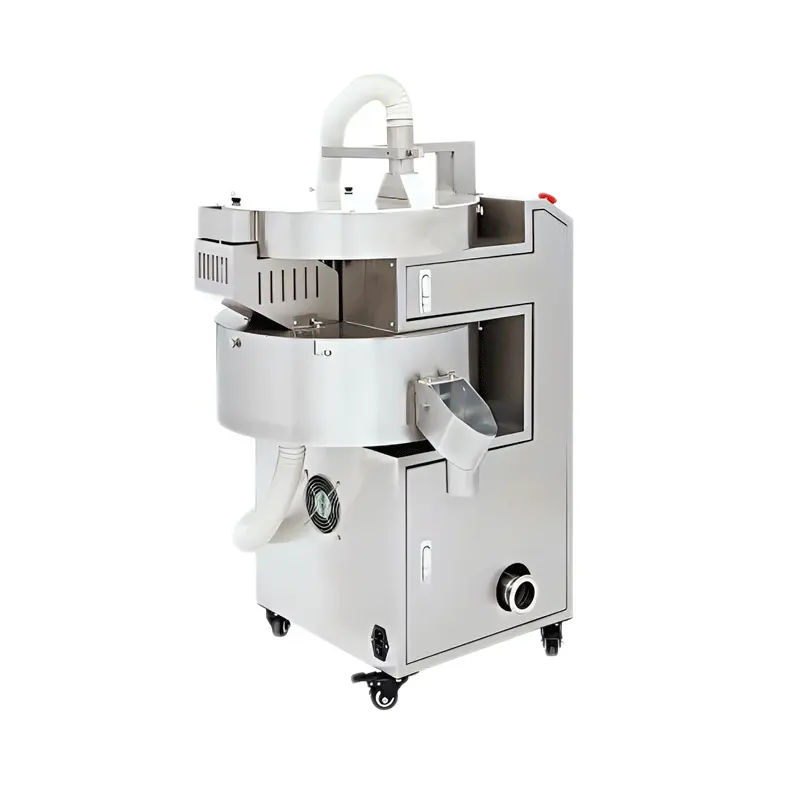
Capsule Polisher Machine Selection For Large-Scale Commercial Production
Large-scale manufacturing changes the economic calculation. When capsule production operates for long periods or across multiple shifts, polishing capacity and equipment reliability become much more important.
A commercial capsule polisher machine should be capable of supporting the required production flow without becoming a restriction between capsule filling and downstream inspection or packaging.
At this stage, manufacturers should examine:
- Continuous operating capability
- Feeding consistency
- Polishing performance over extended operation
- Discharge stability
- Integration with other production equipment
- Cleaning and changeover procedures
- Preventive maintenance requirements
- Availability of critical spare parts
- Operator and maintenance access
A machine with insufficient capacity can create a bottleneck even when the capsule filling process has adequate output. Conversely, selecting substantially more capacity than the production plan requires can increase capital expenditure, footprint, utility requirements, and maintenance responsibilities without delivering equivalent value.
The right capsule polisher machine is therefore not necessarily the machine with the highest nominal output. It is the machine whose practical operating range fits the production process.
Capsule Polisher Machine Capacity Should Match Batch Requirements
Capacity is one of the most important factors when matching equipment to production scale. However, theoretical capacity should not be treated as actual production output.
Real production conditions can reduce output because of capsule characteristics, powder residue, feeding behavior, machine adjustments, cleaning interruptions, changeovers, inspection requirements, and other process controls.
For example, a capsule polisher machine operating at a nominal high speed may not maintain that speed throughout every production batch. Stable production is often more valuable than temporarily reaching a higher maximum rate.
Manufacturers should therefore distinguish between:
- Maximum or nominal machine capacity
- Expected practical operating capacity
- Required batch throughput
- Future capacity requirements
- Capacity lost during cleaning and changeover
This distinction is particularly important when comparing machines for different production scales. A realistic capacity calculation can prevent both under-sizing and unnecessary over-investment.
Capsule Polisher Machine Investment Should Follow Project Stage
Equipment investment should develop with the production project. A manufacturer moving from formulation development to commercial production may not need the same equipment configuration at every stage.
For small projects, the investment priority may be flexibility and ease of operation. During pilot production, repeatability and process control become more important. For commercial manufacturing, automation, throughput, maintenance efficiency, and equipment integration may receive greater attention. A vertical capsule polishing machine can also be considered when a compact equipment layout and efficient capsule handling are important for the production area.
A staged investment strategy can help control project costs:
- Define the current production requirement.
- Estimate realistic future demand.
- Identify the minimum technical requirements.
- Compare suitable capsule polisher machine configurations.
- Calculate total ownership costs, not only purchase price.
- Confirm cleaning, maintenance, and qualification requirements.
- Select equipment with appropriate room for future growth.
This approach reduces the risk of purchasing equipment based solely on maximum capacity or the lowest quotation.
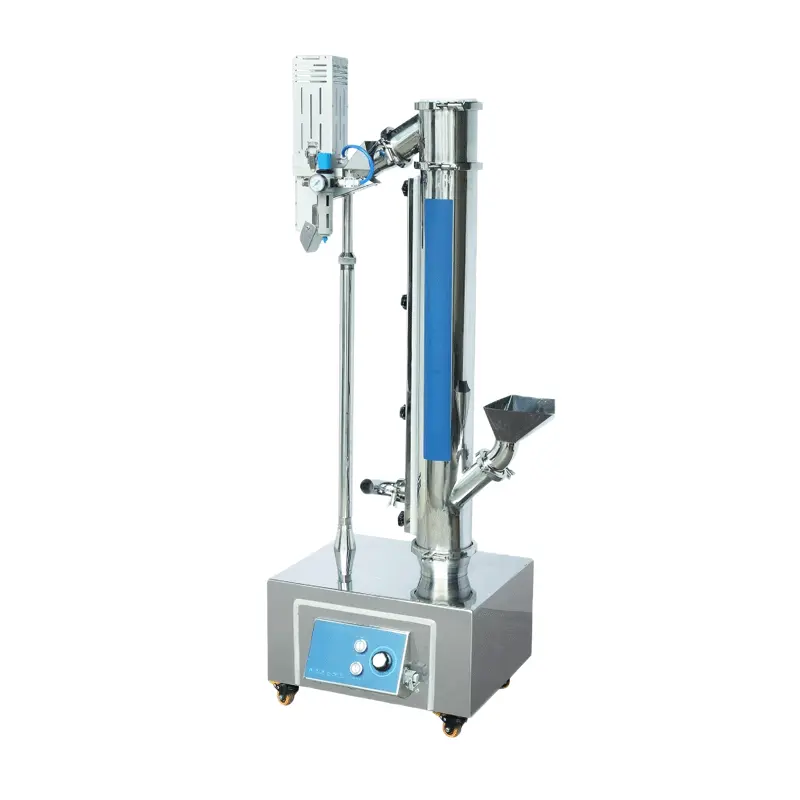
Capsule Polisher Machine Automation Should Match Production Volume
Automation can reduce operator involvement, but higher automation does not automatically mean better value for every production scale.
For small batches, frequent product changes may make a highly automated capsule polisher machine unnecessarily complex. Operators may need frequent access for inspection, cleaning, or adjustment, reducing the practical benefit of additional automation.
For medium and large production, automation can become more valuable because stable feeding, monitoring, alarms, and equipment integration can reduce repetitive manual tasks.
The selection should consider the actual production environment. Relevant automation features may include:
- Automatic feeding
- Speed adjustment
- Sensor-based monitoring
- Alarm functions
- Automatic discharge
- Interconnection with upstream and downstream equipment
- Centralized control
The objective is to match automation with production requirements rather than selecting features simply because they are available.
Capsule Polisher Machine Cleaning And GMP Considerations
Production scale also affects cleaning workload. A machine operating multiple batches or products may require more frequent cleaning and changeover than equipment used for limited development work.
FDA CGMP requirements state that equipment must be cleaned, maintained, and, when appropriate, sanitized at suitable intervals to prevent contamination or malfunctions that could affect product quality. FDA also notes that cleaning procedures should be documented and, where applicable, validated.
WHO GMP guidance similarly states that production equipment should be cleaned on a scheduled basis and that product-contact equipment should not adversely affect product quality. Defective equipment should be removed from production or clearly identified to prevent use.
For a capsule polisher machine, manufacturers should therefore evaluate the accessibility of product-contact areas, ease of dismantling where required, powder accumulation points, cleaning procedures, and maintenance access.
A machine that is inexpensive to purchase but difficult to clean may create higher long-term operating costs.
Capsule Polisher Machine Integration With A Capsule Sorting Polisher
Some production lines require polishing and sorting functions to be coordinated. In such cases, a capsule sorting polisher or an automatic capsule polishing sorter machine may provide a combined approach to surface cleaning and capsule quality handling.
The decision depends on the production process. If sorting is already performed by separate inspection equipment, a dedicated capsule polisher machine may be sufficient. If the process benefits from integrated handling, a combined capsule polisher and sorter may reduce transfers between equipment.
The selection should consider:
- Required polishing function
- Sorting requirements
- Rejected-capsule handling
- Inspection strategy
- Production speed
- Cleaning requirements
- Downstream equipment connection
There is no universal configuration that suits every pharmaceutical factory. FDA explicitly states that manufacturers have flexibility to select equipment that best satisfies their particular needs, provided applicable CGMP requirements are met.
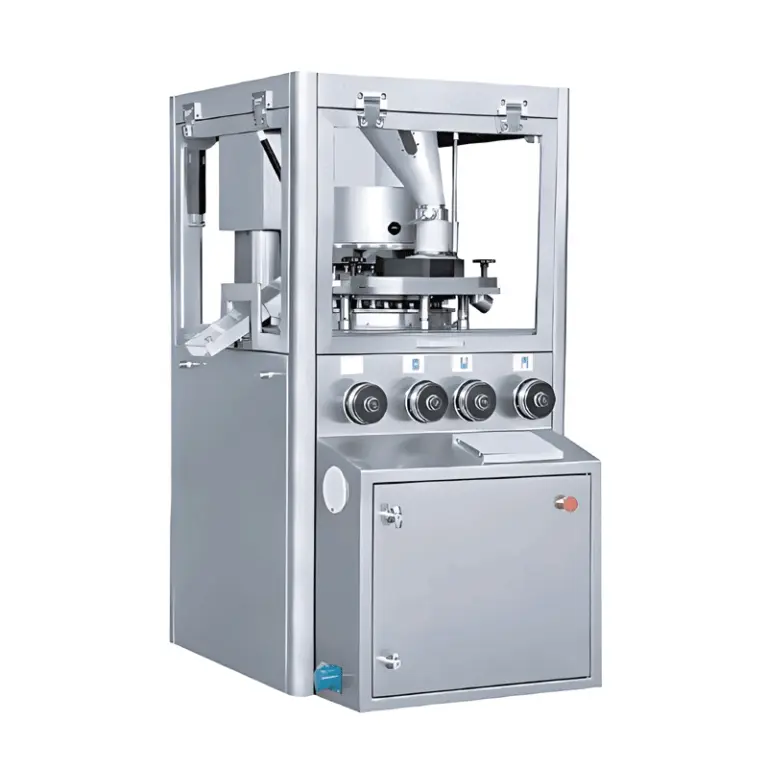
Capsule Polisher Machine Selection Checklist By Production Scale
A practical selection framework can be summarized as follows.
Capsule Polisher Machine For Small-Scale Production
Prioritize suitable working capacity, simple adjustment, easy cleaning, flexible operation, and controlled initial investment. Avoid paying for automation or throughput that the project cannot realistically use.
Capsule Polisher Machine For Pilot-Scale Production
Focus on repeatability, stable feeding, process control, changeover efficiency, and compatibility with future production requirements. Pilot equipment should provide useful experience for later commercial scale-up.
Capsule Polisher Machine For Commercial Production
Focus on practical throughput, continuous operation, automation, maintenance accessibility, equipment integration, cleaning strategy, spare parts, and long-term reliability.
WHO GMP principles require qualification and validation activities to be identified according to the critical aspects of a particular operation, with appropriate documentation.
Capsule Polisher Machine Final Selection Strategy
The best capsule polisher machine for a pharmaceutical project depends on where the project is today and where it is expected to go.
Small-batch manufacturers generally benefit from avoiding unnecessary capacity and complexity. Pilot-scale projects need a balance between flexibility and repeatable production. Large-scale manufacturers require equipment that can support stable throughput, integration, maintenance, and long-term production planning.
The key is to evaluate the complete process rather than selecting equipment by a single specification. Capacity, capsule characteristics, feeding, polishing, sorting, cleaning, maintenance, automation, footprint, and future expansion should all be considered together.
A well-matched capsule polisher machine can control initial investment while supporting reliable production. More importantly, equipment selection should remain consistent with the manufacturer’s documented process requirements, quality system, cleaning procedures, and applicable GMP expectations. FDA and WHO guidance both place responsibility on manufacturers to use equipment appropriate for its intended purpose and to maintain suitable controls around equipment, cleaning, and production.
FAQ
What capsule polisher machine is suitable for small-batch production?
A compact machine with appropriate capacity, simple adjustment, and easy cleaning is generally more practical when production volume is limited.
Should a capsule polisher machine be oversized for future expansion?
Some capacity margin can support growth, but excessive capacity may increase investment and operating costs without providing immediate value.
Is a capsule sorting polisher necessary for every production line?
No. The need depends on whether polishing and sorting are required together and how the downstream inspection and packaging process is configured.