


A capsule polisher machine is an important piece of equipment in capsule manufacturing. It is normally installed after capsule filling to remove loose powder and residue from capsule surfaces before inspection, sorting, or packaging.
For pharmaceutical factories, purchasing this equipment is not simply a matter of comparing machine prices. A suitable capsule polisher machine needs to match production capacity, capsule specifications, material characteristics, cleaning requirements, GMP expectations, and the factory’s maintenance system.
Buyers also need to consider whether the equipment should operate as a standalone polishing unit or as part of a larger capsule handling line. An automatic capsule polisher may offer higher automation, while a capsule polisher and sorter can combine polishing and capsule quality separation in one process.
This guide provides a practical framework for evaluating a capsule polisher machine before purchase, helping production, engineering, QA, and purchasing teams focus on the technical factors that matter most.

How to Define Capsule Polisher Machine Requirements Before Purchase
The first step is to define the actual production requirement. Buying a machine according to a supplier’s maximum advertised output without checking the factory’s real operating conditions can lead to an unsuitable configuration.
Start with the capsule types, production volume, operating hours, and upstream capsule filling capacity.
A useful purchasing assessment should include:
- Capsule size range
- Expected production output
- Daily or batch production requirements
- Number of production shifts
- Capsule filling equipment capacity
- Available installation space
- Required automation level
- Cleaning and changeover frequency
- Downstream inspection or packaging requirements
The capsule polisher machine should normally be compatible with the production capacity of the surrounding process.
If the polishing capacity is significantly lower than the output of the capsule filling stage, it may become a bottleneck. Similar capacity planning is also important when coordinating equipment such as a freeze dryer within the overall production process. If the polishing machine has substantially more capacity than required, the additional investment may not provide practical value.
Capsule Polisher Machine Capacity and Actual Production
Capacity should be evaluated using realistic operating conditions rather than a theoretical maximum.
Important questions for suppliers include:
- What is the rated output under the specified capsule size?
- Is the stated capacity continuous or theoretical?
- What capsule characteristics were used for the capacity test?
- Does the output change with different capsule sizes?
- What operating speed is recommended for stable polishing?
- What percentage of the nominal capacity is expected during normal production?
The final selection should be based on verified production requirements and the complete process line rather than one output number.
Which Capsule Polisher Machine Design Features Matter Most
The internal design of a capsule polisher machine directly affects capsule handling, cleaning, maintenance, and long-term operation.
The main structure may include a feeding section, polishing chamber, brush or polishing element, drive system, conveying path, discharge section, protective covers, and control system.
The equipment should allow capsules to move smoothly through the polishing area without excessive accumulation or unnecessary mechanical stress.
A well-designed machine should also make routine inspection and cleaning practical. FDA CGMP requirements state that manufacturing equipment should be appropriately designed, adequately sized, and suitably located to facilitate intended operations as well as cleaning and maintenance.
Capsule Polisher Machine Feeding and Discharge Design
The feeding system should provide stable capsule movement into the polishing area.
Poor feeding can result in capsule accumulation, irregular polishing, or unstable production. For a gelatin capsule polisher, stable feeding is particularly important to maintain consistent capsule movement through the polishing area. The discharge section should also allow capsules to leave the machine smoothly and connect effectively with downstream equipment.
During supplier evaluation, buyers should therefore examine both the inlet and outlet instead of focusing only on the polishing mechanism.
A practical factory test should confirm:
- Stable capsule feeding
- No excessive accumulation
- Smooth capsule discharge
- Suitable connection with upstream and downstream equipment
- Easy access for cleaning
- Minimal areas where powder can collect
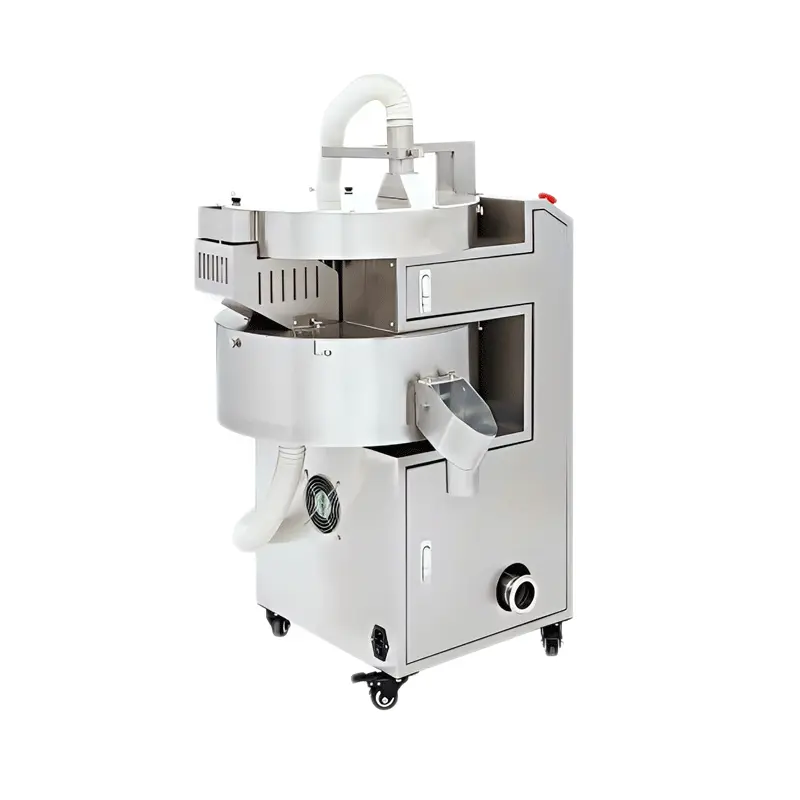
How to Evaluate Capsule Polisher Machine Materials for GMP Production
Material selection is particularly important for pharmaceutical equipment because product-contact surfaces must not adversely affect product quality.
FDA regulations require equipment surfaces that contact components, in-process materials, or drug products to be constructed so they do not react with, add to, or absorb materials in a way that alters the drug product beyond established requirements.
For this reason, buyers should ask suppliers to identify the materials used in product-contact components and provide appropriate documentation where required.
Common considerations include:
| Evaluation Area | What Buyers Should Check | Why It Matters |
|---|---|---|
| Product-contact material | Material grade and suitability | Supports product protection |
| Surface finish | Smoothness and cleanability | Helps reduce residue accumulation |
| Internal structure | Accessible and hygienic design | Simplifies cleaning |
| Seals and gaskets | Material compatibility | Helps prevent contamination |
| Brush or polishing element | Product suitability and durability | Directly affects polishing |
| External structure | Corrosion resistance and durability | Supports long-term use |
| Documentation | Material certificates where applicable | Supports quality records |
What GMP Requirements Should a Capsule Polisher Machine Meet
GMP should be considered before purchasing the equipment rather than after installation.
GMP covers much more than the machine’s external appearance. It includes equipment design, cleaning, maintenance, documentation, operating procedures, personnel practices, and contamination control.
WHO defines GMP as a quality-assurance system designed to ensure pharmaceutical products are consistently produced and controlled according to appropriate quality standards.
For a capsule polisher machine, buyers should pay particular attention to:
- Product-contact material suitability
- Cleaning accessibility
- Equipment identification
- Maintenance requirements
- Cleaning procedures
- Cross-contamination controls
- Equipment documentation
- Operating procedures
- Maintenance records
- Changeover requirements
FDA guidance also states that equipment should be constructed and located to facilitate cleaning and maintenance and should not adversely affect the identity, strength, quality, or purity of the drug product.
Capsule Polisher Machine Cleaning and Changeover
Cleaning is especially important for factories producing multiple capsule products.
Powder can accumulate around the polishing chamber, brushes, conveying paths, joints, and discharge areas. If these locations are difficult to access, routine cleaning can become slower and less reliable.
FDA CGMP guidance requires equipment to be cleaned and maintained at appropriate intervals to prevent contamination or malfunctions that could affect product quality. For multiproduct equipment, cleaning procedures and, where appropriate, cleaning validation should demonstrate effective removal of residues.
Before purchasing, ask the supplier:
- Which parts can be removed without special tools?
- How long does routine cleaning normally take?
- Can product-contact parts be inspected visually?
- Are cleaning procedures provided?
- Which components require special cleaning methods?
- Is the equipment suitable for campaign or multiproduct operation?
How to Compare Capsule Polisher Machine Automation Levels
Automation requirements depend on factory scale and the overall production line.
A basic capsule polisher machine may require more manual intervention for feeding, inspection, adjustment, or discharge. An automatic capsule polisher can reduce operator involvement by integrating automated feeding, control, monitoring, or connections with other equipment. A vertical capsule polishing machine can also support a more streamlined layout where space efficiency and continuous capsule handling are important.
For factories that require both surface polishing and capsule quality separation, a capsule polisher and sorter may provide a combined process.
However, automation should be evaluated according to actual production requirements. More automation does not automatically mean a better solution if the factory does not need the additional functions.
Important automation features may include:
- Automatic feeding
- Speed adjustment
- Monitoring functions
- Alarm systems
- Safety interlocks
- Production-line integration
- Automatic rejection or sorting, where applicable
- Easy parameter adjustment
The key is to determine which functions reduce manual work or improve process control without creating unnecessary complexity.
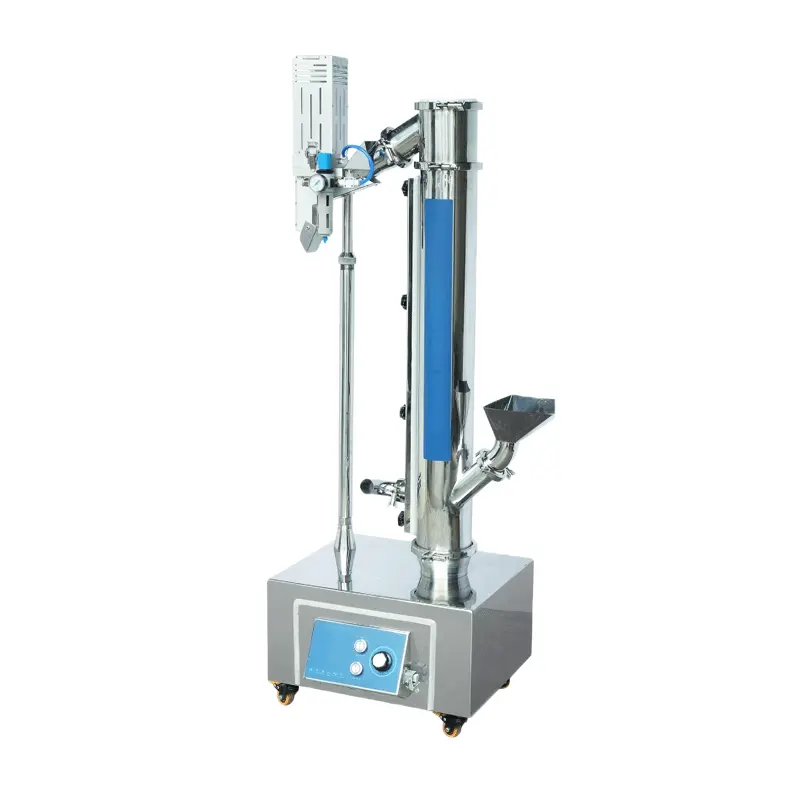
How to Evaluate Capsule Polisher Machine Maintenance and Spare Parts
A machine should be evaluated not only by how it performs when new but also by how easily it can be maintained after years of operation.
Certain capsule polisher parts are more likely to require inspection or replacement because they are exposed to movement, friction, cleaning, or direct product contact.
Potential wear components may include:
- Polishing brushes or polishing elements
- Bearings
- Seals and gaskets
- Flexible connections
- Transmission components
- Certain product-contact guides
- Other manufacturer-specified wear parts
The supplier should provide a clear spare-parts list and identify recommended replacement intervals where applicable.
Final Selection Criteria for a Capsule Polisher Machine
The right capsule polisher machine should fit the complete manufacturing process rather than operate as an isolated piece of equipment.
Before final approval, confirm that the selected equipment:
- Matches the required production capacity
- Handles the intended capsule size range
- Provides stable capsule feeding and discharge
- Uses suitable product-contact materials
- Supports the factory’s cleaning procedures
- Fits applicable GMP expectations
- Provides accessible maintenance points
- Has clearly identified spare parts
- Comes with appropriate technical documentation
- Includes suitable after-sales support
FDA notes that there is no universal FDA-approved list of manufacturing equipment. Instead, manufacturers are responsible for selecting equipment that satisfies their particular process needs and applicable CGMP requirements.
This makes the purchasing process a technical evaluation rather than a simple equipment comparison.
For pharmaceutical factories, the best purchasing decision begins with a clear understanding of production requirements, product characteristics, cleaning procedures, maintenance capability, and quality-system expectations. These considerations should also align with upstream equipment, such as a capsule filling machine, to support a consistent overall production process. A capsule polisher machine should then be selected according to how well it fits those requirements over its entire service life.
FAQ
What capacity should a capsule polisher machine have?
The required capacity should normally match the output of the upstream capsule filling process while allowing a practical operating margin. Actual capacity should be verified under relevant capsule and operating conditions.
What material should be used for a capsule polisher machine?
Product-contact materials should be suitable for pharmaceutical processing and should not adversely affect product quality. The specific material grade and surface condition should be confirmed with the supplier and quality team.
What should be included with a capsule polisher machine purchase?
Important items include technical documentation, operating and maintenance instructions, spare-parts information, cleaning guidance, commissioning support, operator training, and clearly defined after-sales service.