


An automatic capsule polisher is an important piece of equipment in modern capsule manufacturing lines. After capsule filling, capsules may carry powder residue, loose particles, or small amounts of material on their outer surfaces. The automatic capsule polisher removes these residues while continuously conveying capsules toward the next production stage.
For pharmaceutical manufacturers, selecting an automatic capsule polisher is not simply a matter of choosing the highest processing speed. Machine structure, capsule handling, polishing performance, material-contact surfaces, cleaning design, capacity, operating stability, and GMP-related requirements should all be considered.
This guide explains the main specifications of an automatic capsule polisher, discusses typical capacity considerations, and outlines important GMP compliance points for large-scale production.
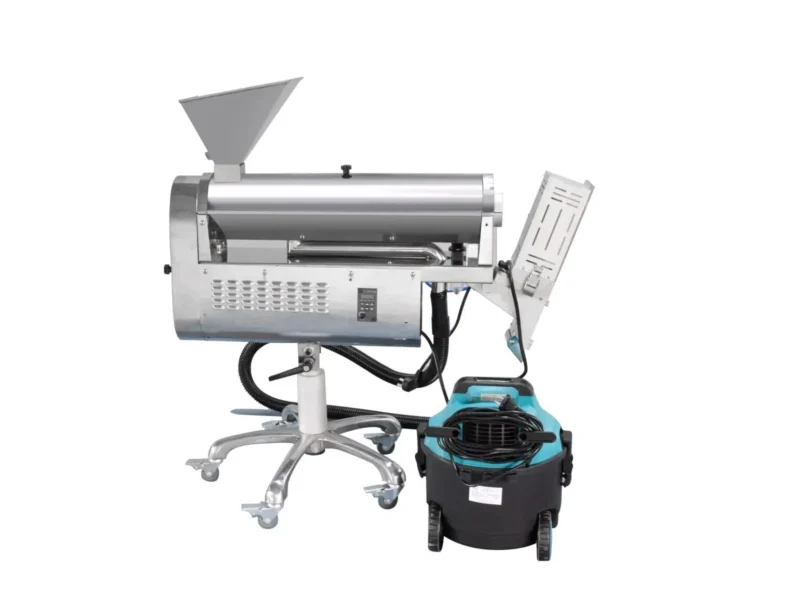
Automatic Capsule Polisher: Main Working Principle
An automatic capsule polisher normally operates through continuous capsule conveying, brushing or polishing, separation of loose powder, and discharge. Capsules enter the machine from the feeding section and move through the polishing area under controlled mechanical action.
The polishing process should remove residual powder without damaging the capsule shell. The exact mechanism varies according to equipment design, capsule type, production speed, and polishing requirements.
Main Components of an Automatic Capsule Polisher
A complete automatic capsule polisher may include:
- Capsule inlet and feeding section
- Capsule conveying mechanism
- Polishing brushes or contact components
- Powder collection or suction system
- Capsule outlet
- Inspection or separation functions
- Speed-control system
- Safety protection and control interface
Some production lines combine polishing and capsule sorting in the same equipment. In this configuration, the capsule polisher and sorter can help remove defective capsules while also cleaning the external surface of acceptable capsules.
The automatic capsule polisher is normally installed after capsule filling and before subsequent inspection, dedusting, metal detection, or packaging processes.
Automatic Capsule Polisher: Key Technical Specifications
Technical specifications should be evaluated according to the actual capsule production process. There is no single specification suitable for every pharmaceutical application.
Important parameters commonly include processing capacity, compatible capsule sizes, machine dimensions, power requirements, contact-material construction, speed adjustment, and cleaning configuration.
| Specification | What to Evaluate |
|---|---|
| Capsule compatibility | Applicable capsule sizes and shell types |
| Capacity | Expected capsules per hour under actual conditions |
| Polishing method | Brush, contact, conveying, or combined design |
| Speed control | Whether operating speed can be adjusted |
| Contact materials | Suitability for pharmaceutical production |
| Powder removal | Collection and extraction performance |
| Cleaning | Accessibility and ease of disassembly |
| Control system | Monitoring, adjustment, and safety functions |
| Installation | Space, connection, and production-line requirements |
An automatic capsule polisher should be selected based on the complete production process rather than a single maximum specification.
For example, a machine rated for high output may not provide the expected production efficiency if the upstream capsule filling machine operates at a lower rate. Similarly, excessive polishing speed may not be appropriate for a sensitive capsule formulation.
Automatic Capsule Polisher: Capacity and Production Range
Capacity is one of the most important considerations for manufacturers planning commercial capsule production.
The actual output of an automatic capsule polisher depends on several factors, including capsule size, filling speed, capsule condition, powder characteristics, equipment configuration, and operating speed. Therefore, suppliers should provide capacity data under clearly defined test conditions rather than relying only on a nominal maximum value.

How to Evaluate Automatic Capsule Polisher Capacity
For large-scale production, the following calculation approach is useful:
- Determine the actual output of the capsule filling process.
- Identify the required polishing capacity with an appropriate operating margin.
- Compare continuous capacity rather than short-term peak capacity.
- Confirm whether the polishing equipment can match downstream inspection and packaging rates.
- Conduct trials using representative capsules and formulation materials.
A practical production line should maintain a reasonable balance between the capsule filling machine, automatic capsule polisher, inspection equipment, and packaging system.
Automatic Capsule Polisher: Capsule Handling Performance
Consistent capsule handling is essential for high-speed operation. An automatic capsule polisher must transport capsules smoothly while minimizing mechanical impact.
Capsule shells can be sensitive to excessive mechanical force, particularly when formulation, shell material, environmental conditions, or capsule dimensions create additional handling challenges.
A well-designed automatic capsule polisher should therefore provide controlled conveying and polishing rather than relying on excessive mechanical pressure.
Key Capsule Handling Factors
Manufacturers should evaluate:
- Capsule transfer stability
- Surface contact conditions
- Brush or polishing-component design
- Capsule orientation and movement
- Risk of shell damage
- Powder accumulation
- Discharge consistency
The capsule polisher machine should also maintain stable performance when production conditions change within the qualified operating range.
Automatic Capsule Polisher: Polishing and Sorting Functions
In many production environments, polishing and sorting are closely related processes. After filling, manufacturers may need to remove loose powder and identify capsules that do not meet defined physical requirements.
A capsule polisher and sorter can combine these functions into one processing stage, depending on the equipment design.
Sorting Functions in Capsule Production
Typical sorting functions may address visibly defective capsules, damaged shells, empty capsules, improperly closed capsules, or other predefined defects.
The exact inspection capability depends on the machine configuration and should not be assumed simply from the term “sorter.” For applications involving gelatin shells, a gelatin capsule polisher should also provide suitable capsule handling to minimize surface damage during polishing and sorting.
An automatic capsule polisher with integrated sorting can offer advantages in production-line layout because fewer separate handling stages may be required.
However, manufacturers should verify the actual detection method, rejection accuracy, acceptable operating speed, and validation strategy before using integrated sorting as a critical quality-control step.
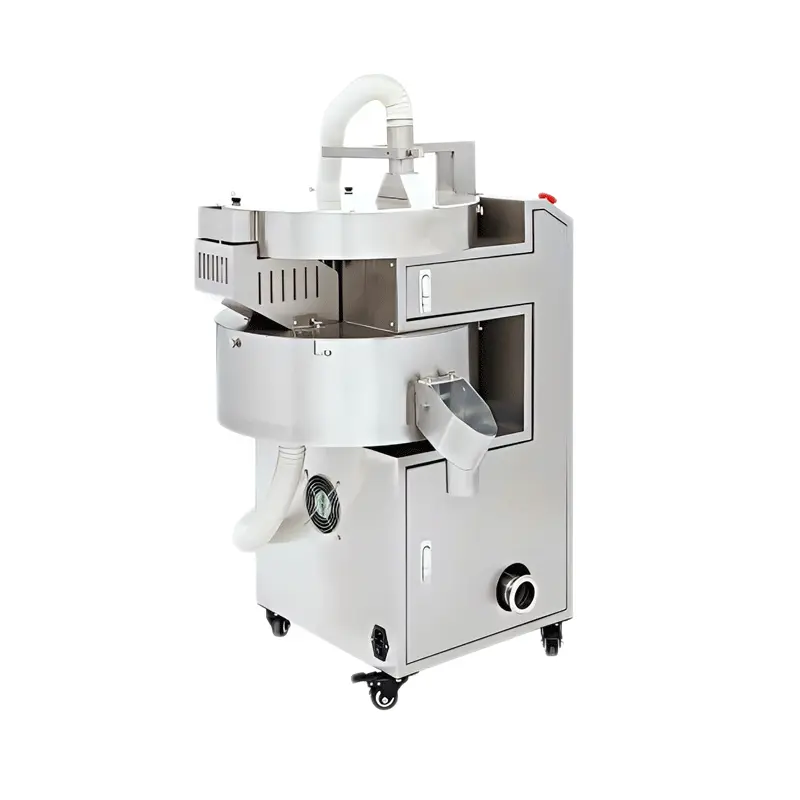
Automatic Capsule Polisher: GMP Material and Hygienic Design
GMP compliance is not achieved simply by purchasing equipment described as “GMP compliant.” The equipment must be appropriate for its intended use, operated within qualified conditions, properly cleaned, maintained, and incorporated into the manufacturer’s quality system.
For an automatic capsule polisher, manufacturers should examine:
- Product-contact material suitability
- Surface finish and accessibility
- Cleaning and disassembly procedures
- Powder accumulation areas
- Lubrication controls
- Equipment identification
- Maintenance access
- Protection against contamination
The European GMP framework includes requirements concerning equipment qualification and validation. A risk-based approach should be used to identify the qualification and validation work necessary for equipment and processes.
Automatic Capsule Polisher: Cleaning and Validation
Cleaning is a major consideration when selecting an automatic capsule polisher for pharmaceutical manufacturing.
Powder residue can accumulate around brushes, conveying components, product-contact surfaces, collection areas, and difficult-to-access sections. Similar cleaning considerations also apply to equipment such as a tablet press, so the equipment design should allow operators to inspect and clean relevant areas effectively.
Automatic Capsule Polisher Cleaning Process
A practical cleaning strategy should address:
- Equipment shutdown and isolation
- Removal of residual capsules and powder
- Disassembly of removable components where required
- Cleaning of product-contact surfaces
- Inspection of difficult-to-clean areas
- Reassembly and equipment-release procedures
For multiproduct manufacturing, cleaning requirements become particularly important because residues from one product should not create unacceptable carryover into another product.
Cleaning procedures should reflect the actual equipment, materials, products, and manufacturing conditions.
Automatic Capsule Polisher: Qualification and GMP Documentation
Qualification provides documented evidence that equipment is suitable for its intended application and operates as expected.
For pharmaceutical production, qualification activities may include design qualification, installation qualification, operational qualification, and performance qualification, depending on the equipment and risk assessment.
Key GMP Documentation
An automatic capsule polisher may require documentation covering:
- Equipment specifications
- Materials of construction
- Installation requirements
- Operating ranges
- Safety functions
- Cleaning procedures
- Maintenance requirements
- Qualification records
- Operating and cleaning SOPs
The specific documentation package for a vertical capsule polishing machine should be established according to applicable regulations, the manufacturer’s quality system, and the intended use of the equipment.
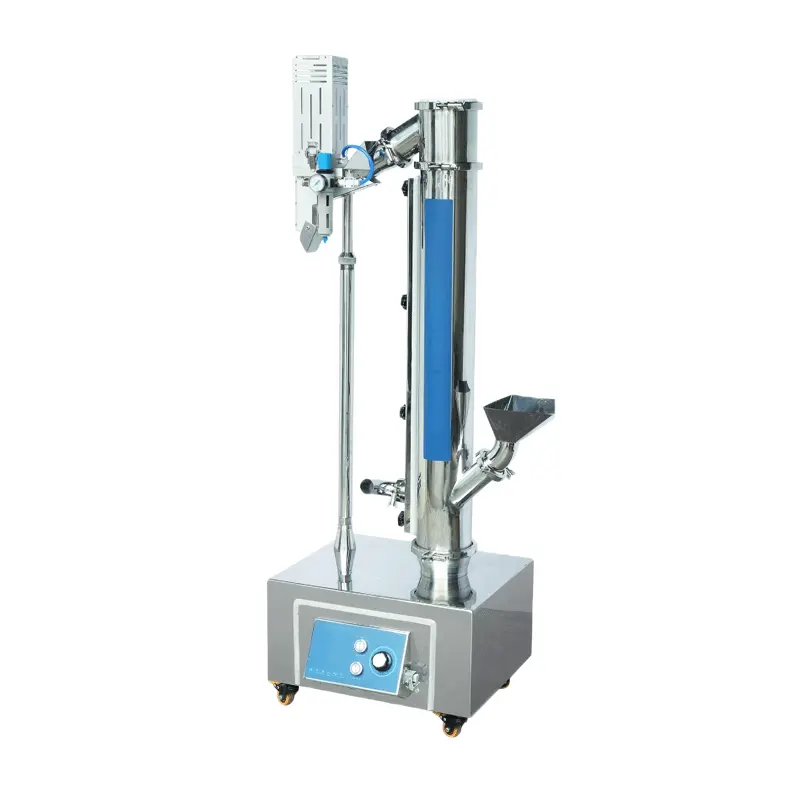
Automatic Capsule Polisher: Production-Line Integration
For large-scale capsule manufacturing, an automatic capsule polisher should be considered as part of the complete production line.
A typical process may include:
Capsule filling → automatic capsule polisher → capsule sorting or inspection → metal detection → packaging
The exact sequence depends on the manufacturing process.
Integration Considerations
Integration should consider product transfer height, conveyor speed, equipment communication, material flow, dust control, and emergency-stop functions.
A capsule polisher machine that operates efficiently as a standalone unit may still require additional engineering when installed in an automated production line.
Manufacturers should therefore evaluate the interface between upstream and downstream equipment, such as a freeze dryer, during installation planning and production trials.
Automatic Capsule Polisher: Common GMP Selection Checklist
Before purchasing an automatic capsule polisher for pharmaceutical production, manufacturers can review the following points:
- Are product-contact surfaces appropriate for the intended process?
- Can the machine be cleaned effectively?
- Are difficult-to-access areas identifiable?
- Is the operating range clearly defined?
- Can the equipment be qualified?
- Are cleaning and maintenance procedures available?
- Can the machine integrate with the existing production line?
- Does the capacity match the capsule filling process?
- Can the supplier provide appropriate technical documentation?
- Can performance be demonstrated using representative capsules?
GMP compliance ultimately depends on the complete manufacturing system, not on a machine label alone.
Final Selection Considerations
An automatic capsule polisher is a relatively simple-looking machine, but its role in a pharmaceutical production line requires careful technical evaluation.
The most important selection factors include capacity, capsule compatibility, polishing performance, powder removal, hygienic design, cleaning accessibility, automation, safety, documentation, and production-line integration.
For GMP-regulated manufacturing, manufacturers should pay particular attention to equipment qualification, cleaning procedures, contamination control, maintenance, and documented operating conditions.
The best equipment choice should therefore be based on actual production requirements rather than a single specification. By matching the automatic capsule polisher with the capsule filling rate, product characteristics, cleaning strategy, and downstream processes, manufacturers can build a more stable and scalable capsule production line.
FAQ
What Does an Automatic Capsule Polisher Do?
An automatic capsule polisher continuously removes loose powder and surface residues from filled capsules while conveying them toward the next production stage.
What Capacity Should an Automatic Capsule Polisher Have?
The required capacity should normally match or exceed the practical output of the capsule filling process, with an appropriate operating margin. Actual capacity depends on capsule size, formulation, machine configuration, and operating conditions.
Is an Automatic Capsule Polisher GMP Compliant?
GMP compliance depends on equipment design, materials, cleaning, qualification, operation, maintenance, and the manufacturer’s quality system. A machine should not be considered GMP compliant solely because a supplier uses that description.