


Before a capsule polisher and sorter leaves the factory, a structured factory acceptance check is an important step for pharmaceutical manufacturers. The purpose is not simply to confirm that the machine starts and runs. A proper acceptance process should verify polishing performance, sorting accuracy, mechanical condition, safety functions, cleaning accessibility, documentation, and the overall suitability of the equipment for the intended production process.
A capsule polisher and sorter typically performs more than one function. It may remove powder residue from filled capsules while simultaneously separating capsules according to defined quality or handling requirements. Because these functions are connected, a problem with feeding, polishing, sensing, or discharge can influence the final result.
Factory acceptance testing, commonly referred to as FAT, should therefore be based on agreed technical specifications and acceptance criteria. The final checklist should reflect the actual machine configuration, product requirements, site expectations, and applicable quality-system procedures.
FDA CGMP requirements do not provide a universal equipment acceptance checklist. Instead, manufacturers are responsible for ensuring that equipment is suitable for its intended use and can be appropriately cleaned and maintained. FDA guidance also emphasizes equipment design, construction, installation, and maintenance as relevant considerations for pharmaceutical manufacturing.
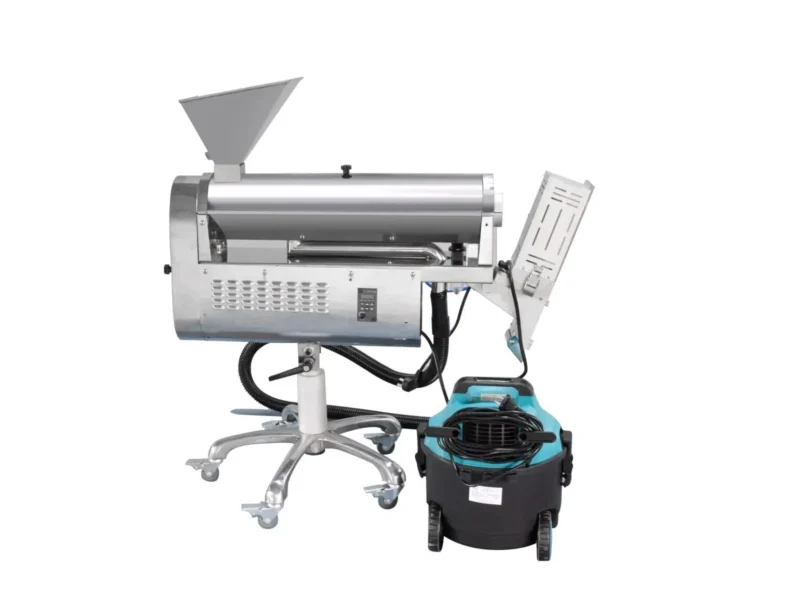
Capsule Polisher And Sorter FAT Scope Before Shipment
The FAT should begin with a clear definition of what will be inspected and how acceptance will be determined. This prevents disagreements after the equipment reaches the customer’s facility.
The inspection scope should normally cover:
- Equipment identification and configuration
- Mechanical construction
- Capsule feeding
- Polishing performance
- Sorting performance
- Rejected-capsule handling
- Discharge stability
- Electrical and control functions
- Safety protection
- Cleaning accessibility
- Documentation and spare parts
A capsule polisher and sorter should be tested under conditions that reasonably represent its intended production application. If the equipment is tested only without capsules or under unrealistic operating conditions, important performance problems may remain undetected.
The FAT protocol should identify the test method, sample requirements, operating conditions, acceptance criteria, responsible personnel, and method for recording deviations.
Capsule Polisher And Sorter Mechanical Inspection Checklist
Mechanical condition is the foundation of reliable operation. Before functional testing begins, the basic construction of the capsule polisher and sorter should be inspected carefully.
The inspection should cover the frame, covers, product-contact areas, access doors, fasteners, rotating components, guides, feeding system, polishing system, sorting mechanism, and discharge section.
Special attention should be given to capsule polisher parts that directly influence product movement and polishing. Parts should be correctly installed, free from obvious damage, and accessible for inspection and maintenance.
A basic mechanical FAT checklist can include:
| Inspection area | Acceptance focus |
|---|---|
| Machine frame | Stable construction and secure installation |
| Product-contact surfaces | Suitable finish and easy access |
| Feeding section | Smooth capsule movement |
| Polishing section | Correct installation and adjustment |
| Sorting system | Proper movement and separation |
| Discharge section | No unnecessary accumulation |
| Guards and covers | Secure and correctly fitted |
| Fasteners | No obvious looseness |
| Moving components | Smooth operation without abnormal interference |
Capsule Polisher And Sorter Polishing Performance Check
Polishing performance is one of the most important FAT items. A machine can operate smoothly while still producing unsatisfactory cleaning results.
The test should use representative capsules and an agreed operating condition. Inspectors should evaluate whether residual powder or visible contamination is appropriately removed without causing unnecessary capsule damage.
The assessment can include capsule appearance before and after polishing, visible powder residue, capsule surface condition, and consistency throughout the test run.
The following factors should be recorded during the test:
- Capsule type and size.
- Feed rate or operating speed.
- Initial capsule condition.
- Polishing settings.
- Test duration or quantity.
- Observed polishing result.
- Any damaged or abnormal capsules.
The acceptance criteria should be agreed before the FAT. Avoid using vague terms such as “good polishing” without defining what constitutes an acceptable result. For a gelatin capsule polisher, the criteria should clearly specify the expected capsule surface condition and acceptable level of residual powder.
For pharmaceutical manufacturing, cleaning and equipment maintenance are important CGMP considerations. FDA states that equipment must be maintained and cleaned at appropriate intervals to prevent contamination or malfunctions that could affect drug quality.
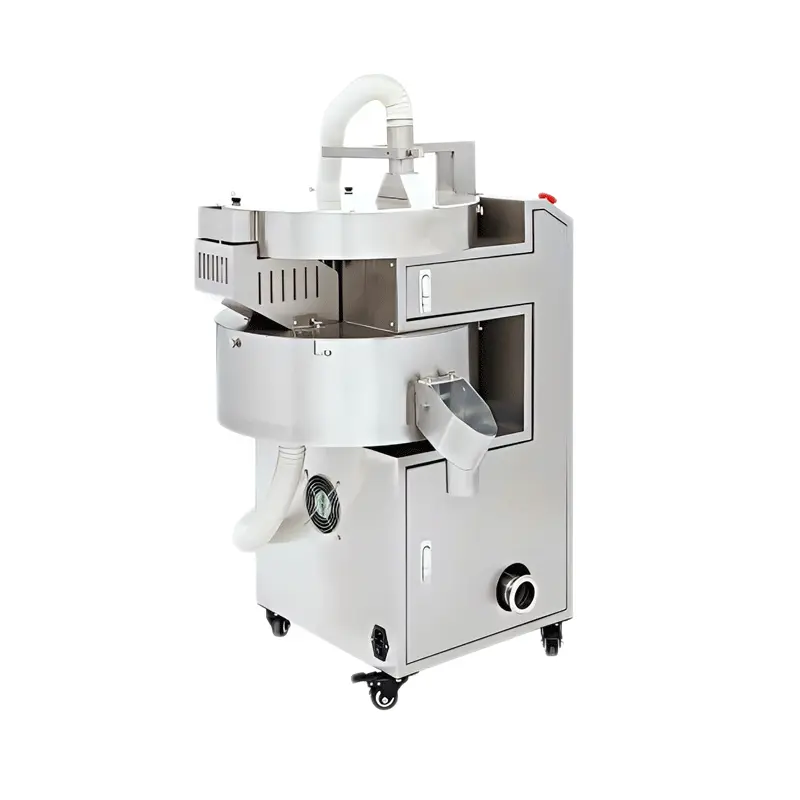
Capsule Polisher And Sorter Sorting Accuracy Verification
Sorting performance requires a separate test because acceptable polishing does not automatically demonstrate acceptable separation.
The capsule polisher and sorter should be tested with representative qualified and intentionally introduced nonconforming samples where appropriate. The test method should reflect the actual sorting principle used by the machine.
Possible inspection points include:
- Correct capsule identification
- Consistent separation
- Reject mechanism response
- False rejection
- Failure to reject
- Capsule accumulation around the sorting section
- Stable operation at the agreed production rate
Sorting accuracy should be evaluated using a predefined sampling method and acceptance criterion.
For example, if a customer specification requires a defined sorting accuracy, the FAT report should record the test quantity, number of correctly sorted capsules, number of incorrect results, and calculation method.
| Test item | What to record | Acceptance basis |
|---|---|---|
| Qualified capsules | Total test quantity | Correctly accepted |
| Defective/test capsules | Total introduced | Correctly rejected |
| False rejects | Number detected | Within agreed limit |
| Missed rejects | Number detected | Within agreed limit |
| Sorting stability | Repeated test results | Consistent performance |
Capsule Polisher And Sorter Feeding And Discharge Test
A stable feeding system is essential because irregular capsule supply can affect both polishing and sorting. Similar attention to stable material flow is also important when coordinating upstream equipment such as a tablet press within an integrated production line.
During the FAT, the capsule polisher and sorter should be operated long enough to demonstrate that capsules move consistently through the complete process. Short tests may not reveal accumulation that develops after extended operation.
The feeding test should examine whether capsules enter the system smoothly without excessive bridging, accumulation, or uncontrolled movement.
The discharge test should verify that accepted and rejected capsules leave through the intended paths and can be transferred to downstream equipment without unnecessary blockage.
If the machine is designed to connect with upstream or downstream equipment, the interface dimensions, transfer height, control signals, and communication requirements should also be checked against the approved technical documentation.
Capsule Polisher And Sorter Safety Function Verification
Safety checks should never be treated as a final paperwork exercise. They should be physically tested during the FAT.
The exact safety configuration depends on the machine design and applicable standards, but typical checks may include emergency stops, access-door interlocks, protective guards, overload protection, alarm functions, and safe restart behavior. These checks are also important for a vertical capsule polishing machine, where access to moving components and product-handling areas should be properly protected.
The FAT team should verify that safety functions produce the intended response and that the machine does not unexpectedly resume operation after a safety interruption.
Electrical inspection may also include checking control-panel labeling, wiring identification, grounding arrangements, and alarm indications according to the approved electrical documentation.
Safety requirements should be evaluated against the applicable machinery, electrical, and site standards rather than relying solely on a generic checklist.
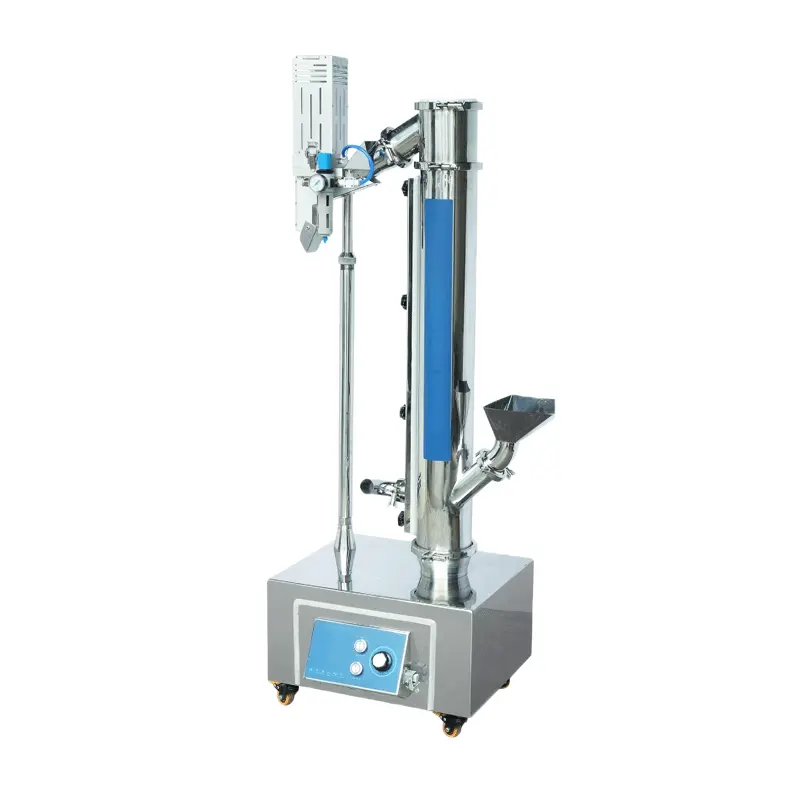
Capsule Polisher And Sorter GMP-Oriented Inspection
GMP-related FAT checks should focus on whether the equipment design supports controlled pharmaceutical manufacturing.
FDA CGMP principles require equipment to be appropriately designed, adequately maintained, and suitable for its intended use. Equipment should also be cleaned and maintained in a manner that prevents contamination or other quality-related problems.
For a capsule polisher and sorter, GMP-oriented inspection can consider:
- Product-contact material documentation
- Surface finish and cleanability
- Accessibility of product-contact areas
- Prevention of powder accumulation
- Drainage or cleaning provisions where applicable
- Identification of product-contact components
- Maintenance accessibility
- Equipment status identification
- Cleaning and maintenance documentation
WHO GMP guidance similarly emphasizes that production equipment should be designed, located, and maintained to suit the intended operation and should permit effective cleaning and maintenance.
The FAT should not be treated as a substitute for site qualification or validation. Instead, it provides documented evidence that the equipment supplied, including an automatic capsule polishing sorter machine, has been inspected and tested against predefined requirements before shipment.
Capsule Polisher And Sorter Documentation Review
Documentation is an essential part of the factory acceptance process. The physical machine and its documentation should correspond to the same approved configuration.
The documentation package may include operating instructions, maintenance information, electrical drawings, component lists, spare-parts lists, certificates, inspection records, and FAT results.
The customer should verify that the documentation identifies the actual equipment supplied rather than a generic model.
Important documents may include:
- Equipment specification
- Operating manual
- Maintenance instructions
- Electrical drawings
- Pneumatic drawings, where applicable
- Recommended spare-parts list
- Product-contact material certificates
- Calibration or inspection records, where applicable
- FAT protocol and completed test results
- Deviation and corrective-action records
The exact documentation package should be agreed during the purchasing and engineering stages.
Capsule Polisher And Sorter FAT Acceptance Record
Every FAT result should be documented. A test that is verbally accepted but not recorded provides limited value for later qualification activities.
A practical FAT record should identify the test item, requirement, actual result, status, responsible person, date, and any deviation.
If a test fails, the issue should be recorded rather than hidden through repeated testing. The manufacturer and customer can then agree on corrective action, retesting requirements, and final acceptance.
For complex pharmaceutical equipment, this documentation can also support later installation and operational qualification activities at the customer’s site.
FAQ
What should be tested first during a capsule polisher and sorter FAT?
Begin with documentation and visual/mechanical inspection, then proceed to feeding, polishing, sorting, discharge, safety, and final documentation review.
How is capsule polisher and sorter sorting accuracy verified?
Use an agreed test method with representative accepted and test/nonconforming capsules, record the results, and compare them with predefined acceptance criteria.
Does FAT replace GMP qualification after shipment?
No. FAT provides evidence that the equipment meets agreed factory requirements before shipment. Site-specific installation, operational, and other qualification activities may still be required.