


A capsule sorting polisher is designed to combine capsule surface polishing with sorting and rejection functions in a continuous processing stage. In pharmaceutical production, filled capsules may carry loose powder, dust, or other residues after capsule filling. At the same time, some capsules may have visible defects that require removal before downstream inspection, packaging, or other processing.
By combining these operations, a capsule sorting polisher can reduce unnecessary material transfer between independent machines. However, its practical performance depends on more than the machine structure. Capsule shell material, capsule size, product formulation, surface condition, feeding stability, polishing method, and sorting technology all affect equipment performance.
Understanding how a capsule sorting polisher works is therefore important when evaluating equipment for different pharmaceutical products. Manufacturers should consider both the mechanical polishing process and the actual rejection mechanism rather than treating the equipment simply as a capsule cleaning machine.

Capsule Sorting Polisher: Basic Working Principle
The working principle of a capsule sorting polisher can be divided into several connected stages: feeding, conveying, polishing, inspection or sorting, rejection, and discharge.
Filled capsules enter the machine through the feeding system. The feeding mechanism should distribute capsules consistently so that excessive accumulation, overlapping, or unstable flow does not interfere with downstream polishing and sorting. In a complete production line, equipment such as a vacuum dryer may also be installed upstream or in another processing stage depending on the product requirements.
The capsules then move through the polishing section. Depending on the equipment design, brushes, soft contact surfaces, controlled conveying, airflow, or other mechanisms may be used to remove loose powder from the capsule surface.
After polishing, capsules enter the sorting area. The sorting function identifies capsules that meet predefined rejection criteria. Accepted capsules continue through the normal product path, while rejected capsules are diverted into a separate collection area.
Capsule Sorting Polisher: Process Sequence
A typical capsule sorting polisher process can be summarized as:
- Filled capsules enter the feeding system.
- Capsules are distributed into a stable product flow.
- Loose powder is removed during polishing.
- Capsules pass through the inspection or sorting section.
- The rejection mechanism separates identified defective capsules.
- Qualified capsules are discharged for downstream processing.
The actual sequence can vary according to machine configuration. Some systems may integrate additional detection or conveying functions, while others may use separate downstream inspection equipment.
The key point is that polishing and sorting perform different tasks. Polishing primarily addresses surface cleanliness, while sorting focuses on separating capsules that meet defined rejection conditions.
Capsule Sorting Polisher: Main Components
A typical capsule sorting polisher may include:
- Feeding hopper or inlet
- Capsule conveying mechanism
- Polishing brushes or contact components
- Product-contact guides
- Sorting or detection section
- Rejection mechanism
- Reject collection area
- Qualified-capsule outlet
- Control and monitoring system
The exact construction depends on the intended production capacity and the types of defects that need to be addressed.
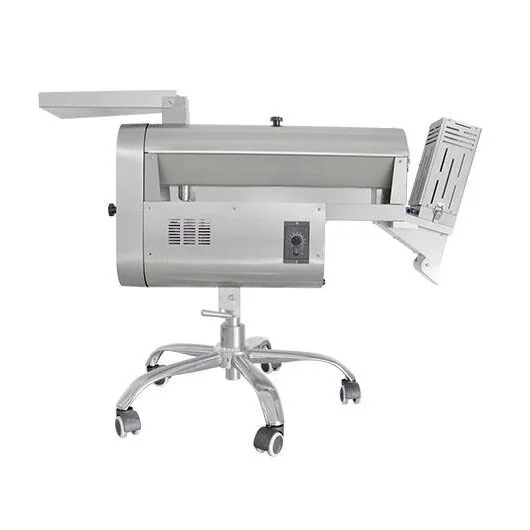
Capsule Sorting Polisher: How Capsule Polishing Works
Polishing is generally performed by moving filled capsules through controlled contact with polishing components. The objective is to remove loose powder and improve the external cleanliness of the capsule without damaging the shell.
The balance between cleaning effectiveness and gentle handling is particularly important. Excessive mechanical contact can potentially scratch, deform, or otherwise affect capsules, especially when operating conditions are not properly adjusted.
A capsule sorting polisher should therefore provide controlled capsule movement rather than simply maximizing mechanical contact.
The formulation also matters. Different powders can have different flow and adhesion characteristics. A powder that adheres strongly to the capsule surface may require different operating conditions from a formulation that produces relatively little surface residue.
Capsule Sorting Polisher: Factors Affecting Polishing
Several factors can influence polishing performance:
- Capsule shell characteristics
- Powder adhesion
- Capsule filling conditions
- Product moisture characteristics
- Brush or contact-surface condition
- Machine speed
- Feeding stability
- Contact pressure
- Residence time
Manufacturers should evaluate these variables during production trials instead of assuming that one fixed setting will provide the same results for every product.
Capsule Sorting Polisher: Sorting and Inspection Principle
The sorting section of a capsule sorting polisher has a different purpose from the polishing section. Its function is to identify capsules that fall outside predefined acceptance criteria and direct them away from the qualified product stream.
Possible rejection targets may include visibly damaged capsules, improperly closed capsules, empty capsules, deformed capsules, or other defects that the selected detection system is capable of recognizing.
The actual detection capability depends on the machine design. A manufacturer should not assume that every capsule sorting polisher can detect every type of defect.
For pharmaceutical applications, the acceptance and rejection criteria should be defined before equipment selection. This makes it possible to determine whether the sorting technology is appropriate for the intended product and process.
Defect Detection
The sorting principle may rely on mechanical characteristics, optical detection, or other inspection technologies depending on the system.
For example, optical inspection can be used to identify certain visible differences in capsule appearance. Other mechanisms may identify physical conditions or product-flow abnormalities. In a complete capsule production process, the capsule filling machine may also affect the condition and consistency of capsules entering the sorting stage.
The important distinction is between detecting a defect and physically rejecting a capsule. A system may identify a capsule condition but still require a reliable rejection mechanism to remove the capsule from the accepted product stream.
Capsule Sorting Polisher: Unqualified Capsule Rejection Mechanism
The rejection mechanism is one of the most important parts of a capsule sorting polisher because incorrect rejection can affect both product quality and production yield.
After a capsule is identified as defective, the control system must coordinate the detection signal with the physical position of that capsule. The rejection device then diverts the selected capsule into a reject container or separate collection path.
A reliable rejection system should minimize two potential problems: failure to remove a defective capsule and accidental rejection of qualified capsules.
How Rejection Is Controlled
The basic rejection process generally involves:
- Detection of a predefined defect.
- Generation of a sorting signal.
- Tracking or timing of the capsule position.
- Activation of the rejection mechanism.
- Separation of the defective capsule.
- Collection and monitoring of rejected material.
The timing between detection and rejection is particularly important in a continuously moving capsule stream. If the timing is inaccurate, the wrong capsule could be rejected or a defective capsule could remain in the accepted stream.
Therefore, manufacturers should evaluate rejection accuracy under realistic operating conditions, including different machine speeds and product flow rates when using a vertical capsule polishing machine.
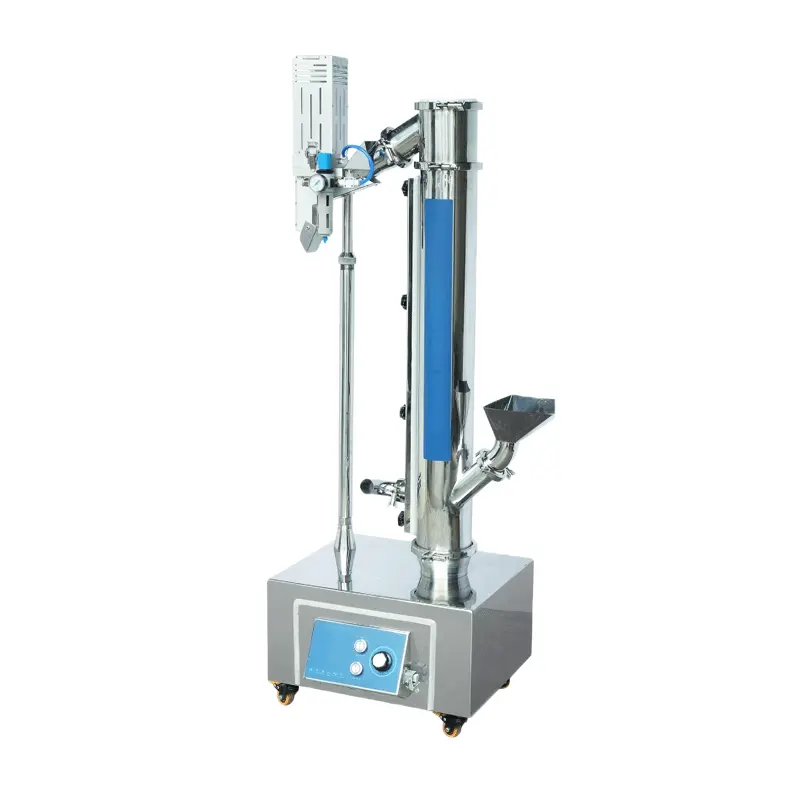
Capsule Sorting Polisher: Material Adaptation Analysis
Material compatibility is a critical part of capsule sorting polisher selection.
Pharmaceutical capsules are commonly produced using materials such as gelatin or hypromellose-based capsule shells. These materials can have different mechanical and handling characteristics. The equipment must therefore provide suitable contact conditions and operating parameters for the intended capsule type.
Capsule size also affects machine performance. Changes in capsule dimensions can influence conveying behavior, brush contact, detection position, and rejection timing.
The formulation inside the capsule can also affect external cleanliness. Fine powders, cohesive formulations, or products with different flow characteristics may leave different amounts of residue on the capsule surface.
Gelatin Capsule Adaptation
Gelatin capsules are widely used in pharmaceutical and dietary-product applications. Their handling characteristics require suitable mechanical contact during polishing.
A capsule sorting polisher used with gelatin capsules should provide controlled conveying and polishing conditions. Excessive contact force, unsuitable brush characteristics, or unstable feeding may increase the possibility of surface damage.
Production trials should therefore use actual gelatin capsules and representative filled products whenever possible.
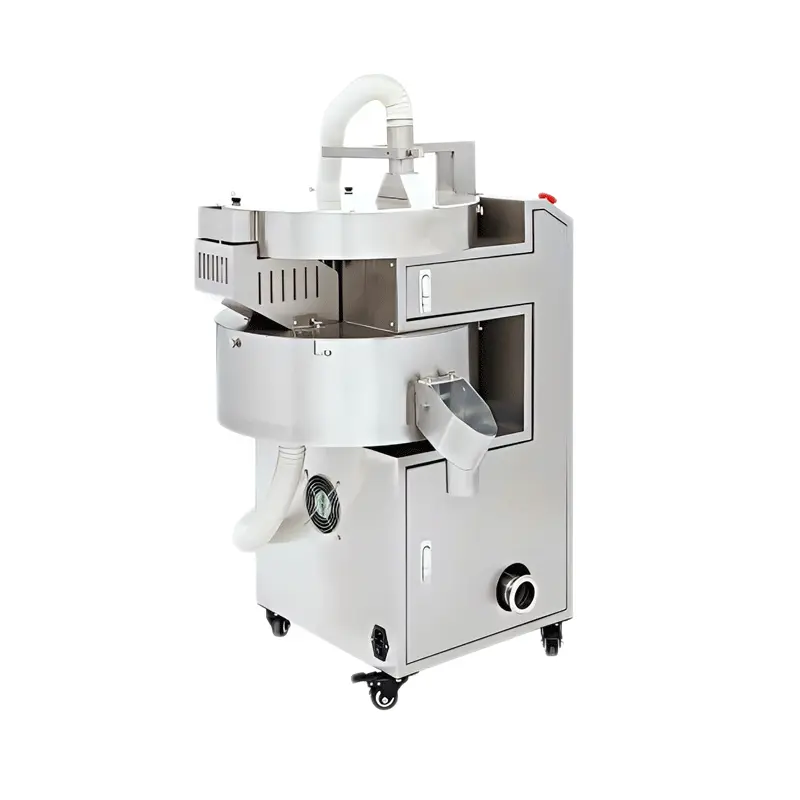
Formulation Adaptation
The capsule shell is only one part of the material-compatibility assessment. The filled formulation can also affect equipment performance.
Fine powder may create more surface residue, while cohesive material may behave differently during filling and conveying. Formulations with different flow properties can therefore produce different operating results even when the same capsule shell is used.
| Material Factor | Possible Effect | Evaluation Focus |
|---|---|---|
| Capsule shell | Handling and surface response | Integrity and appearance |
| Capsule size | Conveying behavior | Stable product flow |
| Powder properties | Surface residue | Polishing effectiveness |
| Formulation flow | Feeding stability | Continuous movement |
| Surface condition | Detection reliability | Sorting accuracy |
Capsule Sorting Polisher: Capsule Size and Production Adaptation
Capsule size is another important consideration. Different capsule sizes can require different guides, feeding settings, tooling, or machine adjustments. In a complete production line, upstream equipment such as a freeze dryer may also influence production planning and equipment coordination.
A capsule sorting polisher should specify its applicable capsule range and identify which components require adjustment during changeover.
Changeover design is particularly important for manufacturers producing multiple capsule sizes. Easy access to product-contact components can reduce downtime and simplify cleaning.
Multi-Product Production
For facilities handling several capsule products, manufacturers should evaluate:
- Capsule sizes used across production
- Shell materials
- Typical formulation characteristics
- Required polishing conditions
- Defects that must be rejected
- Changeover time
- Cleaning procedures
- Required production capacity
A machine that performs well with one capsule product may require different settings for another. Validation and production-trial procedures should therefore reflect the actual product range.
Capsule Sorting Polisher: GMP and Cleaning Considerations
Cleaning should be considered during equipment selection because powder residue can accumulate on product-contact surfaces, brushes, conveying components, and collection areas.
A capsule sorting polisher should allow operators to access relevant areas for inspection and cleaning. Product-contact components should be designed with appropriate accessibility, and cleaning procedures should be documented according to the manufacturer’s pharmaceutical quality system.
FDA current good manufacturing practice requirements emphasize suitable equipment design, cleaning, maintenance, and control to help prevent contamination and protect product quality.
Cleaning and Maintenance
Manufacturers should assess:
- Ease of disassembly
- Accessibility of product-contact areas
- Brush removal and cleaning
- Powder accumulation points
- Reject collection-area cleaning
- Routine maintenance access
- Changeover procedures
Integration does not automatically mean easier cleaning. The complete internal product path should be examined during equipment evaluation.
Capsule Sorting Polisher: Performance Verification
Performance should be verified using representative capsules and realistic production conditions.
The evaluation should examine both polishing and sorting. A machine may provide excellent surface cleaning but still require additional verification of rejection accuracy. Similarly, a sorting system may detect predefined defects effectively but need operating adjustments to maintain stable capsule flow.
Production trials should therefore examine the complete process rather than one individual function.
Key Trial Parameters
During trials, manufacturers can evaluate:
- Capsule feeding stability
- Surface powder removal
- Capsule integrity
- Detection capability
- Rejection accuracy
- Qualified-product recovery
- Production throughput
- Cleaning time
- Changeover performance
The results should be compared with predefined acceptance criteria established for the specific product and process.
Conclusion
A capsule sorting polisher integrates capsule polishing and sorting into a connected production process. Its working principle can be understood through several stages: controlled feeding, capsule conveying, surface polishing, defect detection, rejection, and final discharge.
The most important consideration is that polishing and sorting are separate technical functions even when they are housed in one machine. Polishing focuses on removing loose surface powder and improving capsule cleanliness, while sorting focuses on identifying and rejecting capsules that meet predefined defect criteria.
Material adaptation is equally important. Gelatin and hypromellose capsules may require different handling conditions, while powder properties, capsule size, formulation behavior, and surface residue can all influence machine performance.
For this reason, manufacturers should evaluate a capsule sorting polisher using representative products and realistic operating conditions. Key areas include polishing effectiveness, capsule integrity, sorting capability, rejection accuracy, cleaning accessibility, changeover, and downstream compatibility.
When properly matched to the product and production process, an integrated capsule sorting polisher can support stable capsule handling while reducing unnecessary transfer between separate polishing and sorting operations.
FAQ
What does a capsule sorting polisher do?
A capsule sorting polisher combines capsule surface polishing with a sorting and rejection function, helping remove loose powder and separate capsules with predefined defects.
Can a capsule sorting polisher handle different capsule materials?
It can be configured for different capsule types, but gelatin and hypromellose capsules may require different operating conditions. Production trials should confirm compatibility.
How are defective capsules rejected?
A detection system identifies predefined defects and sends a signal to the rejection mechanism, which diverts the selected capsule from the qualified product stream.