


A capsule sorting polisher is a pharmaceutical processing machine that combines capsule surface polishing with a sorting or rejection function. After capsule filling, powder residue can remain on the outside of filled capsules. The capsule sorting polisher removes loose surface material while helping separate capsules that meet defined inspection criteria from selected rejects. Unlike a conventional polishing unit, which mainly focuses on surface cleaning, a capsule sorting polisher combines product finishing and capsule handling functions in one process.
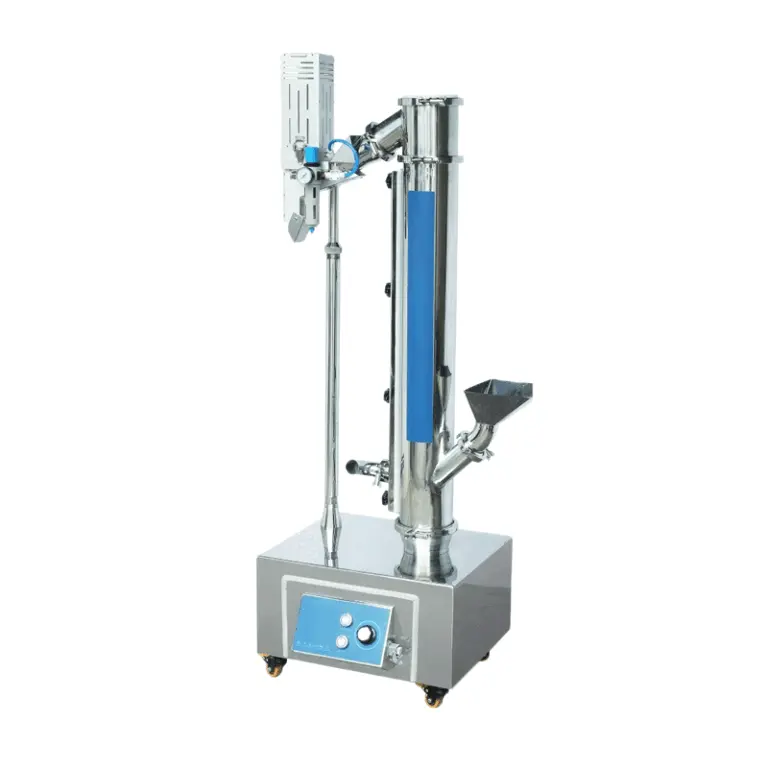
Capsule Sorting Polisher: Basic Definition
A capsule sorting polisher is normally positioned after the capsule filling process. Its first task is to polish the outside of filled capsules. Capsules are guided through a polishing section where brushes or other suitable polishing elements remove loose powder and particles.
The second task is sorting. Depending on the equipment configuration, the capsule sorting polisher can incorporate an inspection mechanism that identifies specific capsule conditions and activates a rejection system. This creates a more complete processing sequence than polishing alone.
A typical capsule sorting polisher may include:
- Capsule feeding and conveying components
- A polishing chamber
- A dust-removal system
- An inspection or detection section
- A rejection mechanism
- An outlet for accepted capsules
The precise functions depend on the machine design and inspection technology. Therefore, a sorting function should always be understood in relation to the actual detection and rejection system installed on the equipment.
FDA CGMP requirements emphasize that pharmaceutical equipment should be suitable for its intended use and designed to facilitate appropriate cleaning and maintenance. (fda.gov)
Capsule Sorting Polisher: Working Principle
The working principle of a capsule sorting polisher can be understood as a connected sequence rather than a single polishing operation.
First, filled capsules enter the machine through a controlled feeding system. They then pass through the polishing section, where mechanical contact removes loose powder from the capsule shell. Dust extraction can collect particles released during this stage.
After polishing, capsules enter the inspection or sorting area. Depending on the system, selected capsule characteristics are checked against predefined criteria. When a capsule is identified for rejection, the rejection mechanism separates it from the acceptable product stream.
The basic process can be summarized as:
- Filled capsules enter the feeding system.
- Capsules move through the polishing section.
- Surface powder and loose particles are removed.
- Dust is extracted from the processing area.
- Capsules pass through the sorting or inspection section.
- Selected rejects are separated.
- Accepted capsules continue to the next production stage.
This sequence explains why a capsule sorting polisher is different from a machine designed only for capsule surface polishing.
Capsule Sorting Polisher: Polishing vs Sorting
The easiest way to understand the difference is to look at the purpose of each function. Polishing deals primarily with the capsule exterior, while sorting focuses on separating capsules according to defined inspection criteria.
A conventional polishing machine, such as a vertical capsule polishing machine, is primarily designed to clean the capsule surface and remove loose powder. It does not necessarily provide an integrated mechanism for detecting and rejecting selected capsules. By comparison, a capsule polisher and sorter combines polishing with sorting functions, potentially reducing the need for separate material transfers.
Capsule Sorting Polisher: Why Sorting Matters
Capsule sorting is intended to provide an additional separation step within the production process. Depending on the inspection system, the equipment may be configured to detect and reject certain capsules that fall outside predefined criteria.
The automatic capsule polisher concept focuses primarily on reducing manual polishing and improving continuous material handling. A gelatin capsule polisher adds another layer by combining effective surface treatment with product separation, helping remove residual powder while supporting a cleaner capsule finish.
This distinction is important when planning a capsule production line. If a manufacturer only needs surface powder removal, a conventional polishing machine may be sufficient. If polishing and capsule rejection are both required at the same production stage, an integrated sorting polisher may better match the process design.
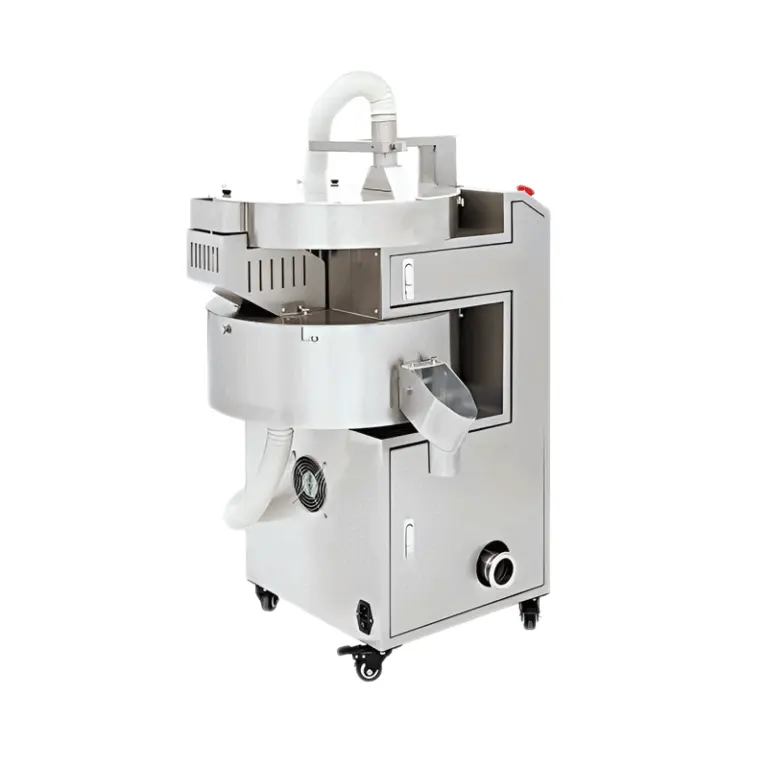
Capsule Sorting Polisher: Production Applications
A capsule sorting polisher can be considered for production lines where continuous capsule movement, surface cleaning, and selected capsule separation are required.
A typical process may look like:
Capsule Filling → Capsule Sorting Polisher → Inspection → Packaging
In this arrangement, the capsule sorting polisher receives filled capsules directly after filling. It removes loose powder before downstream handling and can separate selected rejects according to its configured inspection system.
The equipment can be particularly relevant to production environments where manufacturers want to reduce repeated manual handling. Fewer transfers can simplify the material flow between processing stages, although the actual layout depends on production capacity and equipment configuration.
FDA inspection guidance for drug manufacturers emphasizes appropriate equipment, cleaning, maintenance, and controls intended to prevent contamination and mix-ups. (fda.gov)
Capsule Sorting Polisher: Key Selection Factors
Selecting a capsule sorting polisher requires consideration of both its polishing performance and sorting capability. The equipment should match the capsule sizes, production requirements, cleaning procedures, and downstream equipment used at the facility.
Key factors include:
- Compatible capsule sizes
- Required production capacity
- Polishing method
- Dust extraction arrangement
- Inspection technology
- Rejection method
- Cleaning accessibility
- Integration with upstream and downstream machines
It is also important to distinguish between nominal machine functions and validated process performance. The capsule sorting polisher should operate within its qualified range, while cleaning and maintenance should follow established procedures.
Capsule Sorting Polisher: Final Overview
A capsule sorting polisher is more than a capsule cleaning machine. Its defining feature is the combination of polishing with inspection-based sorting or rejection. The polishing section removes loose powder from filled capsules, while the sorting section provides a controlled way to separate selected capsules.
Compared with ordinary polishing equipment, this combined approach can simplify capsule handling where both functions are required. The right choice ultimately depends on the production process, capsule specifications, inspection requirements, and overall line configuration.
FAQ
What does a capsule sorting polisher do?
A capsule sorting polisher removes loose powder from filled capsules and can sort or reject selected capsules according to its configured inspection system.
How is a capsule sorting polisher different from a normal polisher?
A normal polisher primarily focuses on capsule surface cleaning. A capsule sorting polisher combines polishing with inspection and sorting or rejection functions.
Where is a capsule sorting polisher installed?
It is commonly installed after capsule filling and before subsequent inspection or packaging, depending on the production line layout.