


Choosing the right filling equipment can feel overwhelming. With dozens of technologies, container formats, and accuracy specifications on the market, procurement teams often spend weeks—or even months—trying to settle on the correct model. Yet the decision doesn’t have to be that slow. With a clear framework, you can narrow down the ideal pharmaceutical filling machine in about an hour.
This guide introduces a practical three-step decision tree: material form → container type → accuracy requirement. By working through these three questions in order, you’ll systematically eliminate unsuitable options and zero in on the right technology. Along the way, we’ll cover the four most common filling scenarios in pharmaceutical production—liquid, powder, capsule, and bottle—so you know exactly what to expect from each.
Why Filling Precision Is Non-Negotiable
Now let’s build the decision framework.
The 3-Step Decision Tree
Before diving into specific machine types, here is the logic that will guide every choice. Follow these steps in sequence:
Identify your material form — Is the product a liquid, a powder, or a solid dose destined for capsules? This determines the core filling mechanism.
Define your container type — Vials, ampoules, bottles, or capsules each require different handling and dosing hardware.
Specify your accuracy requirement — High-value biologics demand tighter tolerances than bulk oral liquids, and this dictates the precision class of the machine.
Answer these three questions, and the field of suitable pharmaceutical filling machines shrinks dramatically. Let’s examine each step.
Step 1: Material Form — The Foundation of Your Choice
The physical state of your product is the single most important factor. It determines the fundamental filling technology because liquids, powders, and solids behave completely differently.
Liquids flow and can be dosed by volume or by pump. Viscosity and foaming tendency influence the choice of pump technology.
Powders resist flowing predictably and require dosing by weight or by volume using augers or vacuum systems.
Solid doses for capsules involve precise dispensing of powder, pellets, or micro-tablets into two-piece capsule shells.
Get this step right, and the remaining choices become far simpler.
Step 2: Container Type — Matching Hardware to Format
Once material form is settled, the container dictates the handling system. A machine designed for glass ampoules cannot simply switch to plastic bottles without significant retooling. Container factors include:
Material (glass vs. plastic)
Size and neck diameter
Fragility and shape
Sterility requirements
Sterile injectables in vials, for example, demand aseptic filling under controlled conditions, while oral liquid bottles have more relaxed environmental requirements.

Step 3: Accuracy Requirement — Defining the Precision Class
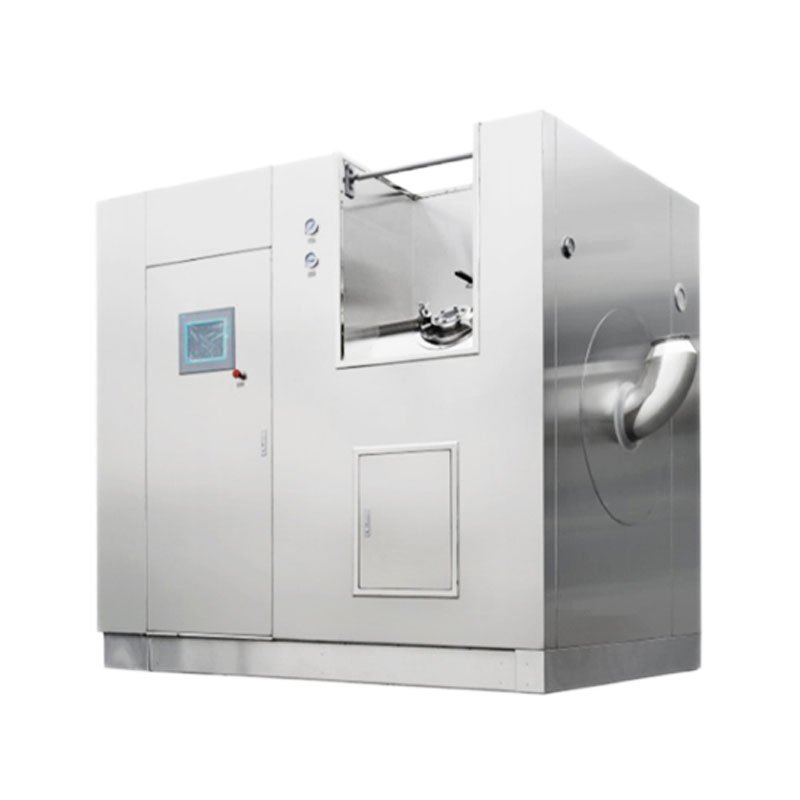
Finally, define how tight your fill tolerance must be. High-potency drugs and expensive biologics justify investment in servo-driven, highly precise dosing systems with in-line checkweighing. Lower-value bulk products may tolerate slightly wider tolerances, allowing for simpler, faster equipment. For solid dosage production, downstream units such as the capsule polisher machine should also be matched to your accuracy and throughput targets.
The table below shows how these three steps map to typical filling technologies:
| Material Form | Common Container | Typical Filling Technology | Accuracy Priority |
|---|---|---|---|
| Liquid | Vial, ampoule, bottle | Peristaltic, piston, or rotary pump | High for injectables |
| Powder | Vial, bottle | Auger or vacuum dosing | High to moderate |
| Solid (capsule) | Two-piece capsules | Dosator or tamping pin | High for potent drugs |
| Bulk liquid | Bottle | Volumetric or gravimetric | Moderate |
Liquid Filling Machines
Liquid filling is among the most widespread applications in pharmaceutical production, covering everything from injectable solutions and vaccines to oral syrups and ophthalmic drops, many of which rely on specialised equipment such as the oral liquid filling machine for consistent, compliant processing.
Common Liquid Filling Technologies
Several pump technologies dominate this space, each suited to particular liquid properties:
Peristaltic pumps are ideal for sterile applications because the liquid contacts only disposable tubing, eliminating cross-contamination. They handle sensitive biologics gently.
Piston pumps deliver high accuracy and suit thicker, more viscous liquids, though cleaning between batches requires more effort.
Rotary piston and time-pressure systems support very high speeds on large-scale lines.
The choice hinges on viscosity, foaming behavior, and whether the product is sterile. A gentle, low-shear pump is often essential for protein-based biologics, which can degrade under mechanical stress.
Key Considerations for Liquid Filling
When evaluating a liquid pharmaceutical filling machine, weigh these factors:
Dosing accuracy across the full volume range
Compatibility with sterile or aseptic environments
Ease of cleaning and sterilization (CIP/SIP capability)
Anti-drip and anti-foam nozzle design
Changeover speed between container sizes
For sterile injectables, the equipment must operate within a controlled aseptic zone, often integrated with restricted access barrier systems (RABS) or isolators to protect the product from contamination.
Powder Filling Machines
Powders present unique challenges because they don’t flow as predictably as liquids. Fine, cohesive, or hygroscopic powders can bridge, clump, or absorb moisture, all of which affect dosing accuracy and demand properly configured powder filling machine to maintain consistent performance.
Auger vs. Vacuum Filling
Two main approaches dominate powder filling:
Auger filling uses a rotating screw to dispense a measured volume of powder. The number of auger rotations controls the dose. This method suits free-flowing to moderately cohesive powders and offers good accuracy across a wide range of fill weights.
Vacuum (dosator) filling draws powder into a dosing chamber under vacuum, then releases it into the container. This technique excels with fine or difficult powders and is common in high-precision applications.
The table below compares these approaches:
| Factor | Auger Filling | Vacuum/Dosator Filling |
|---|---|---|
Best for | Free-flowing powders | Fine, cohesive powders |
Accuracy | Good | Very good |
Speed | High | Moderate to high |
Dust control | Moderate | Better |
Cleaning complexity | Moderate | Higher |
Managing Powder Challenges
Powder filling lines frequently incorporate weight verification through in-line checkweighing, since visual inspection alone cannot confirm dose accuracy. Dust containment is also critical, both for product quality and for operator safety when handling potent compounds. Many modern powder pharmaceutical filling machines include containment features that protect staff from exposure to active ingredients.
Capsule Filling Machines
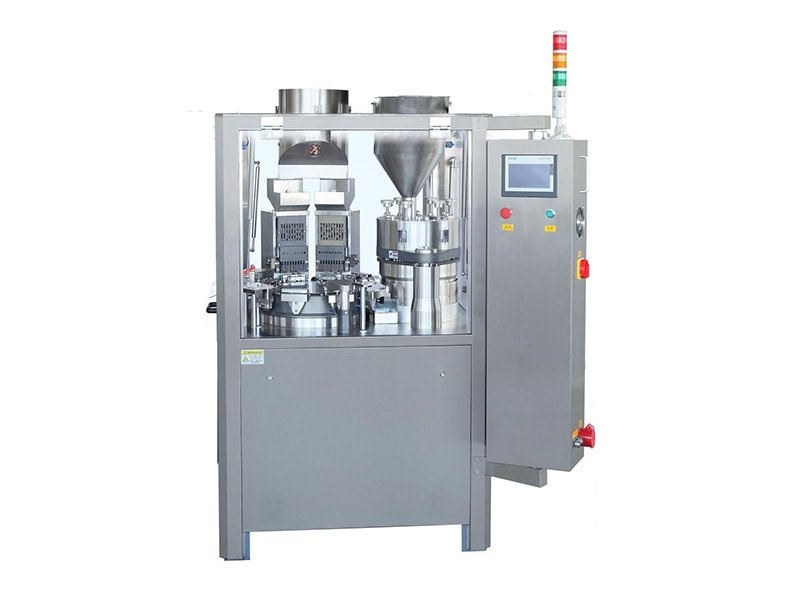
Capsules remain a popular oral dosage form, valued for masking taste, enabling precise dosing, and accommodating powders, pellets, granules, and even liquids. Capsule filling machines separate the two-piece capsule, dispense the fill material into the body, then rejoin and eject the completed capsule.
Filling Mechanisms
Capsule fillers use two principal dosing methods:
Dosator systems compress powder into a small dosing tube, forming a slug that is then ejected into the capsule body. These suit a broad range of powders.
Tamping pin (dosing disc) systems compress powder in stages within a dosing disc before transferring it to the capsule. These are common on high-speed lines.
The right choice depends on powder characteristics and required output.
Levels of Automation
Capsule fillers span a spectrum of automation:
Manual — suited to laboratory and very small batches
Semi-automatic — a balance of flexibility and moderate output
Fully automatic — high-speed continuous operation for commercial production
Accuracy in capsule filling is essential, especially for potent or narrow-therapeutic-index drugs. In-process weight checks and rejection systems help maintain compliance with pharmacopoeial uniformity of dosage unit requirements.
Bottle Filling Machines
Bottle filling covers both liquid and solid oral products packaged in bottles for retail or hospital distribution. Because a bottle line often integrates multiple functions, it’s best viewed as a coordinated system rather than a single machine.
Integrated Bottle Line Functions
A complete bottle filling line typically performs these steps in sequence:
Bottle unscrambling and orientation
Cleaning or air-rinsing
Filling (liquid) or counting (solids)
Desiccant, cotton, or dropper insertion
Capping and torque control
Induction sealing for tamper evidence
Labeling and coding
For solid doses, electronic or slat counters ensure precise tablet and capsule counts. For liquids, volumetric or peristaltic filling systems deliver accurate volumes. The line must maintain consistency at speed, since even minor count or volume errors multiply across large batches.
Selecting the Right Bottle Filling System
Match the line configuration to your product and volume. A small operation may use a semi-automatic system, while high-volume commercial production justifies a fully integrated automated line. Flexibility for multiple bottle sizes and quick changeovers can significantly improve overall equipment effectiveness.
Working With a Reliable Equipment Partner
Selecting the machine is only part of the equation. The pharmaceutical filling machine factory or supplier you choose determines the quality of validation support, spare parts availability, and long-term service. When shortlisting candidates, evaluate:
GMP compliance and documented certifications
Complete validation packages (IQ, OQ, PQ)
Availability of aseptic and containment options where needed
Global service network and spare parts logistics
Training for operators and maintenance staff
Transparent total cost of ownership
A trustworthy partner supports you well beyond installation. The right supplier turns a one-time purchase into a lasting, productive relationship that protects both compliance and uptime.
FAQ
How do I choose between auger and vacuum powder filling?
Match the method to your powder’s flow properties. Auger filling works well for free-flowing to moderately cohesive powders and offers high speed. Vacuum or dosator filling handles fine, cohesive, or dusty powders more accurately and provides better containment. For potent compounds requiring both precision and operator protection, vacuum systems are often the stronger choice.
What accuracy level should a liquid pharmaceutical filling machine achieve?
It depends on the product’s value and regulatory profile. High-value injectables and biologics require tight tolerances, typically supported by servo-driven pumps and in-line checkweighing. Bulk oral liquids can tolerate somewhat wider tolerances. Always confirm the machine meets the fill-volume consistency standards required by your target markets’ regulations.
What should I look for in a pharmaceutical filling machine factory?
Prioritize GMP compliance, complete validation documentation (IQ, OQ, PQ), and relevant aseptic or containment capabilities. Equally important are a responsive global service network, reliable spare parts supply, operator training, and transparent total cost of ownership. A strong partner minimizes downtime and supports compliance throughout the equipment’s lifecycle.