


Selecting the right capsule filler machine is one of the most consequential capital decisions a pharmaceutical or nutraceutical manufacturer will make. The equipment you choose directly determines your production capacity, labor requirements, fill consistency, and ability to scale.
This guide categorizes capsule filler machine equipment into four main types—manual, semi-automatic, fully automatic, and dosator (metering) systems—and provides a structured budget planning framework to match each category to the right production stage and investment profile.
Before examining each category, it is useful to understand the broader market context. The global capsule filling equipment market was valued at approximately $0.9–1.2 billion in 2024–2025, expanding at a 6.3–7.1% CAGR, with pharmaceutical applications accounting for 70–85% of revenue. Within this growing market, the choice of capsule filler machine type remains the primary differentiator in both cost and capability.
Manual Capsule Filler Machine Equipment – Entry-Level Budget Planning
Manual capsule filler machine equipment represents the lowest-cost entry point into capsule production. These benchtop devices use plates with holes (typically 50, 100, 200, or 300 holes) to align, fill, and close capsules through entirely manual.
Price Range and Configuration
| Hole Count | Typical Price (USD) | Best Use Case |
|---|---|---|
| 10–20 holes | $30–$50 | Micro-batches, R&D trials |
| 100 holes | $130–$170 | Startup product launches |
| 200 holes | $200–$300 | Growing small-batch production |
| 300–800 holes | $360–$600 | High-volume manual production |
For example, a 100-hole manual capsule filler machine typically costs around $129, while an 800-hole unit may range up to $359. Upgraded designs can reduce material waste by up to 20% and increase operational speed by a similar margin.
Output and Labor Considerations
A well-organized operator with a 100-hole manual capsule filler machine can typically achieve 2,000–2,500 capsules per hour. With practice and optimized workflow, some teams push closer to 4,000 capsules per hour. Larger 300-hole machines can reach up to 8,000 capsules per hour.
Key advantages of manual capsule filler machine equipment include:
Lowest upfront investment
No electricity required
Compact footprint
Fast changeovers for custom formulas
However, manual operation is labor-intensive, fill-weight consistency depends heavily on operator skill, and scaling beyond 100,000–200,000 capsules per month becomes impractical.
Semi-Automatic Capsule Filler Machine Equipment – Mid-Tier Budget Planning
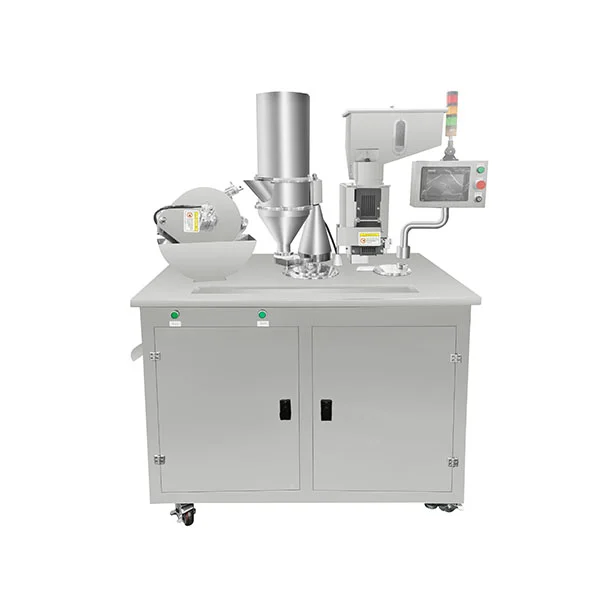
Semi-automatic capsule filler machine equipment bridges the gap between manual labor and full automation. Unlike a full-automatic liquid capsule filling machine, which requires specialized viscosity control and hermetic sealing mechanisms to handle fluid formulations, these semi-automatic units focus on automating dry-powder separation and filling processes while still requiring operators for manual steps like capsule loading and transfer.
Output Capacity
Semi-automatic capsule filler machine equipment delivers substantially higher throughput than manual alternatives:
Standard models: 10,000–30,000 capsules per hour
High-performance units: 25,000–40,000 capsules per hour
Double-head configurations: 45,000–50,000 capsules per hour
Who Should Consider Semi-Automatic Equipment
A semi-automatic capsule filler machine is the right choice when:
You are a growing brand with monthly demand of 500,000–2 million capsules
You run multiple SKUs requiring moderate changeover frequency
You have 1–2 operators available per shift
Your budget falls between $5,000 and $20,000
Investment ROI Analysis Across Capsule Filler Machine Equipment Categories
Payback Period Analysis
The payback period for a capsule filler machine varies significantly by category:
Manual capsule filler machine equipment offers immediate affordability but limited scalability. The low initial cost means payback can occur within weeks for small-batch production, but the high per-unit labor cost limits long-term profitability.
Semi-automatic capsule filler machine equipment typically achieves payback within 9–12 months for growing brands. The moderate investment delivers meaningful labor savings while maintaining reasonable upfront costs.
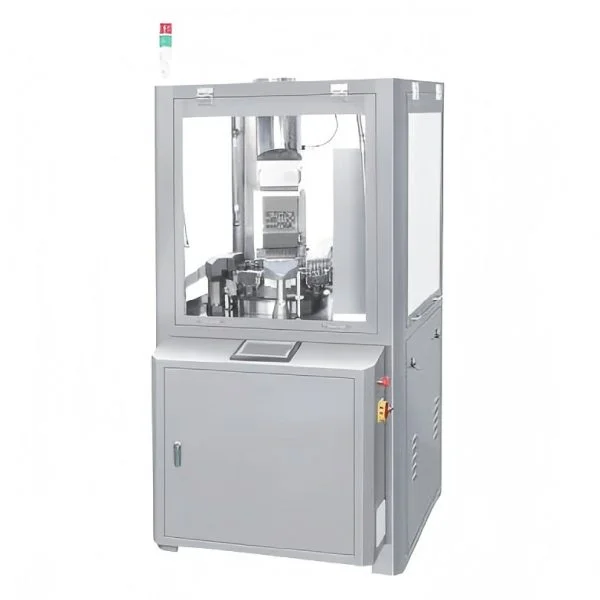
Fully automatic capsule filler machine equipment, despite higher initial costs, often pays back the price difference compared to semi-automatic within the first year through:
Labor savings (replacing 1–2 dedicated operators)
Tighter fill-weight consistency reducing material waste
Reduced rejection rates (one facility reduced rejects to 0.3%, saving approximately $42,000 per month in scrap costs)
For high-speed fully automatic systems, typical payback periods range from 14 to 28 months.
Dosator capsule filler machine equipment, positioned at a similar price point to fully automatic systems, offers payback through:
Material flexibility (reducing the need for multiple machines)
Superior accuracy for high-value formulations
Reduced material waste from precise dosing
Key Budget Planning Principles
When planning your capsule filler machine equipment budget, follow these principles:
Look beyond the purchase price – Validation, tooling, changeover parts, and spare parts can equal 40–60% of the initial machine cost.
Match equipment to production volume – Buying the cheapest machine possible only to replace it a year later costs more than choosing a capable model upfront.
Factor in labor costs – A semi-automatic machine may look economical until you price eight hours of labor per production run.
Compare itemized quotations – Quotes that appear 20–30% cheaper often exclude mold sets, dust collectors, or freight.
Plan for growth – Choose systems that can scale to higher output without replacing the entire line.
FAQ
What is the minimum budget needed to start capsule production?
A manual capsule filler machine can be purchased for under $200 for a basic 100-hole unit, making it the most accessible entry point for startups and R&D labs. However, the total startup budget should also include raw materials, quality control equipment, and packaging supplies.
How long does it take for a fully automatic capsule filler machine to pay for itself?
Fully automatic systems typically achieve payback within the first year through labor savings and reduced material waste. The $9,500–$10,000 price gap between semi-automatic and automatic equipment is usually recovered within 12 months at commercial production volumes.
What hidden costs should I include in my capsule filler machine equipment budget?
Beyond the machine price, budget for additional mold sets for each capsule size you run (approximately $2,850 per set), dust collection systems, polishing equipment, freight and installation, commissioning and validation, spare parts inventory, and operator training.