Capsule Filling Machine: 2026 Complete Beginner Guide for Pharma Production

Capsule Filling Machine: 2026 Complete Beginner Guide for Pharma Production

Stepping into pharmaceutical or supplement manufacturing can feel overwhelming, especially when it comes to choosing production equipment. At the center of most capsule-based operations sits one crucial tool: the Capsule Filling Machine. If you are new to this field, this beginner-friendly guide walks you through what this equipment does, how to pick the right one, and what to expect as you scale up in 2026.

What Is a Capsule Filling Machine?

A Capsule Filling Machine is equipment that fills empty capsule shells with a measured amount of powder, granules, pellets, or liquid. It separates the capsule cap from the body, doses the active ingredient into the body, then rejoins the two halves into a sealed, ready-to-package product.

Capsules remain popular because they mask taste, dissolve efficiently, and can be produced quickly. Acting as a reliable capsule maker, this machine guarantees each unit carries a consistent dose—something that matters deeply for both compliance and consumer trust.
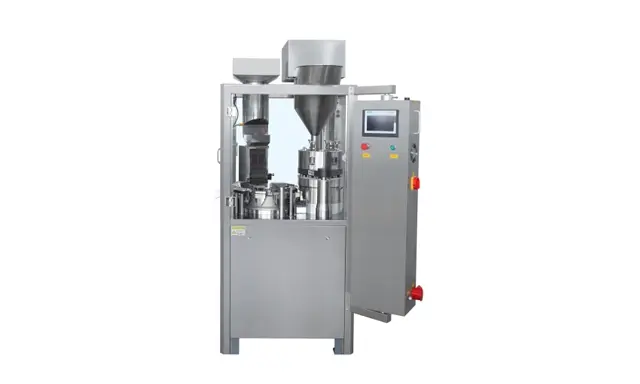
capsule filling machine

Main Types of Capsule Filling Machine & Core Parameters

Classification by Automation Level

Capsule filling machine models are strictly classified according to production capacity, automation level, and application scenarios. Each type has unique structural designs, operational requirements, and compliance standards, making model selection the primary step for capsule production layout. The three mainstream types cover the full production chain from laboratory research and small-batch trials to large-scale commercial mass production.
Type
Typical Output
Best‑Fit Scenario
Key Compliance Note
Manual capsule filling machine
50‑300 capsules/hour
Lab R&D, formula testing, small trial batches, academic research
Full manual operation; strict SOP training required to avoid human error contamination
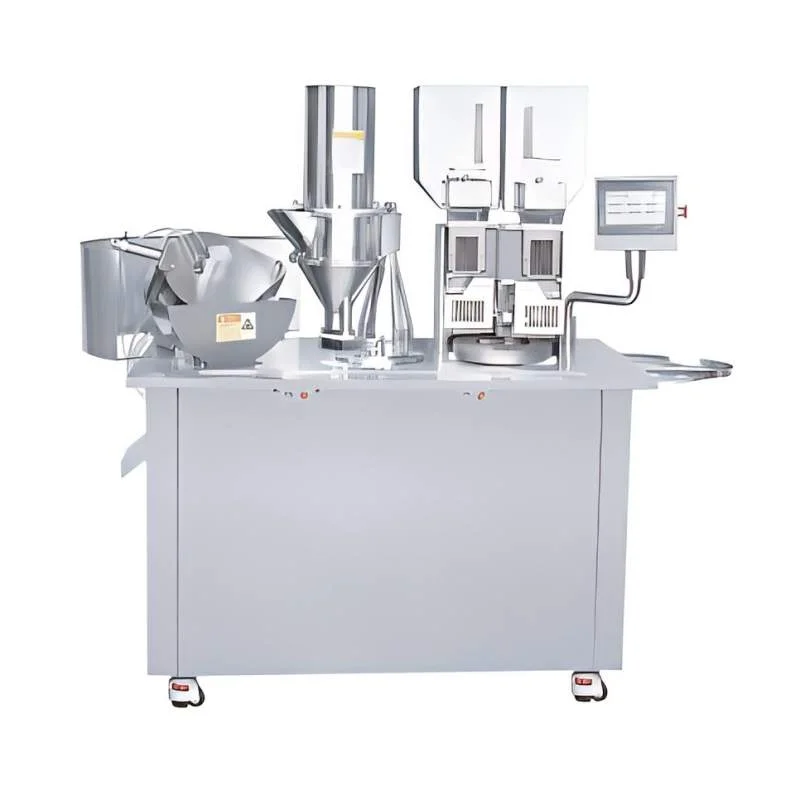
Semi‑automatic capsule filling machine
3,000‑25,000 capsules/hour
Pilot plant production, mid‑batch formal manufacturing, small enterprise mass production
Manual capsule loading + automatic dosing/closing; regular tooling calibration mandatory
Fully‑automatic capsule filling machine
25,000‑150,000+ capsules/hour
Large‑scale pharmaceutical factory commercial production, high‑volume standardized orders
Full automated operation; equipped with inline weight detection and defective product rejection system
The manual capsule filling machine features low cost, small footprint, and flexible operation, making it ideal for early-stage formula verification without large equipment investment. The semi-automatic capsule filling machine balances efficiency and cost, solving the low-output pain point of manual equipment while avoiding the high investment cost of fully automatic machines, which is the most mainstream choice for mid-sized pharmaceutical and nutraceutical enterprises. The fully automatic capsule filling machine is designed for industrial mass production, with intelligent control systems that realize unmanned continuous operation and fully meet high-standard GMP production requirements.

Standard Working Sequence of a Capsule Filling Machine

Step-by-Step Operational Workflow

Regardless of automation level, all qualified capsule filling machine equipment, including the full‑automatic liquid capsule filling machine for special liquid‑filled formulations, follows a unified standardized production process formulated by pharmaceutical industry authorities. The complete workflow ensures shell integrity, dosing accuracy, and capsule tightness, avoiding defective products such as empty shells, under‑filled shells, and loose capsules.
  1. Capsule Feeding and Orientation: The capsule filling machine automatically loads empty capsules into the feeding system, and through mechanical vibration and guiding structures, uniformly arranges capsules with the body facing down and the cap facing up, eliminating chaotic placement.
  2. Capsule Separation: The precision mechanical structure of the capsule filling machine separates capsule caps and bodies stably, ensuring no shell deformation or damage during separation, which is the key premise of accurate filling.
  3. Precision Dosing and Filling: According to the material type (powder, granule, pellet), the capsule filling machine adopts a matching dosing system including tamping pins and dosators to quantitatively fill raw materials into capsule bodies, controlling filling weight error within the industry standard range.
  4. Capsule Locking and Sealing: After filling is completed, the equipment automatically aligns caps and bodies, and applies constant pressure to lock the capsules tightly to prevent material leakage during storage and transportation.
  5. Ejection and Screening: Finished qualified capsules are ejected and collected, while unqualified products such as unfilled, damaged, and loosely locked capsules are automatically screened and eliminated by the system.
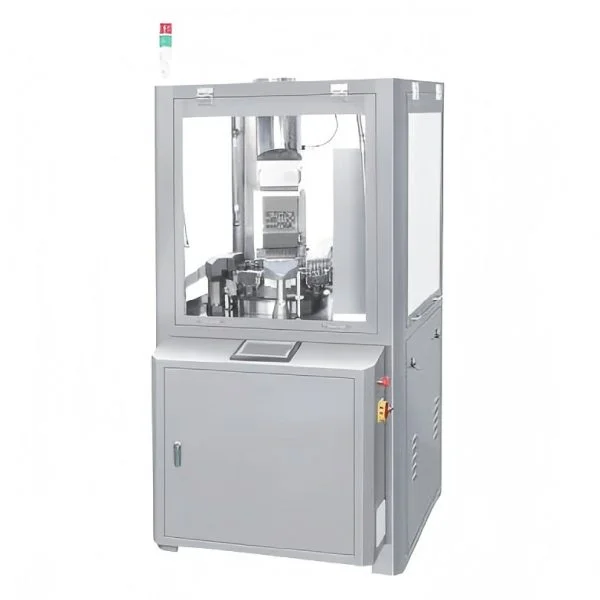
full automatic capsule filling machine

Core Factors Affecting Capsule Filling Machine Operation Quality

Many manufacturers encounter unstable product quality even with professional capsule filling machine equipment. In addition to equipment performance, operational specifications and material status are crucial influencing factors. The following key points must be strictly controlled in daily production:
  • Raw Material Fluidity: Powder materials with excessive viscosity or poor fluidity will cause uneven dosing of the capsule filling machine, leading to large weight differences between individual capsules. Pre-screening and drying of materials are required before production.
  • Capsule Shell Quality and Storage Environment: Empty capsule shells are sensitive to humidity. Too high or too low workshop humidity will cause shell deformation, affecting the separation and locking efficiency of the capsule filling machine.
  • Equipment Tooling Calibration: Different capsule sizes (00#, 0#, 1#, 2#, 3#) require matched tooling. Long-term operation will cause tooling wear, so regular calibration and replacement are necessary to ensure filling accuracy.
  • Workshop Cleanliness: The production environment of the capsule filling machine must meet GMP dust-free standards to avoid material contamination and ensure product safety and hygiene.
  • Regular Equipment Maintenance: Long-term operation will produce residual materials and mechanical wear. Timely cleaning and maintenance of the capsule filling machine can reduce failure rates and extend equipment service life.

GMP Compliance Standards for Capsule Filling Machine

For pharmaceutical production enterprises, GMP compliance is a mandatory industry threshold, and the capsule filling machine, as core production equipment, must fully meet standardized design and operational requirements. A compliant capsule filling machine features a fully polished stainless steel body without dead corners, which is convenient for full disassembly and cleaning, effectively avoiding material residue and cross‑contamination between batches. For complete post‑processing workflows, many facilities pair this unit with a capsule polisher machine to remove surface dust and leftover powder from finished capsules.

In daily production management, enterprises need to establish complete equipment operation logs for the capsule filling machine, recording production time, batch information, dosing parameters, and equipment maintenance records. This logging practice also extends to supporting units such as the capsule polisher machine for full‑batch traceability. Regular sampling and testing of capsule filling weight is required during operation. Once weight deviation is found, the capsule filling machine should be stopped immediately for parameter adjustment and tooling inspection. Standardized operation of the capsule filling machine and auxiliary equipment like the capsule polisher machine is not only the key to passing regulatory audits but also the core guarantee of consumer drug safety.

Practical Buying Guide for Beginner Manufacturers
When purchasing a capsule filling machine, beginners often blindly pursue high output while ignoring actual production demands, resulting in equipment waste or insufficient production capacity. First, enterprises need to confirm their long-term production scale: laboratory research, formula trials and small-batch customization are perfectly matched with a manual capsule filling filler and small semi-automatic capsule filling machine; stable mid-batch production prefers conventional semi-automatic models; and large-scale standardized pharmaceutical factories must choose fully automatic intelligent capsule filling machine with detection functions. Second, confirm the compatibility of the capsule filling machine with production materials and capsule sizes. Even a professional manual capsule filling filler requires strict material adaptability testing for small-batch trials. High-precision dosing structures are required for ultra-fine powders, while pellet materials need special anti-crushing filling components. In addition, it is necessary to prioritize equipment with expandable functions, which can be matched with inline detection, automatic sorting, and cleaning systems in the later stage to adapt to production capacity upgrades.
semi-automatic capsule filling machine

Daily Maintenance Tips for Capsule Filling Machine

Scientific daily maintenance can effectively stabilize the working performance of the capsule filling machine, reduce failure rates, and extend the overall service life of production equipment. For pharmaceutical production environments where batch continuity and product stability are prioritized, standardized maintenance is as critical as correct operation. Most beginner equipment failures stem from irregular cleaning, neglected lubrication, and delayed tooling inspection, which gradually lead to dosing deviation, capsule jamming, and low production efficiency.
Daily cleaning is the most basic maintenance step for any capsule filling machine. After each production batch, operators must disassemble contact parts including filling trays, dosing pins, and capsule guide rails to remove residual powder and particle deposits. Residual materials left on equipment surfaces will absorb moisture, harden, and affect the precision of subsequent filling operations, while also posing cross-contamination risks for different formula batches. All stainless steel contact components should be cleaned with pharmaceutical-grade cleaning agents and dried completely before reassembly.
Regular mechanical lubrication and inspection are essential for long-term stable operation of the capsule filling machine. Transmission gears, bearings, and rotating shafts need periodic food-grade lubrication to avoid mechanical friction loss and abnormal noise. Operators should inspect tooling wear every week, focusing on capsule separation molds and tamping pin assemblies. Worn tooling will cause incomplete capsule separation, shell cracking, and inconsistent filling depth, directly lowering finished product qualification rates.
In addition, seasonal maintenance cannot be ignored. In high-humidity seasons, the workshop environment and equipment internal components need regular dehumidification treatment to prevent capsule shell softening and metal part rusting. Recording all maintenance behaviors in equipment logs helps enterprises form standardized maintenance systems, meet GMP traceability requirements, and ensure the long-term stable operation of the capsule filling machine.

FAQ

What is the most frequent issue when operating a capsule filling machine?
Fill-weight inconsistency is the most common problem, mainly caused by poor powder flowability, worn dosing tooling, unstable workshop humidity, and irregular capsule shell orientation. Regular tooling calibration, material pre-treatment, and humidity control can effectively solve this issue and stabilize capsule filling machine performance.
Most modern multi-functional capsule filling machine models support powder, granule, and pellet filling, but different filling materials require matched interchangeable dosing assemblies. Operators must replace corresponding parts and reset parameters when switching material types to ensure filling accuracy.
No. Fully-automatic models are suitable for large-scale mass production, while manual and semi-automatic capsule filling machine options are more cost-effective for laboratory R&D, formula testing, and small-batch pilot production. Manufacturers should select equipment based on actual batch scale and production goals rather than blindly pursuing high automation.

News

Contact Us

滚动至顶部