


In pharmaceutical manufacturing, the accuracy and consistency of capsule filling directly impact product quality, patient safety, and regulatory compliance. Among the various technologies available for filling hard-shell capsules, the dosator capsule filling machine stands out as a precision-engineered solution designed to handle challenging powder formulations with exceptional accuracy.
A dosator capsule filling machine is an automatic encapsulation system that uses a hollow cylindrical nozzle—known as a dosator—to collect, compress, and transfer a precise volume of powder into empty capsule bodies. Invented by Zanasi in 1957, this technology has become a cornerstone of modern capsule filling operations, particularly for low-dose and inhalation products.
This article explores the core filling principle of the dosator capsule filling machine, its fundamental advantages, and why it remains a preferred choice for pharmaceutical manufacturers worldwide.
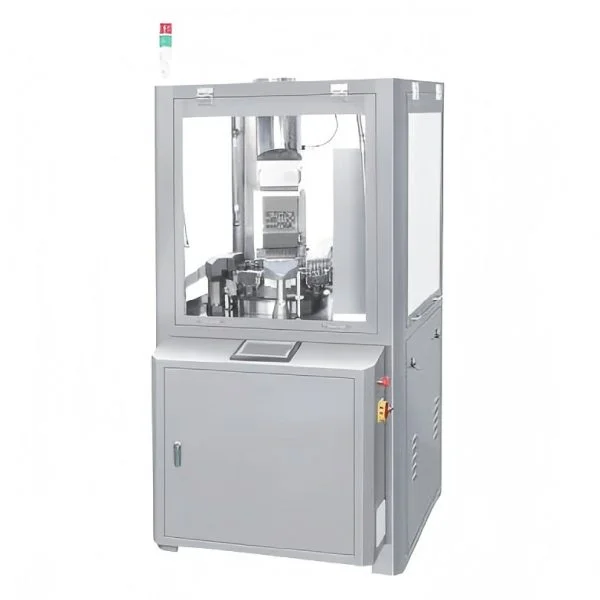
The Core Filling Principle of a Dosator Capsule Filling Machine
Understanding how a dosator capsule filling machine operates requires a closer look at its mechanical design and sequential filling process.
Key Components
The dosator capsule filling machine consists of several essential components that work in precise coordination:
Dosator nozzle – A hollow stainless steel cylinder open at the bottom, which dips into the powder bed to collect material
Internal piston – A movable piston within the dosator that compresses the powder to form a cohesive plug
Rotating powder bed – A bowl containing the powder formulation, maintained at a consistent depth
Transfer mechanism – Systems that move the dosator from the powder bed to the capsule body
Ejection system – The piston mechanism that pushes the formed plug into the empty capsule
The Four-Step Filling Cycle
The filling process of a dosator capsule filling machine follows a precise, repeatable sequence:
Step 1: Dipping into the Powder Bed
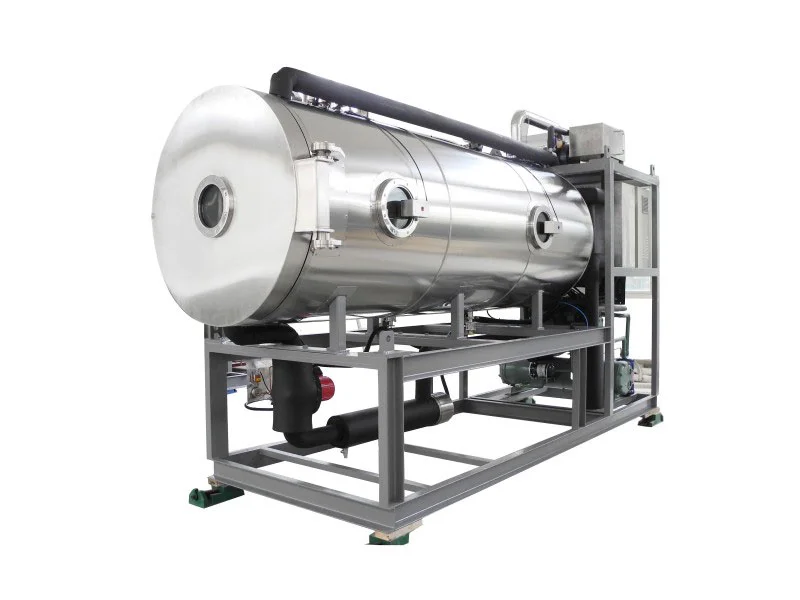
The dosator nozzle descends into the rotating powder bed until it reaches a predefined depth. As the hollow cylinder enters the powder, material is forced upward into the chamber until it reaches the piston. This initial stage is known as precompression, where the powder undergoes its first densification. For formulations that have been processed through a freeze dryer, the resulting powder often exhibits high porosity and significant electrostatic charge, making this precompression step particularly critical for stabilizing the bed density and preventing erratic fills.
Step 2: Compression
Once the dosator is fully immersed, the internal piston applies downward pressure to compress the powder within the chamber. This compression can be achieved through precompression, active compression, or a combination of both. When handling materials derived from a freeze dryer, the compression parameters must be carefully tuned to accommodate the brittle, porous structure of lyophilized particles—ensuring the formation of a dense, cohesive plug with precisely controlled weight and density, without crushing the particles excessively.
Step 3: Transfer
The dosator is lifted from the powder bed and rotated or indexed to position itself directly over an open capsule body. During this movement, the powder plug must be retained within the dosing chamber without losing material.
Step 4: Ejection
The internal piston pushes downward, ejecting the compressed powder plug from the dosator chamber directly into the waiting capsule body. The filled capsule then proceeds to the next station for capping and quality inspection.
Volumetric Dosing Principle
The dosator capsule filling machine operates on a volumetric dosing principle: the dose volume is determined by the geometry of the dosing chamber—specifically, the diameter of the dosator and the position of the internal piston. This design allows for precise control over fill weight, with the chamber length being centrally adjustable to suit different filling requirements.
Comparison: Dosator vs. Tamping Pin Filling
| Feature | Dosator Capsule Filling Machine | Tamping Pin System |
|---|---|---|
| Dosing Principle | Direct slug capture in hollow cylinder | Staged compression in rotating disc bores |
| Best Suited For | Cohesive, sticky, low-dose powders | Free-flowing powders and granules |
| Fill Weight Range | Excellent for low-dose (<50 mg) | Better for higher-dose applications |
| Powder Compaction | Higher, denser plugs | Lower, less dense plugs |
| Flexibility | Variable chamber geometry | Requires disc change for volume adjustment |
| Powder Loss | Potential for higher loss | Generally lower loss |
FAQ
What types of powders are best suited for a dosator capsule filling machine?
The dosator capsule filling machine is particularly effective for cohesive, sticky, and poorly flowing powders, as well as low-dose formulations requiring precise fill weights below 50 mg. It is also widely used for dry powder inhaler formulations where controlled compaction is essential.
How does a dosator capsule filling machine differ from a tamping pin filling machine?
A dosator capsule filling machine captures powder directly into a hollow cylinder that dips into the powder bed, while a tamping pin system compresses powder into bores of a rotating disc in successive stages. Dosator systems excel with cohesive powders and low doses; tamping systems are better for free-flowing powders and higher doses.
Can a dosator capsule filling machine handle granules as well as powders?
Yes. Research has shown that the dosator nozzle principle can work successfully for granules, particularly when greater compression is required to fill large-dose drugs or use smaller capsule sizes. The plug formed by a dosator machine is consistently denser than the maximum bulk density, which can be advantageous for granule formulations.