


In the world of automatic capsule filling, two dosing principles dominate: the dosing disc (tamping-pin) system and the dosator system. While both technologies have existed for decades, their approaches to powder handling are fundamentally different. Understanding the dosator capsule filling machine—how it works, where it excels, and which powders it handles best—is essential for any manufacturer making a capital equipment decision.
The dosator capsule filling machine represents a distinct approach to powder dosing that offers unique advantages for specific applications, particularly low-dose formulations and cohesive powders. This article provides a comprehensive examination of the dosator dosing principle, compares its powder filling accuracy against conventional systems, and identifies the powder types and production scenarios where dosator technology delivers superior results.
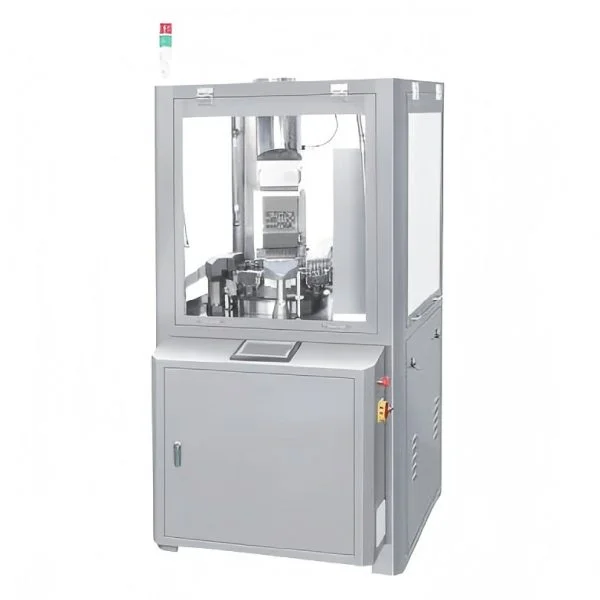
What Is a Dosator Capsule Filling Machine and How Does Its Dosing Principle Work?
A dosator capsule filling machine uses a hollow cylinder—the dosator—to directly capture a measured volume of powder from the powder bed and transfer it into the capsule body. Unlike tamping-pin systems that build powder slugs progressively in a rotating dosing disc, the dosator forms a powder plug in a single, controlled motion.
The Core Components of a Dosator Capsule Filling Machine
The dosator system consists of several key elements:
A hollow tube (the dosator nozzle) with a precision-bored internal chamber
A movable piston inside the tube that defines the dosing chamber volume
A vacuum system that assists powder pickup and retention
A powder bowl containing the product bed
A transfer mechanism that positions the dosator over the capsule body
The dosing chamber length is determined by the position of the movable piston, and the chamber volume can be adjusted to suit different fill weight requirements.
Step-by-Step Dosing Principle of the Dosator Capsule Filling Machine
The dosing sequence of a dosator capsule filling machine follows a precise, repeatable cycle:
Immersion: The dosator nozzle descends into the powder bed, penetrating to a controlled depth.
Powder pickup: A low-pressure vacuum is applied within the dosator, drawing powder into the dosing chamber. The vacuum maintains the powder in the chamber, forming a slug with a predetermined bulk density.
Chamber formation: The piston position determines the volume of powder retained. Powder densification within the dosator can be achieved by precompression, compression, or both. Precompression depends on the powder-to-piston height ratio, while compression depends on piston displacement against the powder.
Transfer: The dosator moves over the open capsule body.
Ejection: The piston pushes the powder slug out of the dosing chamber and into the capsule.
Return: The dosator retracts, and the cycle repeats.
This direct, single-step dosing approach distinguishes the dosator capsule filling machine from multi-stage tamping systems.
Dosator Capsule Filling Machine Dosing Accuracy: A Comparative Analysis
The dosing accuracy of a dosator capsule filling machine is influenced by multiple variables, and understanding these factors is critical for predicting performance with specific powder formulations.
Key Variables Affecting Dosator Filling Accuracy
Research has identified several parameters that significantly impact fill weight and weight variability in dosator-based systems:
Capsule filling speed
Dosator diameter
Powder layer depth in the bowl
Powder bulk density
Particle size and distribution
Powder compressibility and air permeability
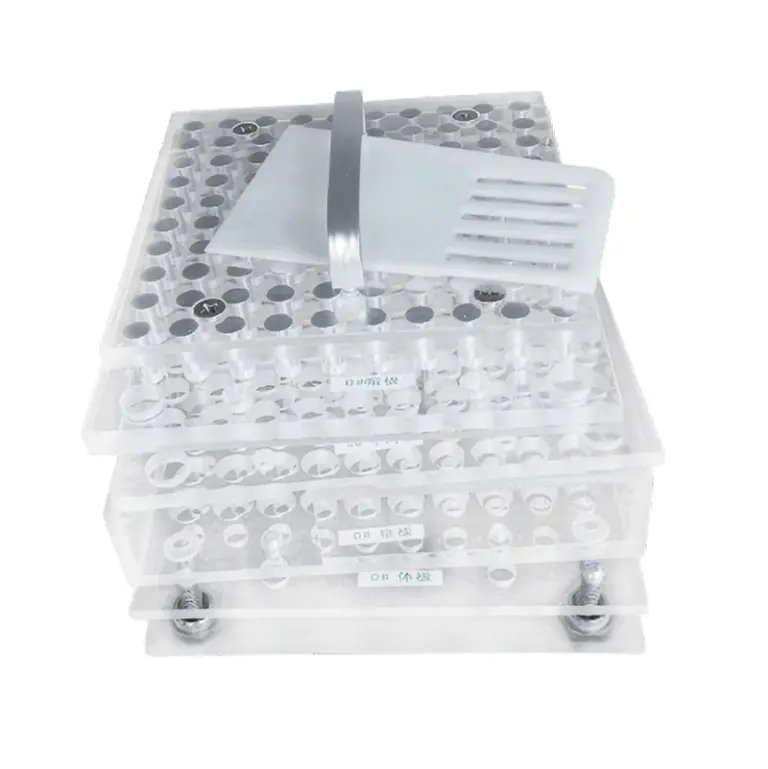
Studies have demonstrated a clear correlation between capsule fill weight and particle size, air permeability, and compressibility. The weight variability (RSD) is inversely correlated with filling speed, dosator diameter, and powder layer depth. By contrast, a manual capsule filling filler bypasses these complex parameters entirely—relying instead on operator technique and manual compression—which introduces far greater weight variability (often exceeding ±5–8%) and makes consistent dose control significantly more challenging, particularly with fine or cohesive powders.
Dosator Capsule Filling Machine vs. Tamping-Pin Systems: Accuracy Comparison
| Criteria | Dosator Capsule Filling Machine | Tamping-Pin (Dosing Disc) System |
|---|---|---|
| Dosing principle | Direct slug capture in hollow tube | Multi-stage compression in rotating disc |
| Fill weight range | Micro-dose to moderate; as low as 1 mg | Standard to high fill weights |
| Typical accuracy | ±1% – ±2.5% (stable powders) | ±2% – ±3.5% |
| Best powder types | Free-flowing, cohesive, low-dose formulations | Free-flowing powders and granules |
| Compaction force | 50–150N range | Up to 200N |
| Speed capability | Moderate to high | Up to 180,000 capsules/hour |
| Sensitivity to powder flow | High—poor flow causes incomplete pickup | Low—progressive compaction stabilizes density |
Why Dosator Accuracy Excels in Low-Dose Applications
The dosator capsule filling machine offers distinct accuracy advantages for specific applications. A major advantage of dosator technology for processing low-dose dry powder inhalers is that the system can dose very small amounts of powders into capsules with maximum precision. The dosators can be accurately adjusted without any need to compress or aspirate the powder.
For micro-dose products, dosator systems are often preferred because the volume can be defined with precision. The ability to dose as low as 1 mg makes the dosator capsule filling machine particularly valuable for potent APIs and inhalation products. This same principle of precision-oriented equipment design extends across the solid-dosage manufacturing spectrum—just as a tablet deduster removes surface dust and fines from compressed tablets to ensure uniform appearance and weight consistency, the dosator’s controlled powder pickup and ejection mechanism ensures that each capsule receives an identical, precise dose without compromising powder integrity.
Powder Types Best Suited for a Dosator Capsule Filling Machine
Not every powder performs well in a dosator capsule filling machine. Understanding which powder characteristics align with dosator technology is essential for successful implementation.
Ideal Powder Characteristics for Dosator Systems
Powders with good flow and consistent batch-to-batch behavior work best with dosator systems. These powders typically:
Settle evenly in the powder bed
Do not trap significant amounts of air
Have uniform particle size distribution
Exhibit stable bulk density
When powder moves smoothly and maintains a steady bed level, the single-step compression of the dosator capsule filling machine can create a stable, repeatable slug. By contrast, a full-automatic liquid capsule filling machine operates on an entirely different principle—designed to handle liquid or semi-solid formulations such as oils, suspensions, and pastes, which cannot be processed by powder-based dosator systems. Where the dosator relies on powder flow and compressibility for dose accuracy, liquid filling machines employ precise volumetric pumps or peristaltic mechanisms to deliver consistent fills, making them the preferred choice for softgel encapsulation and liquid-filled hard capsules.
Powders That Challenge Dosator Performance
Dosator systems have limitations. They favor free-flowing granulations and may struggle with poorly flowing or highly cohesive powders. The powder must be retained in the dosing chamber while the dosator is in motion—if the powder does not stay in place, fill weight consistency suffers.
Dosators are therefore suited to a specific range of powders, necessitating careful matching of powder properties to the dosator system.
Common Materials Filled by Dosator Capsule Filling Machines
The dosator capsule filling machine is widely used for:
Dry powder inhaler (DPI) formulations: Low-dose inhalation products requiring precise micro-dosing
Potent APIs: High-potency active ingredients dosed in milligram or sub-milligram quantities
Free-flowing pharmaceutical powders: Well-characterized excipients and API blends
Nutraceutical formulations: Dietary supplements with consistent powder characteristics
Micro-tablets and pellets: Some dosator systems can handle pellets and granules
Limitations and Considerations for Dosator Capsule Filling Machine Selection
While the dosator capsule filling machine offers clear advantages, it also has limitations that must be considered.
Powder Flow Dependency
Dosator systems depend on consistent powder flow and a steady powder bed. If the bed level drops or rises during production, the system collects an incorrect volume. Operators must monitor humidity and environmental conditions because these factors affect how powder settles.
Limited Powder Type Range
Dosators are suited to a limited range of powders compared to tamping-pin systems. Tamping systems tolerate poorly flowing and low bulk-density powders better than dosator systems.
Speed Constraints
While high-speed dosator machines exist, tamping-pin systems generally achieve higher maximum speeds—up to 180,000 capsules per hour compared to the dosator’s typical range.
Advantages of the Dosator Capsule Filling Machine Over Conventional Systems
The dosator capsule filling machine offers several distinct advantages that make it the preferred choice for specific production scenarios.
Precision Micro-Dosing Capability
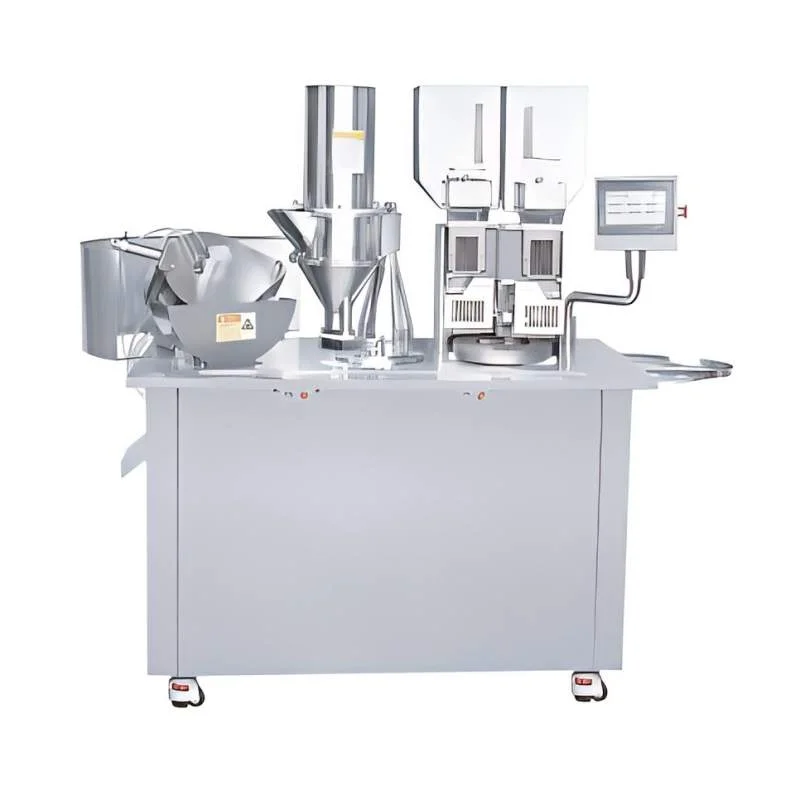
The most significant advantage of the dosator capsule filling machine is its ability to handle very low fill weights with exceptional precision. For products requiring doses below 50 mg—and especially below 10 mg—the dosator system often outperforms tamping-pin alternatives. The fill weight range for low-dose applications can be as low as 1–45 mg.
Flexibility in Dose Adjustment
The dosator capsule filling machine allows for rapid dose adjustment by changing the piston position, which alters the dosing chamber volume. This flexibility is valuable for R&D environments and multi-product facilities where fill weights change frequently.
Reduced Powder Compaction
Unlike tamping-pin systems that apply progressive compaction, the dosator capsule filling machine can form a powder slug with minimal compression. This is particularly important for inhalation products where excessive compaction can negatively impact aerodynamic performance and drug dispersion. The same attention to product integrity extends to downstream processing—a capsule polisher gently removes surface dust and static charge from filled capsules without subjecting them to harsh mechanical action, ensuring that the delicate powder bed structure preserved by the dosator remains intact through to the final packaged product.
Interchangeability with Tamping Systems
Some modern capsule filling machines are designed to accommodate both dosing principles, allowing manufacturers to switch between dosator and tamping systems based on powder type. This flexibility enables a single machine platform to handle a broader range of formulations.
Selecting the Right Dosator Capsule Filling Machine for Your Application
Choosing a dosator capsule filling machine requires a systematic evaluation of your powder characteristics and production requirements.
Key Selection Criteria
When evaluating a dosator capsule filling machine, consider:
Fill weight range: Does your product require micro-dosing below 50 mg?
Powder flow properties: Is your powder free-flowing with consistent bulk density?
Production volume: What daily throughput do you need?
Changeover frequency: How often will you switch between products?
Regulatory requirements: Does your application demand specific accuracy standards?
When to Choose a Dosator Capsule Filling Machine
A dosator capsule filling machine is the optimal choice when:
Your product requires low fill weights (especially below 50 mg)
You are manufacturing dry powder inhalers or other inhalation products
Your powder has good flow characteristics and consistent behavior
You need rapid dose adjustment for multiple SKUs
Minimal powder compaction is critical for product performance
When to Consider Alternatives
Consider tamping-pin systems when:
Your powder is poorly flowing or has low bulk density
You need maximum production speed above 100,000 capsules per hour
Your fill weights are standard or high (above 100 mg)
You have a single product with long production runs
Conclusion
The dosator capsule filling machine represents a sophisticated dosing technology that delivers exceptional precision for low-dose applications and cohesive powder formulations. Its direct slug-capture principle, combined with vacuum-assisted powder handling, enables fill weight accuracy that rivals—and in some cases exceeds—conventional tamping-pin systems.
The key to successful dosator implementation lies in matching the technology to the right powder characteristics. Free-flowing powders with consistent bulk density and uniform particle size distribution yield the best results. For manufacturers producing low-dose pharmaceuticals, dry powder inhalers, or potent APIs, the dosator capsule filling machine offers a compelling combination of precision, flexibility, and product quality protection.
As the pharmaceutical industry continues to develop increasingly potent and low-dose therapies, the dosator capsule filling machine will remain an essential tool in the solid dosage manufacturing arsenal.
FAQ
What is the minimum fill weight a dosator capsule filling machine can achieve?
Dosator capsule filling machines can dose as low as 1 mg, with typical low-dose applications ranging from 1–45 mg. This makes them ideal for potent APIs and inhalation products.
How does the accuracy of a dosator capsule filling machine compare to a tamping-pin system?
With stable powders, dosator systems typically achieve ±1% to ±2.5% accuracy, while tamping-pin systems deliver ±2% to ±3.5%. Dosator systems excel in low-dose applications where volume control is critical.
Can a dosator capsule filling machine handle poorly flowing powders?
Dosator systems favor free-flowing powders. Poorly flowing or highly cohesive powders can cause incomplete pickup and weight variability. For such powders, tamping-pin systems may be more suitable.