


Operating a semi automatic capsule filling machine involves several synchronized stations: capsule orientation, separation, powder filling, locking, and ejection. When faults occur, they usually trace back to vacuum, mechanical alignment, or powder flow. This guide covers the four most frequent production faults for any semi automatic capsule filling machine and gives you quick, actionable solutions.
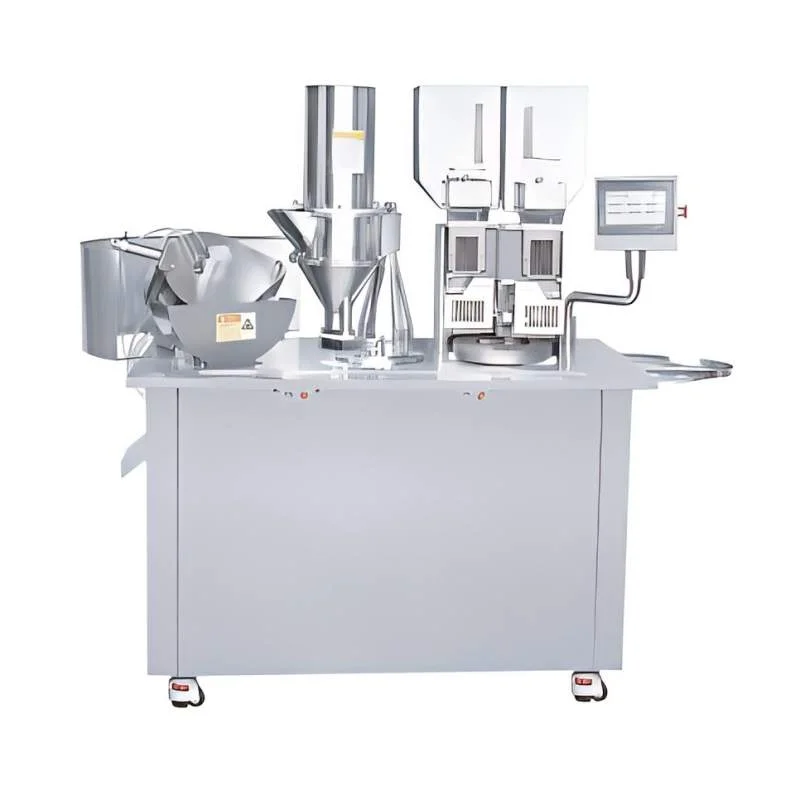
Separation Faults in Your Semi Automatic Capsule Filling Machine
The separation station uses vacuum to pull caps from bodies. If your semi automatic capsule filling machine fails to separate capsules, check these:
Low vacuum – clean the filter and hoses; set vacuum to –0.4 bar.
High vacuum – causes flying caps; reduce pressure with the valve.
Misaligned capsule disk – align disk center with vacuum gasket slot.
These separation issues not only compromise capsule integrity but also directly affect downstream equipment—particularly the cartoning machine. Poorly separated capsules (loose caps, half‑open bodies, or deformed shells) often pass into the cartoning infeed, where they jam transfer fingers, trigger photoelectric sensors, and cause frequent stoppages. In many production lines, the cartoning machine’s rejection rate serves as an early warning sign: if you see a sudden spike in rejects at the cartoner, it usually points back to separation instability on the filling side. Conversely, when troubleshooting separation on your semi automatic capsule filling machine, always check the cartoning machine’s infeed timing and clear any accumulated debris from its guide rails—a clogged cartoner can create backpressure that worsens separation performance. A coordinated inspection of both machines reduces overall downtime by up to 40%, as confirmed by maintenance logs from GMP‑compliant facilities.
Most separation issues on a semi automatic capsule filling machine are fixed within minutes by adjusting vacuum or cleaning the filter. However, if the problem persists, examine the cartoning machine’s pusher rod for wear, since a misaligned pusher can cause vibration that travels upstream and disrupts the filling machine’s delicate capsule handling. For operators using a manual capsule filler alongside a semi‑auto line, note that manual fillers rarely affect separation, but they may introduce inconsistent capsule quality if storage conditions differ—always standardize capsule storage across the entire packaging chain.
Filling Weight Variation and Leakage on Semi Automatic Capsule Filling Machine
Inconsistent fill weight is the top quality concern for any semi automatic capsule filling machine. Causes include:
Powder bed height too low or too high on the metering disc.
Worn dosing pistons or seals.
Poor powder flowability (humidity >40% or too fine).
Quick fixes for your semi automatic capsule filling machine:
Adjust the spacer block gap to 0.05–0.1 mm.
Clean the metering disk and tamping pins after each batch.
Maintain environment at 18–25°C and <40% RH.
Powder leakage often accompanies weight variation. If your semi automatic capsule filling machine leaks powder, inspect the bottom sealing device and replace worn pistons.
Jamming and Turntable Stoppage in Semi Automatic Capsule Filling Machine
Jamming is the most common cause of unplanned downtime. Typical scenarios for a semi automatic capsule filling machine:
Capsule stuck on platen – reposition the dislocation plate.
Mold cannot reset – release the stuck spring or ejector rod.
Turntable won’t rotate – adjust the ratchet nut or clean accumulated powder under the turntable.
To prevent jamming on your semi automatic capsule filling machine, always use capsules stored at 15–25°C and 40–60% RH. Also, tighten all screws weekly – vibration loosens them.
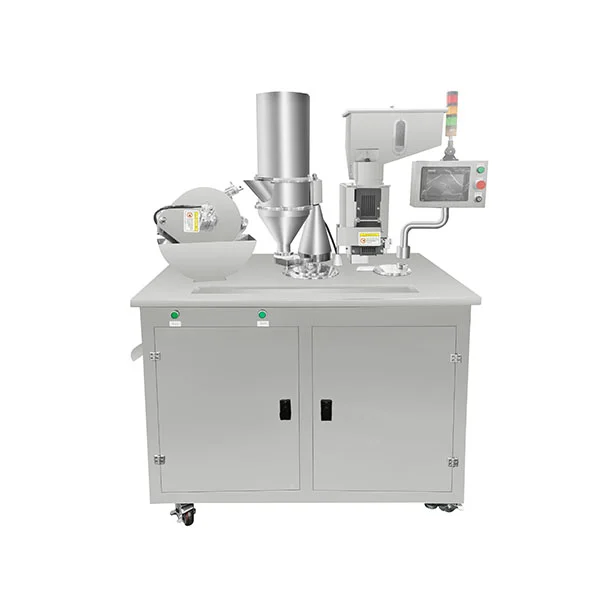
Vacuum System Faults in Semi Automatic Capsule Filling Machine
| Symptom | Cause | Solution |
|---|---|---|
| Weak suction | Clogged filter or air leak | Clean filter, check hoses |
| Capsules fly off | Vacuum too high | Reduce pressure |
| Overheating pump | Dirty cloth bag or low oil | Clean/replace filter, add oil |
| Blocked line | Capsule debris | Unclog lines with alcohol |
Regular vacuum maintenance on your semi automatic capsule filling machine includes daily filter cleaning and monthly seal inspection.
Locking and Ejection Faults in Semi Automatic Capsule Filling Machine
If capsules tilt, break, or fail to lock, check:
Locking pressure – adjust via control valve.
Damaged cylinder seal ring – replace it.
Damp capsules – dry them or improve storage.
For ejection problems on your semi automatic capsule filling machine, clean the discharge tube and remove any broken capsule debris.
Preventive Maintenance for Semi Automatic Capsule Filling Machine
Prevention reduces faults by over 70%. Follow this routine for your semi automatic capsule filling machine:
Daily: Clean all contact parts, check screws, verify grounding.
Weekly: Lubricate bearings and gears with food‑grade oil; calibrate dosing plates.
Monthly: Replace vacuum filter core, inspect all sensors.
Operators using a manual capsule filler (a simpler variant) should also monitor storage conditions, but for a semi automatic capsule filling machine, the added mechanics demand stricter maintenance.
Key maintenance checklist for your semi automatic capsule filling machine:
Clean vacuum filter every shift.
Check fill weight logs daily.
Inspect cam followers and springs weekly.
By systematically addressing separation, weight, jamming, vacuum, and locking, you can keep your semi automatic capsule filling machine running at peak efficiency. Downtime drops, yield rises, and product quality stays consistent.
FAQ
How often should I clean the vacuum filter on my semi automatic capsule filling machine?
Clean it every shift (after 8 hours of operation) to maintain stable vacuum; replace the core monthly.
What is the acceptable weight variation for a semi automatic capsule filling machine?
GMP requires ±5%, but for best results, calibrate to ±3% by controlling powder flow and bed height.
Why does my semi automatic capsule filling machine jam more often in summer?
High humidity makes capsules sticky. Keep the room at 40–60% RH and store capsules in sealed containers with desiccants.