


The journey from a promising formulation in the research laboratory to a commercially successful capsule product is as much about equipment selection as it is about formulation science. Every stage of product development—from initial feasibility testing to full-scale commercial production—demands a different class of capsule maker equipment. Choosing the wrong machine at the wrong time can mean either over-investing in capacity you do not yet need or under-investing to the point where production bottlenecks delay your market entry.
The global capsule filling equipment market was valued at approximately USD 235 million in 2025 and is projected to reach USD 504 million by 2035, growing at a CAGR of 7.92%. More than 68% of capsule-based product makers now prefer automated filling systems to reduce manual handling and improve output consistency. Meanwhile, nearly 47% of mid-sized firms are upgrading semi-automatic units as they scale. These trends underscore a fundamental reality: the capsule maker you choose today must not only meet current needs but also accommodate tomorrow’s growth.
This guide maps the complete upgrade path—from the simplest manual capsule filler to high-speed automated production lines—so you can match your equipment investment to your business stage and scale with confidence.

Understanding the Capsule Maker Landscape: From Manual to Fully Automatic
Before diving into upgrade strategies, it is essential to understand the three primary categories of capsule maker equipment available on the market today. Each category occupies a distinct position in the production spectrum, defined by throughput capacity, automation level, capital investment, and operational complexity.
A manual capsule filler is the simplest form of capsule maker—a benchtop device that relies entirely on human operation. The operator loads empty capsule bodies into a plate, spreads powder over the dosing area, manually tamps the powder into each capsule body, and then caps the filled units. No electricity is required, and the entire process is cycle-based rather than continuous. Manual fillers are typically available in configurations of 100, 200, 300, or even 400 holes per cycle.
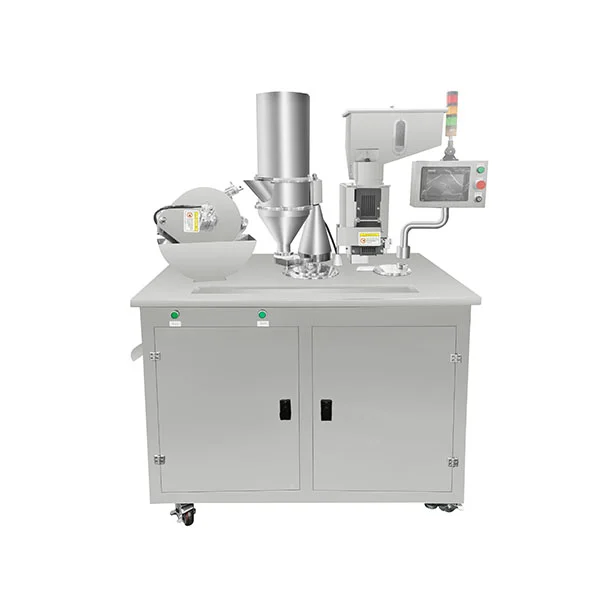
A semi-automatic capsule filler machine represents the first step toward automation. These capsule maker systems automate the most repetitive and consistency-sensitive steps—such as capsule separation, powder dosing, and tamping—while still requiring the operator to load empty capsules and remove filled ones. Output typically ranges from 10,000 to 30,000 capsules per hour.
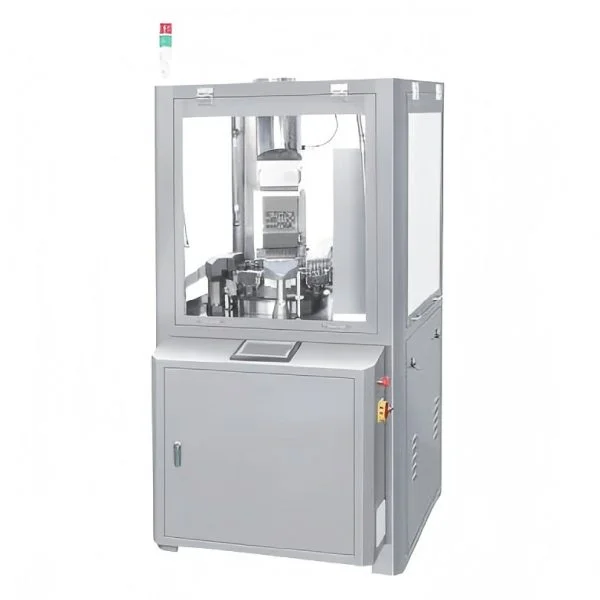
A fully automatic capsule filler machine is the apex of capsule maker technology. These systems handle the entire filling cycle continuously—separation, filling, tamping, joining, and ejection—with the operator primarily overseeing rather than performing each cycle. Output ranges from 30,000 to over 150,000 capsules per hour.
The R&D Stage: Why a Manual Capsule Maker Is Your Ideal Starting Point
In the research and development phase, the primary objective is not high-volume production but formulation validation, feasibility testing, and clinical sample preparation. Production volumes are typically small—ranging from a few dozen to a few thousand capsules per batch—but the variety of formulations tested can be extensive. At this stage, flexibility matters far more than speed.
A manual capsule filler is the capsule maker of choice for R&D environments for several compelling reasons. First, the upfront investment is minimal—typically a few hundred to a few thousand dollars, compared to tens or hundreds of thousands for automated systems. Second, changeover between different formulations is fast and simple; cleaning the powder tray and swapping the dosing plate takes minutes rather than hours. Third, manual fillers require no electricity, compressed air, or specialized facility modifications, making them ideal for temporary lab setups.
Output Realities of the Manual Capsule Maker
The throughput of a manual capsule filler depends primarily on two factors: the number of holes in the filling plate and the operator’s efficiency. A well-organized operator using a 100-hole manual capsule filler can typically achieve 20–25 cycles per hour, translating to approximately 2,000–2,500 capsules per hour. With a 300-hole machine, output can reach 8,000 capsules per hour.
However, it is important to recognize the limitations. Producing 100,000 capsules with a manual capsule filler requires approximately 25 to 40 hours of focused hands-on labor, depending on workflow optimization. That same volume can be completed in roughly a single shift on a semi-automatic capsule filling machine, which automates the dosing and tamping steps while still requiring manual capsule loading.
When to Move Beyond the Manual Capsule Maker
Most brands can comfortably stay with a manual capsule filler up to roughly 100,000 capsules per month. The upgrade signals are clear:
Unordered list: Signs your manual capsule maker is reaching its limit
Monthly production consistently exceeds 100,000 capsules
Operator fatigue is becoming a bottleneck
Fill weight consistency is increasingly difficult to maintain across long runs
You are spending more time filling capsules than developing formulations
Your product portfolio is stabilizing, with fewer SKUs and larger batch sizes
The Pilot Stage: Semi-Automatic Capsule Maker as the Bridge to Production
Between laboratory R&D and full commercial production lies the critical pilot or small-batch production stage. This is where you validate that the formulation developed in the lab performs consistently under production-like conditions and where you begin to produce clinical trial supplies, stability batches, and initial market test quantities.
The semi-automatic capsule maker is the ideal bridge at this stage. It offers significantly higher output than manual systems—typically 10,000 to 30,000 capsules per hour—while requiring a fraction of the capital investment of fully automatic lines. Semi-automatic machines automate the most critical steps: capsule separation, powder dosing, and tamping. The operator’s role shifts from performing every step to loading capsules and monitoring the process. Once filled, capsules are often routed to a pill counting machine for accurate batch enumeration before packaging, ensuring that clinical trial supplies and stability samples meet precise quantity requirements.
Key Considerations for Semi-Automatic Capsule Maker Selection
When selecting a semi-automatic capsule maker for pilot production, consider the following:
Ordered list: Evaluation criteria for semi-automatic capsule maker procurement
Assess your current and near-term production volume—if daily output exceeds 50,000 capsules, you may be approaching the upper limit of semi-automatic feasibility
Evaluate powder flow characteristics—semi-automatic systems handle a wide range of formulations but may struggle with extremely cohesive or sticky powders
Consider changeover frequency—if you frequently switch between capsule sizes or formulations, prioritize machines with quick-change tooling
Verify utility requirements—semi-automatic machines typically require electricity and sometimes compressed air
Review validation documentation—ensure the supplier can provide IQ/OQ/PQ protocols to support regulatory submissions
The Upgrade Signal from Semi-Automatic to Fully Automatic
The transition from semi-automatic to fully automatic capsule maker equipment typically occurs when monthly production stabilizes above 5 million capsules or when daily output consistently exceeds 50,000 capsules. At this point, the labor cost and operational constraints of semi-automatic operation become economically unfavorable compared to the efficiency of a fully automated line.
The Production Stage: Fully Automatic Capsule Maker for Commercial Scale
When your product has cleared clinical trials, secured regulatory approval, and demonstrated consistent market demand, it is time to invest in a fully automatic capsule maker. This is the equipment class that powers commercial-scale production—delivering high output, consistent quality, and the operational efficiency required to compete in the pharmaceutical and nutraceutical markets.
Fully automatic capsule maker systems handle the entire filling cycle continuously: capsule orientation and separation, powder dosing with multiple tamping stations, capsule closing, and ejection. Output ranges from 30,000 to over 150,000 capsules per hour. These systems are typically installed in dedicated GMP production suites and require significant infrastructure: cleanroom environments, compressed air systems, vacuum, and often integrated dedusters and metal detectors.
What to Look for in a Production-Stage Capsule Maker
When evaluating fully automatic capsule maker equipment for commercial production, the following parameters are critical:
Fill weight accuracy and consistency—industry standards typically require fill weight RSD below 2% for powders
Reject rate—target below 2% of total production
Batch yield—aim for 98% or higher across three consecutive batches
Changeover time—modern machines offer quick-change kits to minimize downtime between product runs
Regulatory compliance—the system must support 21 CFR Part 11 compliance for electronic records and audit trails
Integration capability—the capsule maker should integrate seamlessly with upstream powder feeders and downstream equipment such as capsule polishers and checkweighers
The Modular Advantage
A significant trend in the capsule maker market is the move toward modular systems that can scale with production demand. Some manufacturers offer lines of full-automatic capsule filling machines where multiple models share the same footprint, utilities, and tooling—differing only in output capacity. This approach allows you to upgrade production capacity without reconfiguring your facility, significantly reducing both capital expenditure and implementation time.
Capsule Maker Selection at a Glance: A Stage-by-Stage Comparison
| Parameter | R&D Stage | Pilot/Scale-Up Stage | Commercial Production |
|---|---|---|---|
| Recommended capsule maker type | Manual capsule filler | Semi-automatic | Fully automatic |
| Typical output (capsules/hour) | 2,000 – 8,000 | 10,000 – 30,000 | 30,000 – 150,000+ |
| Investment level | Low (hundreds to thousands) | Medium (thousands to tens of thousands) | High (tens of thousands and above) |
| Automation level | Fully manual, no power required | Partially automated dosing & separation | Fully automated, integrated systems |
| Best for | R&D labs, startups, small custom batches | Growing brands, small/medium manufacturers | High-volume facilities, established brands |
| Key advantage | Lowest upfront cost, fast changeovers | Balanced output and investment | Highest sustained output, lowest per-unit cost |
| Key limitation | Labor-intensive, limited scale | Operator still required for loading | High upfront cost, complex operation |
Conclusion
The path from laboratory R&D to mass production is a journey of progressive capability—and your capsule maker equipment should evolve alongside your business. A manual capsule filler gives you the flexibility to explore formulations and validate products with minimal financial risk. A semi-automatic capsule maker provides the throughput to support pilot production and early commercial sales. A fully automatic capsule maker delivers the efficiency, consistency, and scale required for commercial success.
The global capsule filling equipment market is projected to grow from USD 235 million in 2025 to USD 504 million by 2035, driven by rising medicine demand, supplement expansion, and stronger automation adoption. Nearly 41% of manufacturers plan equipment upgrades. By understanding the upgrade path and timing your investments strategically, you can scale your capsule production efficiently—avoiding both premature over-investment and costly production bottlenecks.
Choose the capsule maker that fits your current stage, but always keep one eye on the next.
FAQ
How many capsules can a manual capsule filler produce per hour?
A manual capsule filler typically produces 2,000 to 8,000 capsules per hour, depending on the number of holes in the filling plate and operator efficiency. A 100-hole machine averages 2,000–2,500 capsules per hour, while a 300-hole machine can reach 8,000 capsules per hour.
When should I upgrade from a semi-automatic to a fully automatic capsule maker?
The transition typically occurs when monthly production consistently exceeds 5 million capsules or when daily output regularly surpasses 50,000 capsules. At this volume, the labor cost and operational constraints of semi-automatic operation become economically unfavorable compared to the efficiency of a fully automated system.
What GMP validation is required for a capsule maker in commercial production?
Commercial capsule maker equipment must undergo Installation Qualification (IQ), Operational Qualification (OQ), and Performance Qualification (PQ). PQ acceptance criteria typically require fill weight RSD below 2%, content uniformity of 85–115%, and batch yield of 98% or higher across three consecutive batches. The system must also support 21 CFR Part 11 compliance for electronic records and audit trails.