


A tablet compression machine is equipment used to compress prepared powders or granules into solid tablets with a defined shape, weight, thickness, and mechanical strength. It is an important part of solid dosage manufacturing, particularly in pharmaceutical production.
In simple terms, a tablet compression machine applies controlled mechanical force to powder held inside a die. The material is compressed between punches until it forms a tablet that can be discharged for subsequent processing.
Although the name may sound different, a tablet compression machine and a tablet press machine generally refer to the same basic type of tablet-forming equipment. The terminology can vary between manufacturers and technical documents, but both describe machinery designed to perform tablet compression.
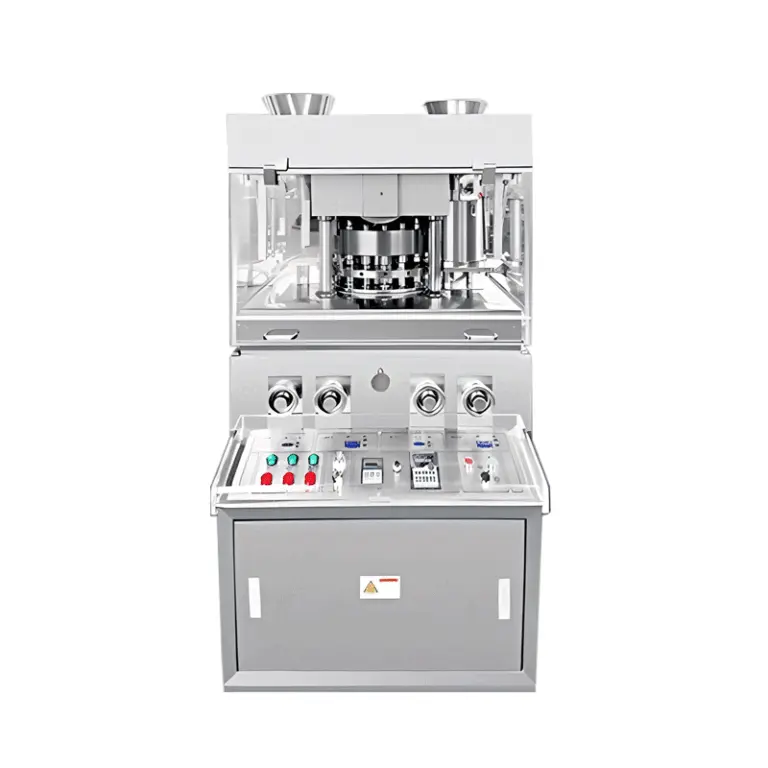
What Does a Tablet Compression Machine Do
The primary function of a tablet compression machine is to transform a measured quantity of powder or granules into a compact tablet. Before compression, the material must normally have suitable flow, density, and compressibility characteristics.
During operation, the tablet compression machine controls several mechanical actions, including material filling, compression, and tablet ejection. The exact structure depends on the machine design, production scale, and intended application. After compression, tablets may move to downstream processes such as inspection, dedusting, or coating with a tablet coating machine, depending on the product requirements.
FDA guidance on solid oral dosage manufacturing identifies compression as a key dosage-form formation operation and notes that compression equipment and operating parameters can affect tablet quality and process consistency.
A basic tablet compression process can be understood through these steps:
- Powder or granules enter the die cavity.
- The lower punch establishes the required filling volume.
- Compression punches apply controlled force to the material.
- The compressed tablet is ejected from the die.
- The finished tablet moves to the next production stage.
The tablet compression machine therefore does more than simply “press” powder. Its mechanical movements and operating parameters need to remain consistent throughout production.
Basic Functions of a Tablet Compression Machine
A tablet compression machine can help manufacturers control several important tablet characteristics:
- Tablet weight and dimensions
- Compression force
- Tablet hardness and mechanical strength
- Production speed
- Consistency between individual tablets
- Controlled tablet discharge
The actual results depend on the formulation, tooling, machine settings, and process conditions. FDA inspection guidance specifically identifies variables such as machine speed, die filling, compression, and equipment settings as factors that can influence tablet weight and quality.
How Is a Tablet Compression Machine Related to a Tablet Press Machine
The terms tablet compression machine and tablet press machine are closely related because they describe the same fundamental manufacturing function. Both are designed to compress pharmaceutical or other suitable powder materials into tablets.
The difference is mainly one of terminology rather than basic operating principle. “Tablet press machine” emphasizes the pressing action, while “tablet compression machine” emphasizes the compression process itself.
| Term | Main meaning | Typical application |
|---|---|---|
| Tablet compression machine | Equipment used to compress powder or granules into tablets | Pharmaceutical and solid dosage production |
| Tablet press machine | Common equipment term for tablet-forming machinery | Pharmaceutical, supplement, and other tablet production |
| Pill compression machine | More general commercial term for tablet-forming equipment | Small-scale or general tablet applications |
In professional pharmaceutical manufacturing, the equipment should be evaluated according to its intended use, process requirements, and ability to consistently produce the required product. FDA states that manufacturers are responsible for selecting equipment that meets their specific process needs and applicable CGMP requirements. The overall production setup may also include downstream equipment such as a tablet deduster to remove loose powder from compressed tablets before further processing.
Therefore, manufacturers should not select a tablet compression machine based only on its name or advertised output. The compatibility of the compression process with related equipment, production capacity, cleaning requirements, and overall workflow should also be considered.
How Does a Tablet Compression Machine Work
A tablet compression machine generally works through a controlled sequence of filling, compression, and ejection. Rotary designs repeat these actions across multiple stations as the tooling moves through the machine.
The powder first enters the die cavity. The lower punch determines the available space and therefore contributes to the amount of material contained in the die. Compression then occurs as the punches move toward each other.
After sufficient force has been applied, the upper punch retracts and the lower punch rises to remove the formed tablet from the die.
This process must remain stable because changes in filling, compression force, or machine speed can influence tablet characteristics. FDA guidance also notes that different compression equipment and operating conditions may contribute to variations in weight, hardness, and other quality attributes.
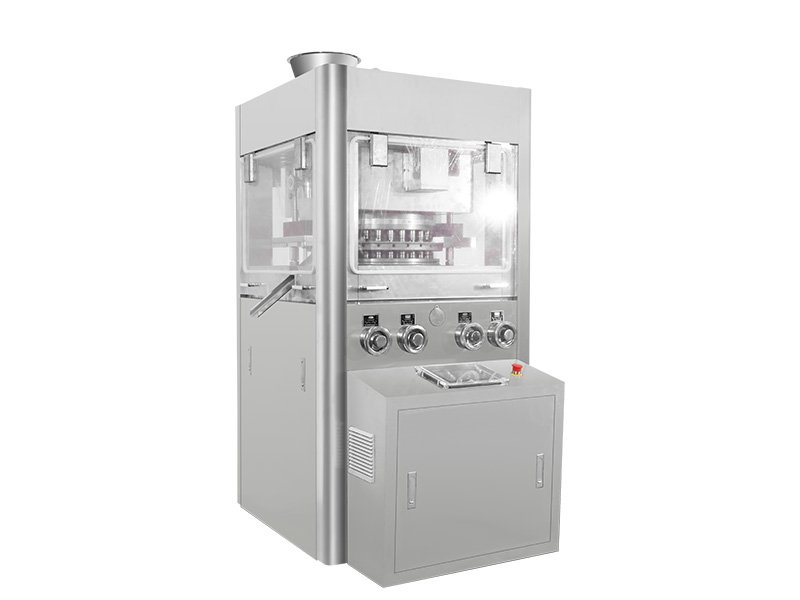
Why Is a Tablet Compression Machine Important
A tablet compression machine connects powder preparation with the final tablet dosage form. If compression is unstable, problems such as weight variation, inconsistent hardness, poor appearance, or tablet defects may occur.
For pharmaceutical production, equipment selection is therefore part of a broader manufacturing and quality system. Equipment must be suitable for its intended use and designed to support appropriate cleaning, maintenance, operation, and process control.
Understanding the basic function of a tablet compression machine helps manufacturers evaluate capacity, tooling, compression requirements, feeding performance, and process controls before purchasing equipment.
FAQ
What is a tablet compression machine?
A tablet compression machine is equipment that compresses prepared powder or granules inside dies to produce tablets with controlled dimensions and weight.
Is a tablet compression machine the same as a tablet press machine?
In most manufacturing contexts, the two terms describe the same basic type of tablet-forming equipment. The terminology mainly differs between suppliers and technical contexts.
What affects tablet compression quality?
Formulation properties, powder flow, tooling condition, filling accuracy, compression force, machine speed, and other process parameters can all affect the final tablet.