


A capsule polisher machine plays an important role in the post-filling stage of capsule production. After capsules leave the capsule filling process, they may carry powder residue, dust, or small particles on their outer surfaces. A properly configured polishing system helps remove these residues while guiding capsules smoothly toward the discharge section.
For production teams, understanding capsule polisher parts is just as important as understanding the machine itself. Individual components affect capsule conveying, polishing efficiency, product contact, cleaning, and operating stability. When a component becomes worn or contaminated, the problem may not immediately appear as a complete machine failure. Instead, operators may notice reduced polishing performance, unstable capsule movement, abnormal noise, or increased product rejection.
This guide explains the main capsule polisher parts one by one and provides practical maintenance methods for daily operation, periodic inspection, and wear-part replacement.
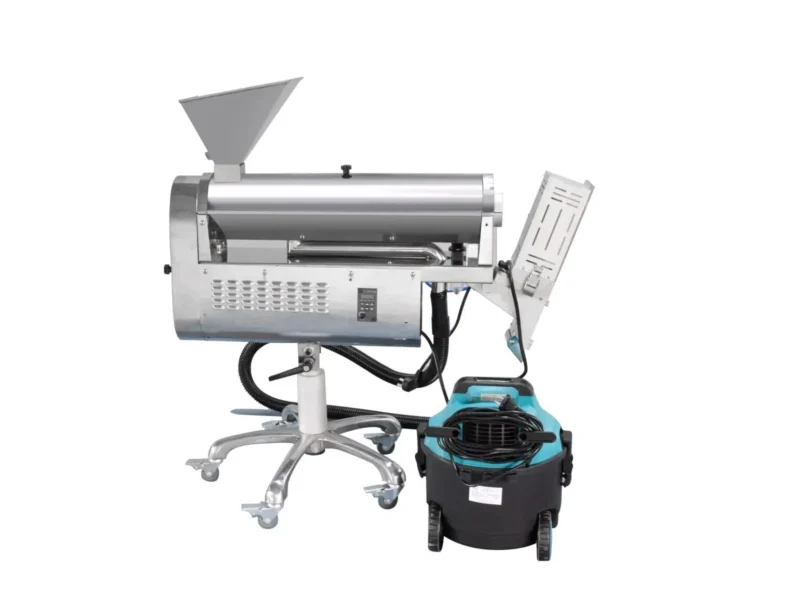
What Are the Main Capsule Polisher Parts?
The structure of a capsule polishing system varies according to equipment design, but most machines contain several functional groups. These include the feeding section, polishing mechanism, transmission system, product-contact components, discharge section, support structure, and control or safety components.
The purpose of these capsule polisher parts is not limited to cleaning the capsule surface. They also need to maintain stable capsule movement and avoid unnecessary mechanical damage.
A typical system may include:
- Capsule inlet and feeding components
- Polishing brush or polishing element
- Rotating shaft
- Drive motor and transmission components
- Product-contact chamber
- Capsule conveying channel
- Discharge outlet
- Collection or connection interface
- Supporting frame
- Protective covers
- Electrical control and safety devices
The exact configuration should always be checked against the equipment manufacturer’s drawings, operating manual, and approved maintenance procedures.
Capsule Polisher Parts for Feeding and Conveying
The feeding section introduces capsules into the polishing area at a controlled rate. Its design should support smooth movement without excessive accumulation. Similar attention to material flow is also important when a granulation machine prepares materials for downstream pharmaceutical processing.
If capsules enter too quickly, they may become crowded inside the polishing chamber. If feeding is too slow or inconsistent, the polishing effect may become uneven.
The feeding components therefore influence both production continuity and polishing consistency.
The capsule conveying channel is another important group of capsule polisher parts. It provides a controlled path for capsules as they move through the machine. Smooth surfaces and proper alignment help reduce unnecessary friction and capsule damage.
Capsule Polisher Parts for Surface Polishing
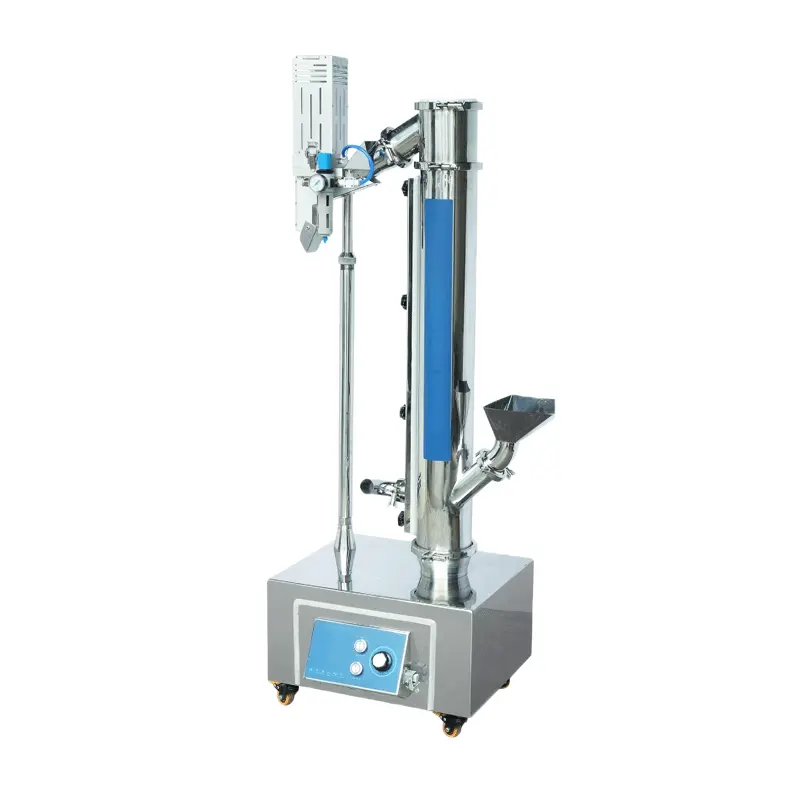
The polishing element is one of the most important product-contact components. Depending on the equipment design, this may be a brush, soft polishing material, or another mechanical cleaning element. In a vertical capsule polishing machine, the polishing element is also designed to support controlled capsule movement through the vertical polishing path.
During operation, capsules pass through the polishing area while the polishing element removes loose powder and surface residue.
The condition of this component directly affects performance. If it becomes excessively worn, contaminated, deformed, or damaged, polishing results may become less consistent.
For pharmaceutical applications, the material and construction of product-contact capsule polisher parts should be appropriate for the intended process and cleaning procedure.
WHO GMP guidance states that production equipment should be designed and maintained to support effective cleaning and to minimize contamination and cross-contamination risks. Product-contact parts should also not adversely affect product quality.
How Do Capsule Polisher Parts Work Together?
Individual components do not operate independently. Their interaction determines how effectively a capsule polisher machine handles capsules.
The basic operating path is generally:
Capsule feeding → controlled conveying → surface polishing → powder removal → capsule discharge.
The feeding system introduces capsules into the working area. The conveying components keep them moving. The polishing components contact the capsule surface and remove loose material. Finally, the discharge components guide the cleaned capsules toward the next production stage.
Capsule Polisher Parts and Polishing Efficiency
Polishing efficiency depends on more than the brush or cleaning element alone. Capsule flow rate, machine speed, contact conditions, capsule characteristics, and component condition all influence the final result.
For example, excessive contact may create unnecessary mechanical stress, while insufficient contact may leave powder residue on the capsule surface.
This is why maintenance should focus on the complete group of capsule polisher parts rather than replacing one component whenever a problem occurs.
Capsule Polisher Parts and Product Protection
Capsules are relatively lightweight and can be sensitive to excessive mechanical force. Damaged or poorly adjusted components may contribute to scratches, dents, cracks, separation, or other defects.
Operators should pay particular attention to unusual noise, vibration, irregular capsule movement, or visible component damage.
If abnormal conditions appear, the equipment should be stopped according to the applicable SOP before inspection or adjustment.
What Are the Most Important Capsule Polisher Parts to Inspect?
Not every component requires the same inspection frequency. Product-contact and moving components generally deserve closer attention because wear or contamination can directly affect operation.
| Capsule Polisher Parts | Main Function | Typical Inspection Focus |
|---|---|---|
| Feeding components | Introduce capsules into the machine | Blockage, alignment, residue |
| Polishing brush | Remove surface powder | Wear, deformation, cleanliness |
| Rotating shaft | Transfers rotation to polishing elements | Wear, alignment, vibration |
| Motor | Provides driving power | Noise, temperature, abnormal operation |
| Transmission components | Transfer mechanical movement | Lubrication, looseness, wear |
| Conveying channel | Guides capsule movement | Scratches, residue, alignment |
| Discharge outlet | Transfers polished capsules | Blockage, residue, smooth flow |
| Protective cover | Protects operators and components | Damage, fastening |
| Frame and supports | Maintains machine stability | Loose fasteners, vibration |
| Electrical controls | Controls machine operation | Connections, alarms, safety functions |
This inspection framework is general. Actual inspection intervals should be established according to the equipment design, operating frequency, risk assessment, and validated procedures.
How Should Capsule Polisher Parts Be Maintained Daily?
Daily maintenance does not necessarily mean dismantling every component after every production cycle. It means following a controlled routine that identifies contamination, wear, looseness, and abnormal operating conditions before they become larger problems.
A practical daily sequence is:
- Stop the machine according to the operating procedure.
- Disconnect or isolate energy sources when required for cleaning or maintenance.
- Remove remaining capsules and visible product residue.
- Inspect product-contact capsule polisher parts for powder accumulation.
- Check polishing components for abnormal wear or deformation.
- Examine moving parts for unusual looseness or damage.
- Check the discharge area for blockage.
- Clean approved components using the specified method.
- Reassemble components correctly.
- Record cleaning, inspection, or maintenance activities as required.
WHO GMP principles emphasize documented procedures for cleaning and sanitation, as well as records for maintenance, cleaning, calibration, and repair of major or critical equipment.
Cleaning Capsule Polisher Parts Correctly
Cleaning is particularly important for product-contact components.
Powder can accumulate in corners, channels, joints, brush assemblies, and discharge areas. If residues remain after production, they can create contamination or cross-contamination risks, particularly when an automatic capsule polishing sorter machine is used for continuous capsule handling.
The cleaning method should be based on the material and construction of each component. Operators should not assume that every part can be cleaned using the same detergent, water temperature, pressure, or drying method.
For multiproduct facilities, cleaning procedures should be appropriately established and, where applicable, validated.
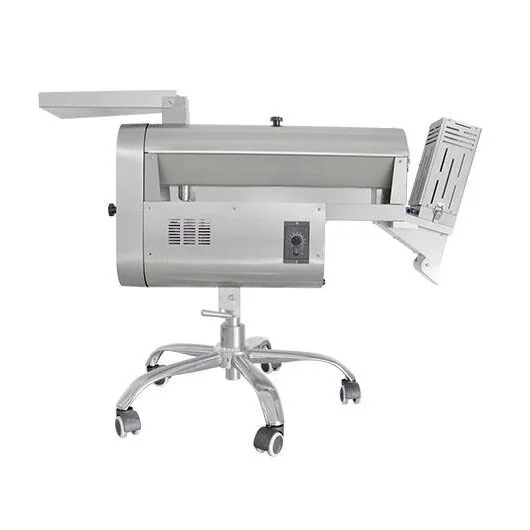
How Often Should Capsule Polisher Parts Be Replaced?
There is no universal replacement interval for every capsule polisher part. Replacement timing depends on component material, production volume, operating conditions, cleaning frequency, formulation characteristics, and equipment design.
Some components are expected to experience more wear than others.
Typical wear-prone items may include:
- Polishing brushes or polishing elements
- Seals and gaskets
- Bearings
- Flexible connections
- Certain conveying components
- Drive belts or other transmission elements, where applicable
A component should not be replaced simply because it has reached an arbitrary number of operating hours if its approved inspection criteria do not require replacement. Conversely, visibly damaged or functionally degraded components should not remain in service simply because the scheduled replacement date has not arrived.
Signs That Capsule Polisher Parts Need Replacement
Operators should look for changes in equipment behavior rather than relying only on calendar-based maintenance.
Common warning signs include:
- Increased vibration or unusual noise
- Reduced polishing effectiveness
- Irregular capsule movement
- Visible wear or deformation
- Loose or damaged components
- Repeated capsule blockage
- Increasing powder accumulation
- Unexpected changes in operating stability
If a product-contact component becomes damaged or cannot be adequately cleaned, it should be evaluated according to the site’s maintenance and quality procedures before further production.
How Can You Extend the Life of Capsule Polisher Parts
Equipment life is influenced by maintenance quality as much as operating hours.
A capsule polisher machine that is regularly cleaned, correctly adjusted, and inspected can generally provide more predictable operation than equipment that is only serviced after a breakdown. For a gelatin capsule polisher, consistent cleaning and adjustment are especially important for maintaining stable capsule handling and polishing performance.
Several practices are particularly useful.
First, avoid operating the machine outside its intended range. Excessive speed or improper feeding can increase mechanical stress on capsule polisher parts.
Second, keep product-contact surfaces clean. Powder accumulation can interfere with movement and may increase wear.
Third, inspect moving components regularly. Small amounts of looseness or misalignment can become larger mechanical problems if ignored.
Fourth, use replacement components that meet the equipment’s specified requirements rather than choosing parts solely because they appear similar.
Finally, maintain accurate maintenance records. Records make it easier to identify repeated failures and determine whether a component is reaching the end of its practical service life.
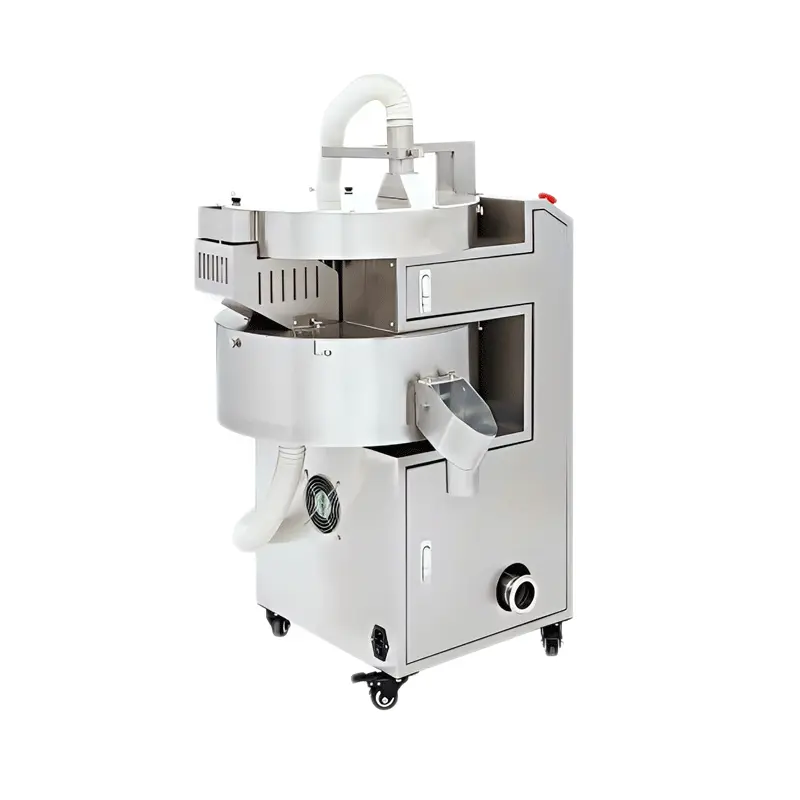
How Do Capsule Polisher Parts Affect Long-Term Equipment Performance
The condition of capsule polisher parts can influence much more than short-term polishing performance.
A worn polishing element may reduce cleaning efficiency. A damaged conveying channel may interfere with capsule movement. Loose mechanical components may increase vibration. Poorly maintained discharge components may cause repeated accumulation.
These problems can increase downtime and make production less predictable.
Regular maintenance helps operators identify these issues before they develop into larger failures. It also supports a more controlled pharmaceutical production environment.
For GMP operations, equipment maintenance should be treated as part of the overall quality system rather than simply as mechanical servicing.
FAQ
Which capsule polisher parts require the most frequent inspection?
Polishing elements, product-contact surfaces, feeding components, conveying channels, and moving parts generally deserve frequent inspection because they can accumulate residue or experience mechanical wear.
How do I know when a capsule polisher brush should be replaced?
Replace the brush according to the equipment’s defined inspection criteria when excessive wear, deformation, contamination, damage, or reduced polishing performance is observed.
Can capsule polisher parts be cleaned with the same method?
Not necessarily. Cleaning methods should match the material, design, and product-contact requirements of each component and follow the approved cleaning procedure for the equipment.