


When pharmaceutical entrepreneurs, nutraceutical developers, or contract manufacturers face the decision of how to fill empty hard gelatin or vegetarian capsules, they quickly encounter two distinct equipment categories: the manual capsule filler and the high‑speed industrial capsule filler machine. While both accomplish the same fundamental task—metering and sealing powder or pellet blends into capsule shells—their operational philosophies, capital requirements, and regulatory footprints could not be more different.
This guide provides a side‑by‑side business‑demand matching framework. We dissect investment costs, throughput capabilities, and compliance hurdles to help you decide whether a manual capsule filler is your ideal prototyping partner or if an automated industrial system is non‑negotiable for commercial scaling. By the end, you will have a clear decision matrix that aligns your current production stage with the most economical and risk‑appropriate filling technology.

Understanding the Core Functions: Manual Capsule Filler vs. Industrial Capsule Filling Machine
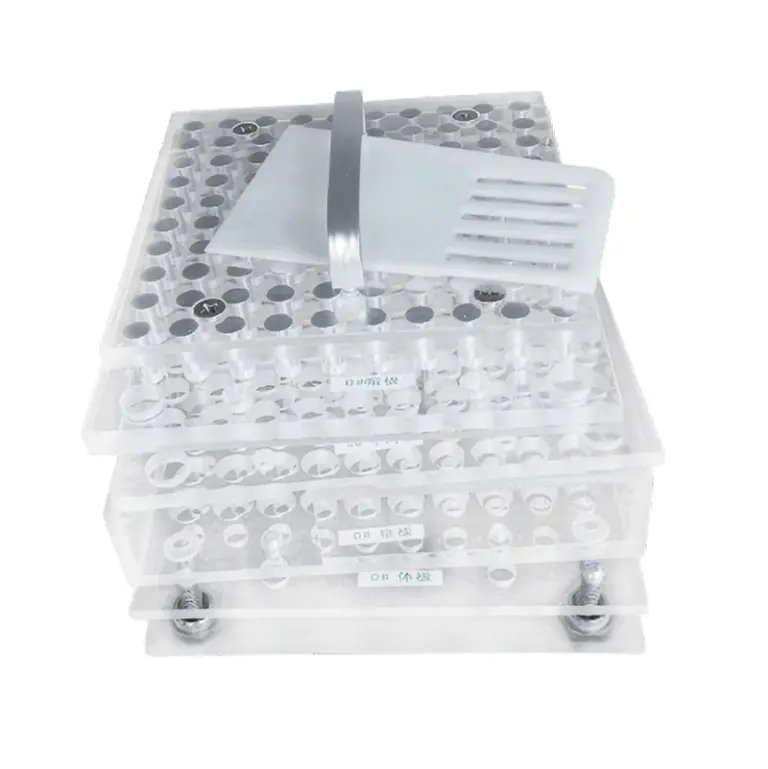
Before comparing numbers, it is essential to define what each machine does and where it fits in the product lifecycle. A manual capsule filler is a bench‑top device that relies on human operators to place empty capsule bodies into a loading tray, spread powder over the dosing plate, and manually compress the powder into the capsules using a hand‑operated tamping pin. The filled capsules are then capped by hand or with a simple capping plate, a step that stands in stark contrast to the integrated capping machine found on automated lines, which seals capsules instantly as part of a continuous high‑speed process. This process is batch‑oriented, typically producing anywhere from 100 to 1,200 capsules per hour, depending on operator skill and the number of stations.
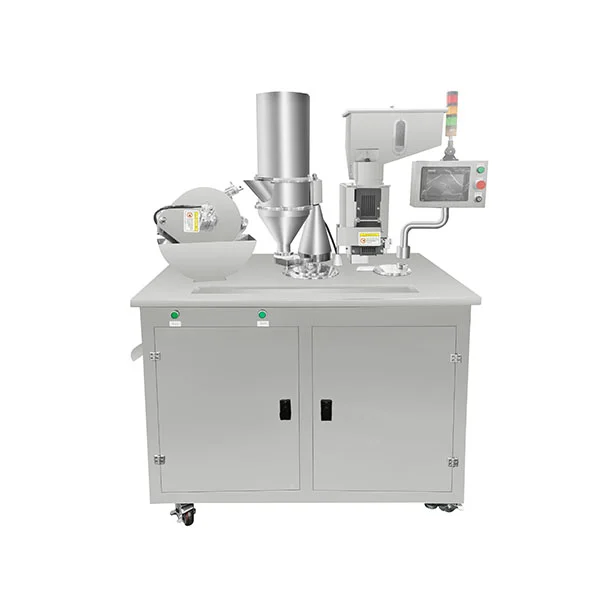
In contrast, an industrial capsule filler machine—often referred to as an automatic capsule filling machine—is a fully servo‑driven system that integrates capsule orientation, powder dosing, tamping, capping, and ejection into a continuous, high‑speed cycle. These machines can reach outputs of 100,000 to over 400,000 capsules per hour, with sophisticated weight‑checking and reject systems. They are built for 24/7 operation and are usually installed in dedicated GMP (Good Manufacturing Practice) production suites.
What Is a Manual Capsule Filler?
The manual capsule filler is essentially a precision‑engineered jig. It consists of a base plate with a grid of holes that match standard capsule sizes (00, 0, 1, 2, 3, etc.), a powder hopper, a spreading comb, and a set of tamping pins. The operator loads capsule bodies, fills the powder, levels it, tamps it repeatedly to achieve uniform fill weight, and then places caps over the bodies for closure. Because the tamping force and powder distribution are manually controlled, the fill‑weight variability (relative standard deviation) is typically around 3‑5%, which is acceptable for early‑stage formulation and small clinical batches.
What Is an Industrial Capsule Filling Machine?
The industrial capsule filler machine uses a rotary or intermittent‑motion principle. Capsules are fed from a hopper, oriented in a rectification system, and presented to a dosing disc. Powder is gravity‑fed or vacuum‑assisted into a dosing chamber, then compressed by multiple tamping stations. Each station applies a precisely controlled force, reducing weight variability to below 1%. Unlike a tablet press, which forms solid tablets by high compression, the capsule filler uses lower tamping pressure to gently pack powder into shells. The machine automatically closes the capsules and ejects them onto a conveyor. These systems require compressed air, vacuum, and often an integrated deduster or metal detector. They are complex, clean‑in‑place (CIP) ready, and validated for continuous production runs lasting several days.
Cost Analysis: Manual Capsule Filler Suits Startups, Industrial Machines for Scale
The most immediate differentiator is the capital expenditure (CAPEX) and operational expenditure (OPEX). A manual capsule filler can be purchased for as little as $1,500 to $5,000, depending on the number of stations (e.g., 100‑hole, 200‑hole, or 300‑hole models). Consumables like replacement tamping pins and spreading combs are inexpensive. There is no need for electrical hookups, compressed air, or specialized HVAC beyond standard laboratory ventilation. Operator training takes less than one hour, and a single technician can run the machine while performing other tasks.
Conversely, an industrial capsule filler machine starts at around $50,000 for a low‑speed semi‑automatic unit and ranges up to $500,000 or more for a fully automatic high‑speed system. Ancillary costs are substantial: you need a dedicated cleanroom (ISO 7 or 8), a compressed air system with dryers and filters, a vacuum pump, and often a separate encapsulation suite. Maintenance contracts can cost 10‑15% of the purchase price annually. Skilled engineers are required for setup, validation, and troubleshooting. The table below summarises typical cost components for a 200‑hole manual filler versus a 100,000‑capsules/hour automatic machine.
| Cost Category | Manual Capsule Filler (200‑hole) | Industrial Capsule Filler (100k/h) |
|---|---|---|
| Equipment purchase | $2,500 – $4,000 | $120,000 – $250,000 |
| Installation & validation | $0 (bench‑top, self‑validation) | $15,000 – $30,000 (IQ/OQ/PQ) |
| Annual maintenance | $200 – $500 (spare parts) | $12,000 – $25,000 (service contract) |
| Operator labour (per hour) | 1 operator @ $25/h | 0.5 operator + 0.5 engineer @ $35/h |
| Facility upgrades | $0 (existing lab) | $50,000 – $100,000 (cleanroom & utilities) |
| Total first‑year cost | ~$3,500 | ~$200,000 – $400,000 |
For a startup with limited funding and a need for rapid formulation trials, the manual capsule filler offers an unbeatable entry point. It allows you to produce 1,000 to 5,000 capsules per batch with minimal fixed investment. However, if you are a contract manufacturer or a pharmaceutical company planning to launch a commercial product, the industrial machine’s per‑unit cost drops dramatically—from $0.10 per capsule (manual) to less than $0.005 per capsule (automatic) when running at full capacity. The break‑even point typically occurs when monthly production exceeds 500,000 capsules. Below that threshold, the manual capsule filler is more cost‑effective.
Production Capacity: When a Manual Capsule Filler Meets R&D Needs, Industrial Machines Drive Mass Production
Capacity is not just about maximum output; it is about batch flexibility and changeover time. The manual capsule filler excels in small‑scale, high‑mix environments. A typical 300‑hole unit can process one batch of 300 capsules in about 15‑20 minutes, including loading, filling, tamping, and capping. This means you can run four or five different formulations in a single shift, each with different powder densities or blend ratios. Changeover is as simple as cleaning the powder tray and swapping the dosing plate—no complex tooling adjustments. This agility is invaluable for R&D departments that need to screen dozens of excipient combinations.
On the other hand, an industrial capsule filler machine is designed for long runs with minimal interruptions. Changeover for a different capsule size or powder formulation can take 2‑4 hours and requires trained technicians to replace dosing discs, tamping tools, and capsule‑feeding parts. While some modern machines offer quick‑change kits, the downtime still makes them inefficient for batches under 50,000 capsules. However, once running, they produce 100,000 capsules per hour with automated weight monitoring and rejection of out‑of‑spec units. For a commercial product selling 2 million capsules per month, the industrial machine is the only viable option.
。
Key throughput comparisons:
Manual capsule filler: 500 – 1,200 capsules/hour (depending on operator experience and station count).
Semi‑automatic capsule filler machine: 3,000 – 10,000 capsules/hour (often a stepping‑stone between manual and full auto).
Fully automatic industrial machine: 50,000 – 400,000 capsules/hour.
For most startups, the manual capsule filler comfortably supports Phase I clinical trials, toxicology studies, and pilot batches for stability testing. Many regulatory agencies accept manual filling for investigational new drug (IND) applications provided that the process is well‑documented and the fill weight uniformity passes USP <905> criteria. When the product moves to Phase III and commercial launch, the switch to an industrial capsule filler machine—or a full-automatic liquid capsule filling machine for liquid or semi‑solid formulations—becomes a strategic imperative.
Decision Matrix: Matching Your Business Phase with the Right Manual Capsule Filler or Industrial Machine
To synthesise the information, we propose a phased decision framework. The choice between a manual capsule filler and an industrial capsule filler machine should be driven by three parameters: production volume, regulatory stage, and available capital.
Ordered list: Steps to evaluate your equipment need
Forecast your annual production – If your total requirement is under 500,000 capsules per year, a manual filler is almost certainly sufficient. For 1‑5 million capsules, consider a semi‑automatic machine. Above 10 million, you need a fully automatic industrial system.
Assess your regulatory timeline – For early clinical batches (Phase I‑II) and bioequivalence studies, regulatory authorities are flexible. A validated manual capsule filler can pass inspection if you demonstrate process control. For commercial launches and ANDA/NDA submissions, you must have an automated, validated filling line.
Calculate total cost per capsule – Include equipment depreciation, labour, maintenance, and facility overhead. For low volumes, the manual filler yields a lower cost per capsule; for high volumes, the industrial machine wins decisively.
Unordered list: Advantages of choosing a manual capsule filler at the startup phase
Minimal upfront investment – preserves cash for formulation development and clinical trials.
Extremely short lead time – can be ordered and operational within a week.
No specialised utilities or facility modifications required.
Easy to train operators and quick to change between formulations.
Enables small‑batch production for market testing without overcommitting.
Unordered list: Advantages of an industrial capsule filler machine for scale‑up
Unmatched throughput – supports national or global distribution.
Superior fill‑weight uniformity – reduces content uniformity risk.
Automated rejection of non‑conforming capsules – increases product quality.
Full data logging and audit trails – simplifies regulatory submissions.
Reduced labour dependency – lowers per‑unit labour cost.
Conclusion
There is no one‑size‑fits‑all answer. The manual capsule filler remains an indispensable tool for innovation, enabling researchers and startups to explore formulations without financial risk. Its low cost, simplicity, and rapid changeover make it the backbone of early‑stage development. Conversely, the industrial capsule filler machine is the engine of commercial success, delivering high output, consistent quality, and the regulatory robustness demanded by health authorities worldwide.
The smartest approach is to view these machines not as competitors but as complements along the product lifecycle. Begin with a manual capsule filler to perfect your formula and generate initial stability data. As your product gains traction and production volumes increase, transition to a semi‑automatic unit, and eventually to a fully automated system. This phased strategy minimises financial exposure while ensuring that you never compromise on quality or compliance. By matching your equipment investment to your business demand, you can scale efficiently and avoid the costly mistake of over‑ or under‑investing in filling technology.
FAQ
Can a manual capsule filler be used for clinical trial batches that will be submitted to the FDA?
Yes, the FDA accepts manually filled capsules for Phase I and II clinical trials, provided you validate the filling process and show that the content uniformity meets USP <905> requirements. You must also maintain detailed batch records and environmental monitoring data.
What is the typical transition point from a manual capsule filler to an automated capsule filler machine?
Most companies switch when monthly production exceeds 500,000 capsules or when they move from Phase II to Phase III clinical trials. At that volume, the labour cost and weight variability of manual filling become economically and operationally unfavourable compared to an automated system.
Are there any regulatory restrictions on using a manual capsule filler for commercial dietary supplements?
The FDA does not prohibit manual filling for dietary supplements, but you must comply with 21 CFR Part 111 (current Good Manufacturing Practice for dietary supplements). This requires you to establish and follow written procedures for all operations, perform in‑process weight checks, and maintain clean equipment. Many small supplement brands successfully use manual fillers for their entire product portfolio.