


A tablet compression machine is a critical piece of equipment in solid oral pharmaceutical manufacturing. During production, the tablet compression machine directly handles powder or granules and influences important physical characteristics such as tablet weight, thickness, hardness, and appearance. Because the equipment has direct or indirect contact with pharmaceutical materials, its design, operation, cleaning, maintenance, and documentation should support Good Manufacturing Practice (GMP) requirements.
GMP applies throughout pharmaceutical manufacturing, including premises, equipment, personnel, procedures, documentation, validation, and quality control. For manufacturers, selecting a tablet compression machine therefore involves more than checking production capacity. The equipment should be compatible with the formulation, designed for effective cleaning, constructed from appropriate materials, and supported by qualification and maintenance documentation.
Tablet Compression Machine GMP Requirements and Equipment Design
Equipment Design for GMP Production
The first consideration is the design of the tablet compression machine. GMP principles require pharmaceutical equipment to be suitable for its intended purpose and designed to help prevent contamination, cross-contamination, and other risks to product quality. The same design principles should also be considered for upstream equipment such as a mixing machine.
A tablet compression machine should minimize areas where powder can accumulate. Unnecessary gaps, inaccessible cavities, rough surfaces, dead zones, and poorly designed connections can make cleaning difficult. These areas may retain product residue and increase cleaning challenges. Similar considerations apply to a mixing machine, particularly around product-contact surfaces and material transfer points.
For a tablet compression machine used in a multiproduct facility, equipment design becomes particularly important. Residues from a previous product must not become a source of cross-contamination for the next ptoduct.
Key Design Considerations
Important design considerations for a tablet compression machine include:
- Smooth and accessible product-contact surfaces
- Appropriate surface finishes
- Easy disassembly of critical components
- Limited powder-retention areas
- Suitable seals and connections
- Accessible inspection points
- Clear identification of removable parts
- Compatibility with approved cleaning methods
A tablet press machine should also allow operators to inspect important components during routine cleaning and maintenance. Tooling, feed systems, compression components, and product-contact parts should be accessible enough to support effective inspection.
Tablet Compression Machine Material Requirements
Product-Contact Materials
Material selection is another important GMP consideration. Product-contact parts of a tablet compression machine should be constructed from materials appropriate for pharmaceutical manufacturing and compatible with the formulation and cleaning process. Similar material considerations also apply to downstream equipment such as a tablet coating machine, particularly for components that come into direct contact with the product.
GMP does not necessarily require one universal material grade for every application. Instead, the material should be suitable for its intended use, resistant to expected operating and cleaning conditions, and unlikely to adversely affect the pharmaceutical product.
Stainless steel is widely used for pharmaceutical equipment because of its durability, corrosion resistance, cleanability, and suitability for many manufacturing environments. The specific grade and surface finish of a tablet compression machine or tablet coating machine should be evaluated according to the formulation, cleaning agents, temperature, mechanical conditions, and product-contact requirements.
Material and Surface Requirements
| Consideration | GMP Purpose |
|---|---|
| Corrosion resistance | Supports equipment integrity |
| Surface condition | Facilitates residue removal |
| Chemical compatibility | Reduces cleaning-related material damage |
| Mechanical durability | Helps reduce deterioration and particle risks |
| Product-contact suitability | Helps prevent unwanted contamination |
Material specifications should be supported by appropriate supplier documentation and equipment records. Where material certificates are required by the site’s quality system, they should be controlled and traceable.
Surface finish is also important because poorly finished surfaces may retain powder and make cleaning validation more difficult.
Tablet Compression Machine Cleaning and Validation
Cleaning Requirements
Cleaning is one of the most important GMP requirements for a tablet compression machine. Pharmaceutical manufacturing equipment should be cleaned according to approved procedures, and cleaning processes requiring validation should have documented evidence demonstrating their effectiveness.
The objective of cleaning validation is not simply to make a tablet compression machine look clean. The process should demonstrate that residues from previous products, cleaning agents, and relevant contaminants can be reduced to predetermined acceptable levels.
WHO guidance identifies cleaning validation as a means of demonstrating that an approved cleaning procedure can consistently provide equipment suitable for its intended use.
Cleaning Validation Process
A typical cleaning validation approach includes:
- Define the equipment and product-contact surfaces.
- Identify products and residues that present cleaning challenges.
- Establish scientifically justified acceptance criteria.
- Define the cleaning procedure and critical parameters.
- Select appropriate sampling locations and methods.
- Establish suitable analytical methods.
- Execute validation runs according to an approved protocol.
- Review and approve the resulting data and report.
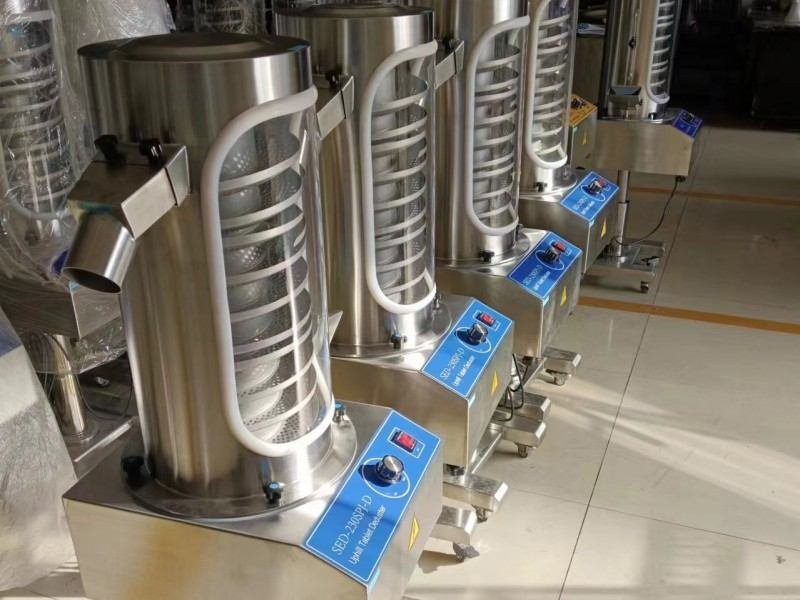
For a tablet compression machine used for multiple products, the cleaning strategy should be supported by a documented risk assessment. The assessment should consider not only the tablet compression machine itself but also connected downstream equipment, such as a tablet deduster, where product residue may accumulate. Difficult-to-clean locations should receive particular attention because they may represent potential worst-case sampling points during cleaning validation.
Tablet Compression Machine Operation and GMP Controls
Operating Procedures
Routine operation of a tablet compression machine should follow approved SOPs. Operators should be trained before performing GMP-related operations, and training should be documented. The same principle applies to upstream equipment, such as a capsule filling machine, when it is included in the manufacturing process.
Operating procedures may cover line clearance, equipment status verification, tooling installation, material loading, machine setup, compression adjustment, in-process checks, shutdown, cleaning, and equipment release. Where a capsule filling machine is used in the same production area, its cleaning and status should also be verified according to the applicable SOPs before materials enter the tablet compression machine process.
Before starting a batch, operators should verify that the tablet compression machine is in
Pre-Operation and Production Checks
Typical pre-operation checks include:
- Equipment identification and status
- Cleaning status
- Correct tooling
- Correct formulation or material
- Correct batch documentation
- Calibration status of relevant instruments
- Absence of previous product materials
- Availability of approved operating procedures
During production, critical parameters should be monitored according to the approved manufacturing process. Depending on the product, this may include tablet weight, thickness, hardness, compression force, machine speed, and other defined in-process controls.
Tablet Compression Machine Change Control and Deviations
Change Control
Changes to a tablet compression machine should be managed through an established change-control system when they may affect product quality, validated status, or GMP compliance.
Examples may include major component replacement, control-system changes, modifications to product-contact surfaces, changes in cleaning procedures, or changes to critical operating ranges.
A change assessment should consider whether the modification affects:
- Product-contact materials
- Cleaning effectiveness
- Operating parameters
- Equipment qualification
- Process validation
- Calibration
- SOPs
- Training
- Cleaning validation

Deviation Management
If a tablet compression machine experiences an unexpected failure or operates outside an approved condition, the event should be handled according to the site’s deviation and investigation procedures. The same principle applies to other critical pharmaceutical equipment, such as a vacuum dryer, when an equipment abnormality may affect the manufacturing process or product quality. The incident should be recorded promptly, including the equipment status, time of occurrence, operating conditions, affected batch, and actions taken by the operator.
The manufacturer should determine whether the event could have affected product quality, such as tablet weight, hardness, thickness, appearance, or other predefined critical quality attributes. Depending on the situation, the affected material or batch may need to be identified and placed under appropriate quality control until the investigation is completed.
The investigation should consider the possible root cause, the duration and extent of the equipment abnormality, relevant machine parameters, previous maintenance history, and any similar events. Supporting information such as batch records, alarm records, maintenance records, and in-process test results may be reviewed as part of the assessment.
Before the tablet compression machine returns to routine production, the manufacturer should determine whether corrective actions, equipment checks, maintenance, calibration, or additional qualification activities are necessary. Production should resume only when the equipment is confirmed to be in an acceptable operating condition and the required GMP procedures have been completed and documented.
For recurring failures, the manufacturer should also evaluate whether a broader corrective and preventive action (CAPA) or change-control process is appropriate. This helps ensure that equipment problems are not only corrected but also properly assessed to reduce the risk of recurrence.
Tablet Compression Machine GMP Compliance Summary
A GMP-compliant tablet compression machine is not defined by a single feature or material specification. Compliance depends on how the equipment is designed, qualified, operated, cleaned, maintained, documented, and controlled within the pharmaceutical quality system.
For companies evaluating a tablet press machine or industrial tablet press, GMP requirements should be considered from the beginning of equipment selection. The manufacturer should define the intended use and quality risks first, then confirm that the tablet compression machine design and supporting documentation can meet those requirements.
Ultimately, GMP compliance means maintaining consistent control over the manufacturing process. A properly designed and controlled tablet compression machine can support reliable tablet production, while its compliance depends on the complete lifecycle system surrounding the equipment.
FAQ
What materials are commonly used for a tablet compression machine?
Stainless steel is widely used for pharmaceutical product-contact equipment because of its corrosion resistance, durability, and cleanability. The appropriate material should be determined according to the product and cleaning conditions.
Does every tablet compression machine require cleaning validation?
Cleaning processes should be validated when required by the applicable GMP and site validation program. The scope and acceptance criteria should be scientifically justified and documented.
What GMP documents are needed for a tablet compression machine?
Typical documentation includes equipment specifications, qualification records, SOPs, cleaning records, maintenance and calibration records, batch documentation, deviation records, and change-control documentation.