


A tablet press machine is a pharmaceutical production machine used to compress prepared powder or granulated material into tablets with a defined shape, size, weight, and strength. In modern solid dosage manufacturing, the tablet press machine is a central part of the compression stage, but it is not the entire tablet production process.
Depending on the equipment design, production scale, and tablet specifications, a tablet press machine can include feeding, compression, tooling, adjustment, monitoring, and discharge systems. Understanding these components helps manufacturers select suitable equipment and establish a stable production process.
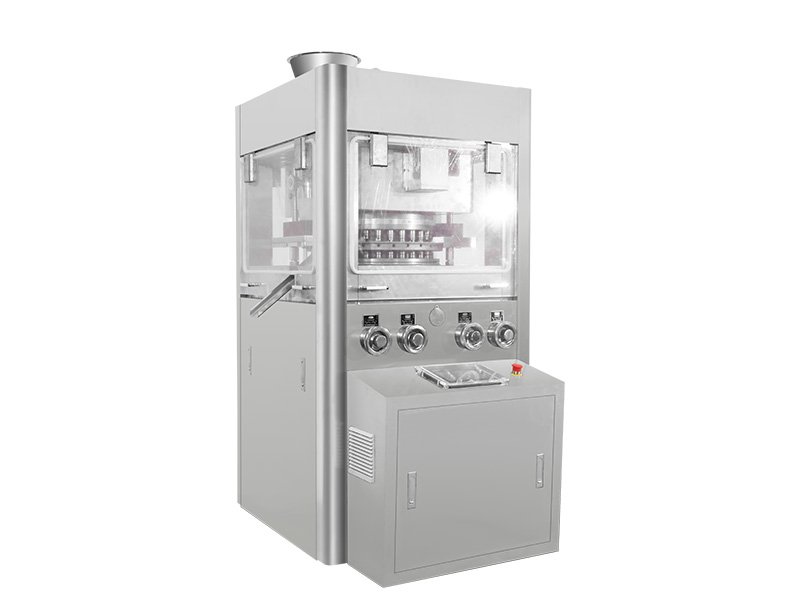
What Is a Tablet Press Machine Used For
The basic function of a tablet press machine is to convert a controlled powder or granulated formulation into solid tablets through mechanical compression. Before compression, the material normally needs suitable flowability, particle characteristics, moisture content, and compressibility.
A tablet compression machine generally works by filling a controlled amount of material into a die and applying compression through punches. The resulting tablet is then discharged from the compression area for subsequent processing.
The main operating sequence can be summarized as follows:
- Prepared material enters the feeding system.
- The material fills the die cavity to a controlled level.
- Upper and lower punches compress the material.
- The formed tablet is removed from the die.
- Tablets are transferred to the next production stage.
A tablet press machine therefore performs a specific manufacturing function rather than replacing the complete upstream and downstream production system.
What Are the Main Parts of a Tablet Press Machine
The structure of a tablet press machine varies between models, but its core systems are generally designed around material feeding, die filling, compression, tablet discharge, and machine control.
Feeding System of a Tablet Press Machine
The feeding system transfers powder or granules into the die cavities. Stable and uniform feeding is important because variations in die filling can influence tablet weight and other physical characteristics. In an automatic rotary tablet pressing machine, the feeding system is designed to support continuous and consistent material delivery during high-speed production.
The design of the feeder may depend on material properties, production speed, and the type of tablet press machine being used.
Compression System of a Tablet Press Machine
The compression system contains the tooling and mechanical components responsible for forming tablets. Punches and dies determine the basic tablet geometry, while compression forces influence tablet density, thickness, hardness, and mechanical strength.
Important components may include:
- Upper and lower punches
- Dies and die table
- Compression rollers
- Turret or rotating assembly
- Force adjustment mechanisms
- Tablet discharge components
The tooling must be properly selected and maintained for the intended tablet specification.
Control and Adjustment System
A modern tablet press machine may include mechanical or electronic systems for controlling operating parameters. Depending on the equipment configuration, operators may monitor production speed, compression force, filling depth, and other process conditions. For smaller-scale production or development work, a single punch tablet press machine may offer a simpler configuration with more direct control over individual compression operations.
These controls help manufacturers maintain repeatable operating conditions, although actual performance still depends on formulation properties, equipment configuration, and validated process parameters.
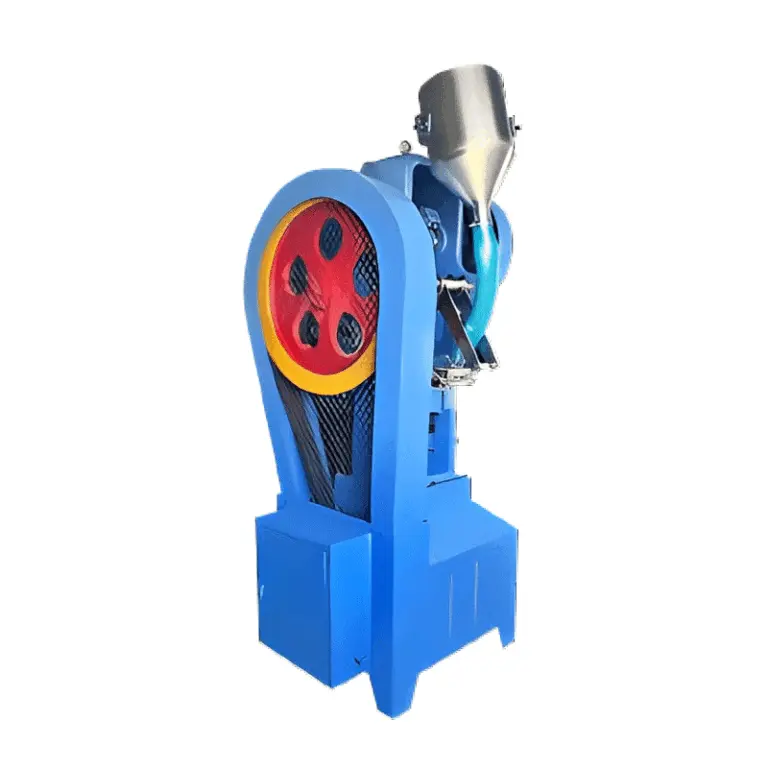
How Does a Tablet Press Machine Work in Pharmaceutical Production
The working principle of a tablet press machine is based on controlled die filling followed by mechanical compression. During continuous production, the turret or compression assembly moves the punches and dies through different operating positions.
Material first enters the die cavity through the feeding section. The lower punch establishes the available filling volume, while the amount of material entering the die influences tablet weight. The punches then pass through the compression zone, where force is applied to consolidate the material.
After compression, the lower punch moves upward and helps eject the finished tablet. The tablet press machine then transfers the product toward the discharge area.
The actual process must be adjusted according to formulation characteristics, tablet dimensions, tooling configuration, and required production conditions. Excessive compression or unsuitable operating parameters may affect tablet quality and equipment performance.
Where Is a Tablet Press Machine Commonly Used
A tablet press machine is widely used in pharmaceutical manufacturing for producing conventional compressed tablets. It may also be applied in other regulated or industrial solid-product manufacturing processes when the material and equipment are suitable.
In pharmaceutical production, common applications include:
| Application | Typical Purpose |
|---|---|
| Pharmaceutical tablets | Production of solid oral dosage forms |
| Nutraceutical tablets | Compression of vitamins and nutritional formulations |
| Supplement tablets | Formation of controlled-dose solid products |
| Research and development | Formulation and process evaluation |
| Pilot production | Scale-up and process verification |
For commercial pharmaceutical production, equipment selection should consider the formulation, expected output, tablet specifications, cleaning requirements, containment needs, and applicable regulatory controls.
How Does a Tablet Press Machine Fit Into a Complete Line
A tablet press machine should be understood as one major piece of equipment within a broader manufacturing process. Powder preparation, granulation, blending, compression, dedusting, inspection, and packaging may involve different machines and controlled operations.
For example, a typical solid dosage workflow may include:
Material preparation → blending or granulation → tablet press machine → tablet dedusting → inspection → packaging
This distinction is important when discussing the term “machine.” A tablet press machine refers primarily to the equipment performing tablet compression, while a complete tablet manufacturing line may contain several interconnected units.
A powder tablet press may therefore describe equipment focused on compressing powder-based material, while a tablet compression machine is a broader technical term often used to describe equipment designed for tablet formation.
What Should Manufacturers Consider When Choosing a Tablet Press Machine
Selecting a tablet press machine requires more than comparing nominal production speed. Manufacturers should evaluate whether the equipment matches the product, formulation, production environment, and quality requirements.
Key considerations include:
- Required production capacity
- Tablet size and shape
- Number and configuration of tooling stations
- Compression-force range
- Powder flow and formulation characteristics
- Cleaning and maintenance requirements
- Control and monitoring functions
- Production environment and containment requirements
The theoretical output of a tablet press machine depends on factors such as turret speed, the number of stations, and the number of tablets produced per compression cycle. Actual output can be lower because of formulation characteristics, machine adjustments, operating conditions, quality controls, and production interruptions.
FAQ
What is the main purpose of a tablet press machine?
A tablet press machine compresses prepared powder or granulated material into tablets with controlled physical dimensions and characteristics.
Is a tablet press machine the same as a tablet compression machine?
The terms are often used interchangeably because both refer to equipment designed for tablet compression. The exact equipment configuration can vary by manufacturer and application.
Can a tablet press machine produce different tablet shapes?
Yes. With suitable tooling, a tablet press machine can produce different tablet shapes, sizes, and surface configurations according to the product requirements.