


A reliable tablet press machine is essential for maintaining consistent tablet quality, production efficiency, and equipment availability. In pharmaceutical, nutraceutical, and other solid-dose manufacturing environments, maintenance is not simply a mechanical task. It is part of a broader system covering equipment condition, cleaning, process control, documentation, and production risk management.
A tablet press machine operates under repeated mechanical loads. Punches, dies, cams, bearings, feeders, lubrication systems, and drive components may experience continuous wear during production. If these components are inspected only after a failure occurs, an apparently minor problem can develop into tablet defects, unplanned downtime, or expensive repairs.
A structured maintenance program helps manufacturers identify deterioration before it affects production. Preventive maintenance should therefore combine routine cleaning, visual inspection, lubrication, functional checks, wear-part monitoring, and documented corrective action.
WHO guidance emphasizes that pharmaceutical manufacturing equipment should be suitable for its intended use and supported by appropriate procedures, maintenance, and documentation. EU GMP principles similarly require premises and equipment to be maintained so that cleaning and maintenance can be performed effectively without creating risks to product quality.
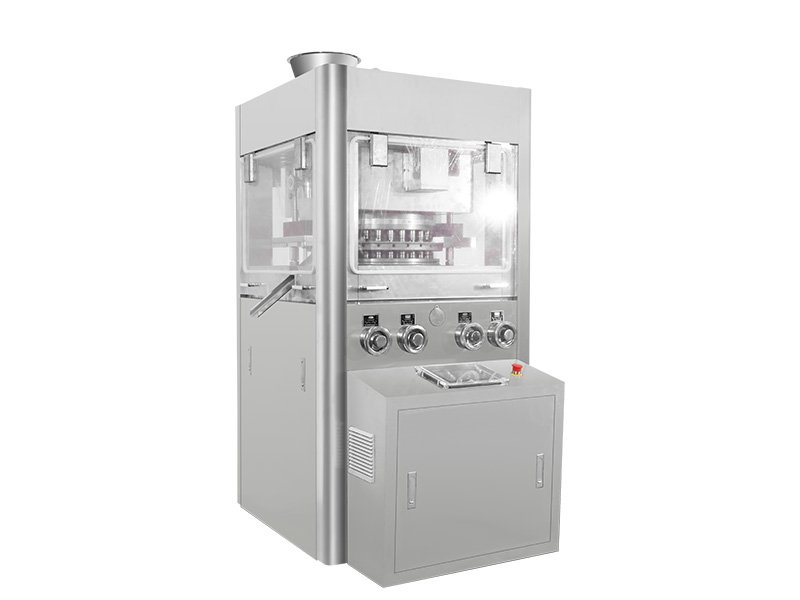
Why Tablet Press Machine Maintenance Matters
A tablet press machine converts powder into tablets through a highly repetitive compression process. During operation, even small changes in mechanical condition can influence tablet weight, thickness, hardness, appearance, and production stability.
Maintenance has three major objectives:
- Prevent unexpected equipment failures and production interruptions.
- Maintain stable operating conditions and product quality.
- Extend the useful service life of critical mechanical components.
For pharmaceutical manufacturers, equipment maintenance also has a GMP dimension. FDA requirements state that equipment must be cleaned and maintained at appropriate intervals to prevent malfunctions or contamination that could affect drug safety, identity, strength, quality, or purity. Similar maintenance principles can also apply to supporting equipment such as a capsule polisher when it is used within the same production environment.
The exact maintenance interval should not be treated as a universal number. A tablet press machine used for several shifts every day may require more frequent inspection than a machine operating only occasionally. Product characteristics, production volume, compression force, environmental conditions, cleaning procedures, and manufacturer recommendations should all be considered.
Main Factors That Affect Maintenance Frequency
The maintenance schedule for a tablet press machine should consider:
- Operating hours and production intensity: Higher utilization generally increases mechanical wear.
- Compression conditions: High compression forces can increase stress on punches, dies, cams, and drive components.
- Powder characteristics: Abrasive, dusty, or poorly flowing formulations can increase contamination and wear.
- Cleaning frequency: Frequent dismantling and cleaning may increase the need to inspect seals, fasteners, and contact surfaces.
- Environmental conditions: Temperature, humidity, and airborne dust can affect lubrication and mechanical components.
- Equipment history: Repeated failures in the same area indicate that the existing maintenance interval may need adjustment.
A risk-based approach is more practical than simply assigning the same interval to every tablet press machine.
Tablet Press Machine Maintenance Schedule
A well-designed maintenance schedule divides tasks according to frequency. Daily checks focus on cleanliness and obvious abnormalities, while weekly and monthly activities examine mechanical condition more closely. Longer-term inspections can address component wear, alignment, lubrication systems, electrical systems, and calibration-related requirements.
WHO guidance on equipment maintenance recommends establishing preventive maintenance programs and defining maintenance schedules through documented procedures.
The following schedule can serve as a general framework. Actual intervals should be adapted to the equipment design, operating conditions, risk assessment, and technical documentation.
| Maintenance frequency | Typical tablet press machine checks | Main objective |
|---|---|---|
| Before/after each production run | Cleaning, visual inspection, powder residue removal, abnormal-noise check | Detect immediate problems |
| Daily | Punches, dies, feeder, guards, lubrication points, compression area | Prevent early-stage failures |
| Weekly | Fasteners, cams, bearings, feeder condition, lubrication system | Identify developing wear |
| Monthly | Drive components, electrical connections, sensors, tooling condition | Control progressive deterioration |
| Quarterly or according to risk | Detailed mechanical inspection and selected wear-part checks | Prevent major failures |
| Annually or according to SOP | Comprehensive inspection, qualification/calibration-related checks where applicable | Confirm long-term equipment condition |
Daily Tablet Press Machine Inspection
Daily inspection is one of the simplest ways to reduce unexpected downtime. Before starting production, operators should examine the compression area, tooling, feeder, guards, and visible mechanical components of the rotary tablet press machine to identify any signs of wear, contamination, or abnormal operation.
Look for:
- Powder accumulation around moving parts.
- Unusual noise or vibration.
- Loose fasteners or guards.
- Damaged punches or dies.
- Irregular feeder movement.
- Oil or lubricant leakage.
- Abnormal temperature around bearings or drive components.
- Changes in tablet appearance during operation.
A short inspection can reveal problems that would otherwise become more serious during a long production run.
Cleaning is equally important. FDA guidance specifically links appropriate equipment cleaning and maintenance with preventing malfunction and contamination.
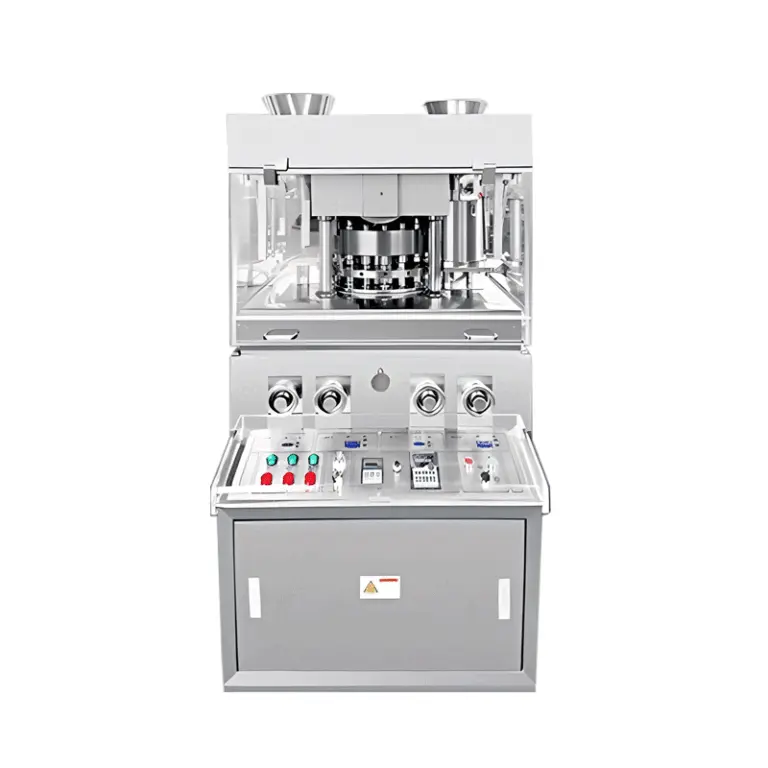
Tablet Press Machine Wear Parts and Replacement
Wear parts require particular attention because their condition changes progressively rather than failing instantly. A component may continue functioning while already producing inconsistent results.
For a tablet press machine, common wear-sensitive components include punches, dies, cams, bearings, seals, feeder components, scrapers, and selected drive elements. Similar preventive maintenance principles may also apply to auxiliary equipment, such as a dryer dehydrator, when it operates within the same production line. The exact list varies according to machine design.
Punches and dies are especially important because they directly influence tablet formation. Damaged tooling can contribute to sticking, picking, capping, weight variation, edge defects, and inconsistent tablet dimensions.
When Should Tablet Press Machine Parts Be Replaced
Replacement should be based on measurable condition rather than appearance alone.
Operators and maintenance personnel should consider:
- Visible scoring, cracks, deformation, or corrosion.
- Increased vibration or abnormal noise.
- Repeated tablet defects after formulation and process variables have been checked.
- Increasing adjustment frequency.
- Reduced equipment performance.
- Excessive clearance or mechanical play.
- Lubrication problems.
- Inspection results that exceed established acceptance limits.
For critical components, the replacement criterion should be defined in an SOP or maintenance specification whenever possible.
A useful approach is to maintain a component history for each tablet press machine. Recording operating hours, replacement dates, observed wear, failure modes, and corrective actions allows maintenance teams to identify recurring patterns.
| Component | Typical warning sign | Recommended action |
|---|---|---|
| Punches | Scratches, deformation, sticking, damaged tips | Inspect, polish only when permitted, or replace |
| Dies | Wear, scratches, dimensional deterioration | Inspect dimensions and replace when outside limits |
| Feeder parts | Irregular powder flow or mechanical resistance | Clean, inspect, adjust, or replace worn parts |
| Cams | Abnormal noise, surface wear, irregular punch movement | Inspect contact surfaces and replace when required |
| Bearings | Noise, heat, vibration, excessive play | Inspect lubrication and replace if defective |
| Seals | Leakage or visible deterioration | Replace and verify correct installation |
| Scrapers | Poor powder removal or visible wear | Inspect alignment and replace if necessary |
Tooling Care for a Tablet Press Machine
Tooling should be handled carefully during removal, cleaning, inspection, and storage. Punches and dies are precision components, so dropping, striking, or storing them incorrectly can create defects that may not be immediately visible.
After cleaning, tooling should be completely dry before storage or installation. In processes that use equipment such as a vacuum dryer, proper drying procedures can also help reduce residual moisture before components are returned to service. Contact surfaces should be protected according to the site’s approved procedure, particularly where corrosion could occur.
Tooling identification is also important. Mixing components without proper identification can make maintenance records difficult to trace and may increase the risk of incorrect installation.
Tablet Press Machine Fault Prediction
Preventive maintenance becomes more effective when it is combined with early fault detection. Instead of waiting for a tablet press machine to stop, operators can monitor changes in sound, vibration, temperature, tablet quality, and operating behavior.
Fault prediction does not necessarily require sophisticated predictive-maintenance software. Basic trend monitoring can already provide useful information.
For example, if vibration gradually increases over several weeks, the change may indicate developing bearing wear, imbalance, misalignment, or another mechanical issue. If tablet defects increase while compression settings remain unchanged, the tooling, feeder, powder characteristics, or compression components should be investigated.
Early Warning Signs of Tablet Press Machine Problems
Several symptoms deserve attention:
- A new or increasingly loud mechanical noise.
- Repeated changes in tablet weight.
- Increasing tablet thickness variation.
- More frequent tablet defects.
- Unexpected temperature increases.
- Powder leakage around the feeder.
- Increasing vibration.
- Irregular punch movement.
- Frequent machine adjustments.
- Lubricant leakage or unusual lubricant consumption.
A single symptom does not automatically identify a specific failure. Instead, it should trigger a structured inspection.
For example, tablet weight variation may result from powder flow, filling depth, feeder performance, turret speed, or mechanical issues. When troubleshooting a single punch tablet press machine, maintenance personnel should therefore avoid replacing components before confirming the actual cause.
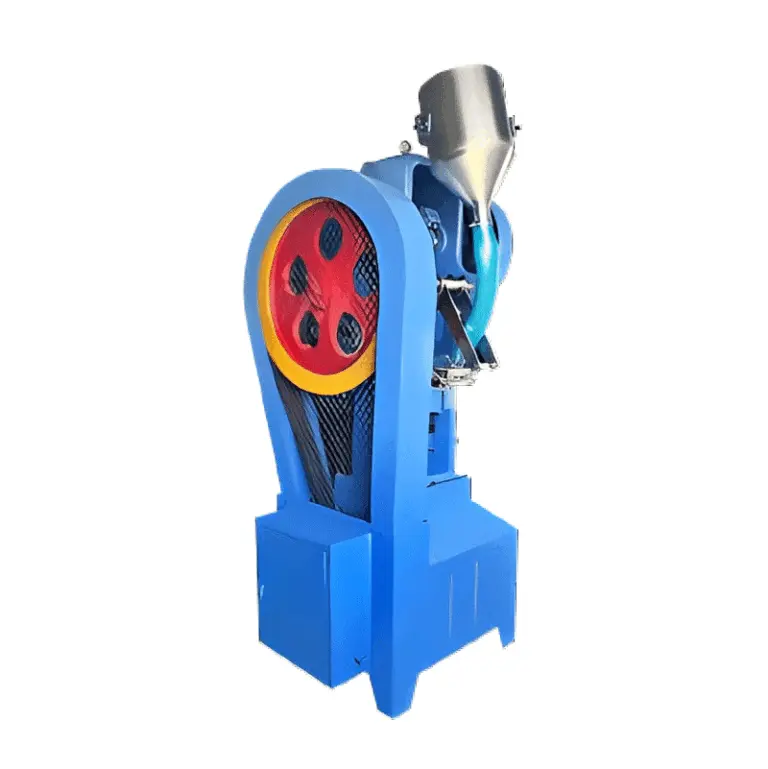
Tablet Press Machine Troubleshooting Before Downtime
A practical troubleshooting strategy should begin with observation and proceed toward the most likely causes.
When an abnormal condition appears, maintenance personnel can follow this sequence:
- Record the symptom: Note when the problem started and whether it occurs continuously or intermittently.
- Check recent changes: Review formulation, tooling, machine settings, cleaning, maintenance, and production conditions.
- Inspect the relevant area: Examine tooling, feeder, cams, bearings, lubrication, and drive components.
- Compare operating trends: Look for changes in vibration, temperature, tablet quality, or machine speed.
- Correct the identified cause: Adjust, clean, lubricate, repair, or replace the affected component according to the approved procedure.
- Verify performance: Confirm that the problem has been resolved before returning the machine to routine production.
- Document the event: Record the failure, cause, action, and follow-up requirement.
This approach is more reliable than repeatedly adjusting machine parameters without identifying the underlying problem.
Tablet Press Machine Maintenance Records and GMP
Maintenance activities should be documented, especially in regulated pharmaceutical manufacturing.
A useful record should identify the equipment, date, maintenance activity, responsible personnel, findings, parts replaced, corrective action, and verification result.
WHO GMP principles emphasize clearly defined, documented, and controlled production processes, while EU GMP requires equipment to be appropriately maintained and designed to support effective cleaning and maintenance.
Good records also make troubleshooting easier. If a tablet press machine repeatedly develops the same problem, maintenance history can show whether the issue is associated with a particular component, production condition, or maintenance interval.
For GMP operations, maintenance procedures should be integrated into the site’s quality system rather than treated as informal workshop activities.
Tablet Press Machine Maintenance: Key Takeaways
A tablet press machine can operate reliably for long production periods when maintenance is planned around actual equipment risks.
Daily cleaning and inspection help identify obvious abnormalities. Weekly and monthly checks provide greater control over progressive mechanical wear. Longer-term inspections should address critical components, equipment history, and site-specific risk.
Wear parts should be replaced according to established condition criteria rather than waiting for complete failure. At the same time, maintenance teams should avoid unnecessary replacement without confirming the source of a problem.
Most importantly, fault prediction should become part of routine production management. Changes in vibration, noise, temperature, tablet quality, and adjustment frequency can provide early indications of mechanical or process-related problems.
For pharmaceutical production, these activities should be supported by written procedures and records. WHO, FDA, and EU GMP guidance all emphasize the importance of appropriate equipment maintenance, cleaning, control, and documentation.
A well-maintained tablet press machine is therefore more than a production asset. It is part of the overall manufacturing control system. By combining scheduled maintenance, wear-part management, early fault detection, and accurate records, manufacturers can reduce avoidable downtime while supporting stable and repeatable tablet production.
FAQ
How often should a tablet press machine be maintained?
Daily operator inspections should be combined with scheduled weekly, monthly, and longer-term preventive maintenance. The exact interval depends on operating hours, production conditions, machine design, and the manufacturer’s maintenance recommendations.
Which parts of a tablet press machine usually require the most attention?
Punches, dies, cams, bearings, feeder components, seals, scrapers, and lubrication-related components should receive regular inspection. The actual wear rate depends on machine utilization, formulation characteristics, compression conditions, and cleaning practices.
How can a tablet press machine failure be predicted before downtime occurs?
Monitor changes in vibration, noise, temperature, tablet quality, machine adjustments, and component wear. Recording these trends over time can help identify deterioration before it develops into a major failure.