


For beginners entering pharmaceutical solid dosage manufacturing, the term tablets making machine can be confusing. Suppliers, engineers, and operators may use terms such as tablets machine, tablet press, tablet compression machine, or tablets manufacturing machine.
These terms can overlap, although they may emphasize different functions or applications. Understanding the terminology first makes it easier to understand how the equipment works and where it fits into a pharmaceutical production line.
A tablets making machine is basically compression equipment that transforms prepared powder or granules into tablets with a defined shape, size, weight, and mechanical strength.
In pharmaceutical manufacturing, however, the tablets making machine is only one part of the overall process. Material preparation, blending, lubrication, compression, dedusting, inspection, coating, and packaging may all be involved depending on the product.
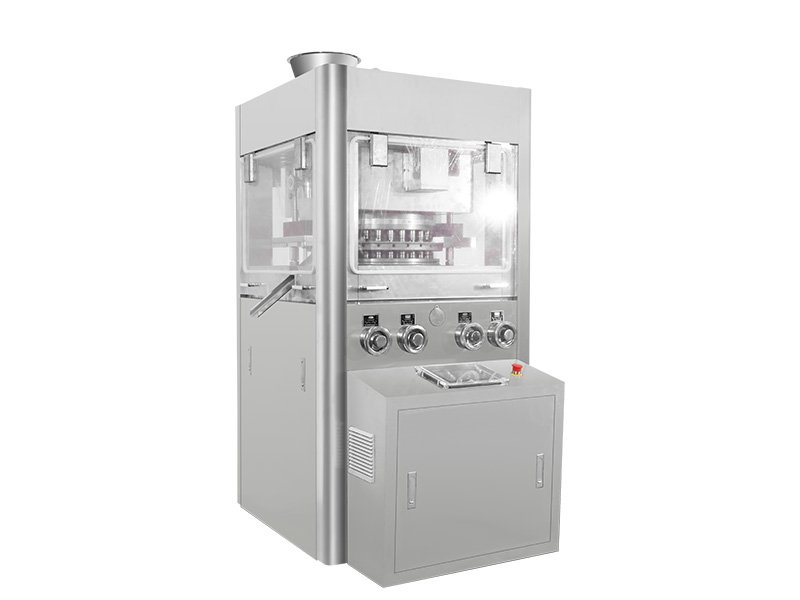
Understanding the Tablets Making Machine Definition
A tablets making machine uses controlled mechanical force to compress a measured quantity of powder or granules inside a die cavity. The basic process consists of filling the die, compressing the material between punches, and ejecting the finished tablet.
Modern equipment may include a feeding system, turret, punches, dies, compression mechanism, discharge system, and control system. The exact configuration depends on the machine design and intended production scale.
The term tablets making machine is commonly used in general B2B communication because it clearly describes the equipment’s purpose. In technical discussions, “tablet press” or “tablet compression machine” may be preferred.
Tablets Making Machine and Common Industry Names
| Common term | Typical meaning |
|---|---|
| Tablets making machine | General tablet-producing equipment |
| Tablets machine | Short commercial expression |
| Tablet press | Technical compression-focused term |
| Tablet compression machine | Emphasizes the compression process |
| Tablets manufacturing machine | Production-oriented description |
The term tablets machine is often simply a shorter expression for tablets making machine. Meanwhile, tablets manufacturing machine may sound broader, but it does not necessarily mean an entire tablet production line.
A complete pharmaceutical manufacturing process may include material dispensing, granulation, drying, blending, compression, dedusting, coating, and packaging. Therefore, buyers should always check the actual equipment functions instead of relying only on the product name.
How a Tablets Making Machine Works
The working principle of a tablets making machine is based on controlled die filling followed by compression.
Powder or granules first enter the feeding system. In a single punch tablet press machine, the material is directed into the die cavity while the tooling moves through the filling zone. The quantity of material entering the die is controlled by machine settings and tooling position.
The filled die then moves into the compression zone. Upper and lower punches apply mechanical force to the material. During compression, particles move closer together and may deform, fracture, and bond to form a compact tablet.
After compression, the punches move away from the compression position. The formed tablet is then ejected from the die and transferred toward the discharge section.
A simplified production cycle is:
- Feed powder or granules into the machine.
- Fill the die cavity.
- Adjust the fill volume through the lower punch.
- Apply compression force through the punches.
- Form the tablet.
- Eject the compressed tablet.
- Transfer the tablet to the next process.
The actual compression cycle depends on machine design, tooling configuration, formulation characteristics, and operating parameters.
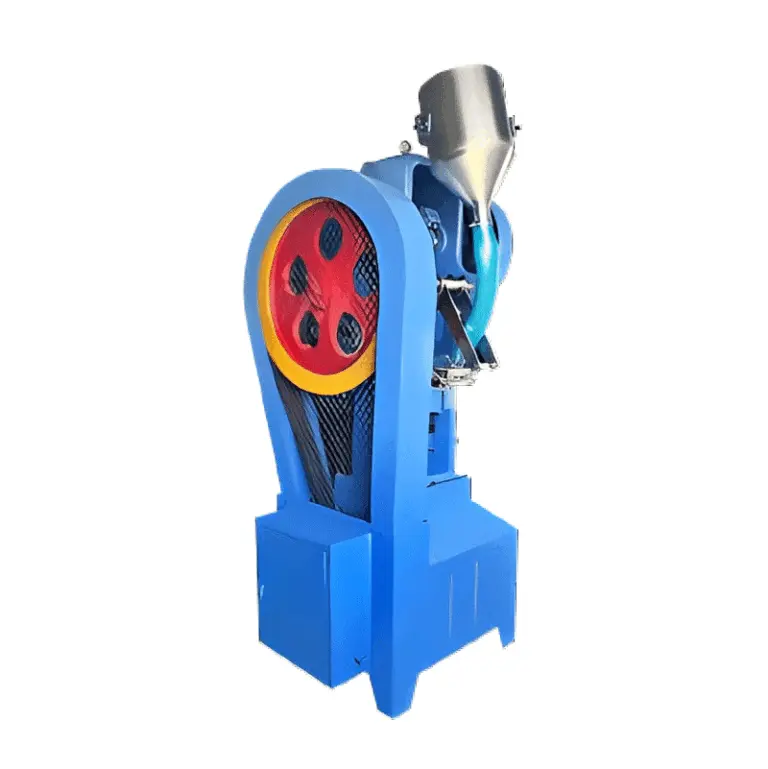
Tablets Making Machine Compression Factors
The compression result depends on more than compression force alone. Powder flow, particle size, moisture, lubrication, density, and compressibility can all influence tablet formation.
Machine parameters also matter. Filling depth, turret speed, compression force, and tooling condition may affect tablet weight, thickness, hardness, appearance, and production stability. In a complete solid-dose production line, a capsule polisher may also be used for capsule products alongside tablet processing equipment.
For this reason, pharmaceutical manufacturers normally establish appropriate process parameters and in-process controls for each product.
Tablets Making Machine Main Components
Understanding the main components provides a useful foundation for beginners.
The feeding system delivers powder or granules toward the die area. Consistent feeding is important because unstable material flow can lead to variations in die filling.
The turret carries multiple tooling stations in many rotary designs. As it rotates, each station passes through filling, compression, and ejection stages.
Punches and dies are the core tooling components. The die determines the basic tablet dimensions, while the punches form the upper and lower surfaces.
The compression system applies the required mechanical force, while the discharge system removes finished tablets from the production path.
Other systems may control speed, operating parameters, safety functions, and production monitoring.
Tablets Making Machine Capacity and Production Factors
Production capacity is an important consideration when evaluating equipment.
For a rotary tablets making machine, theoretical output is influenced by the number of stations, turret speed, and the number of tablets produced during each compression cycle.
However, theoretical capacity is not always equal to actual production output. Formulation properties, machine adjustments, tooling requirements, operating conditions, quality checks, and planned interruptions can reduce practical production speed.
A simple capacity assessment can consider:
- Number of tooling stations
- Turret speed
- Tablets produced per compression cycle
- Formulation flow and compressibility
- Compression settings
- Quality-control requirements
- Cleaning and changeover time
Therefore, manufacturers should evaluate production capacity under realistic operating conditions instead of relying only on maximum machine speed.
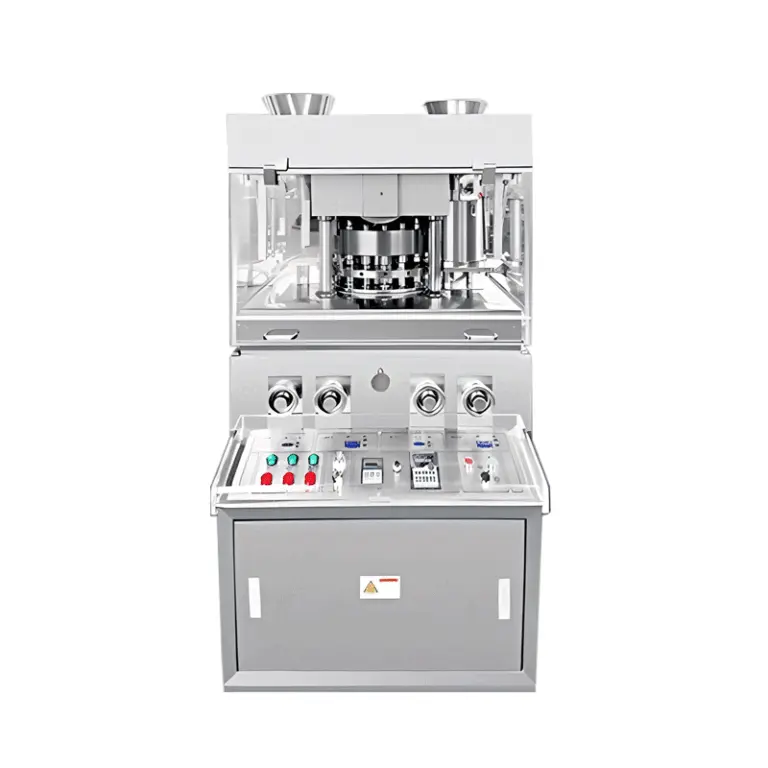
Tablets Making Machine in Pharmaceutical Production
A tablets making machine normally operates as one stage within a larger pharmaceutical production process.
Before compression, materials may undergo dispensing, sieving, milling, granulation, drying, blending, and lubrication. The exact sequence depends on the formulation and manufacturing process.
After compression, tablets may pass through dedusting, inspection, coating, and packaging. In some pharmaceutical production lines, equipment such as a capsule filling machine may also be part of the broader solid-dose manufacturing workflow, depending on the products being manufactured.
This means the tablets making machine should be considered together with upstream and downstream equipment. Stable material feeding, controlled tablet discharge, cleaning accessibility, and suitable process integration can all affect production efficiency.
GMP principles also require pharmaceutical production processes and equipment to be appropriately controlled, documented, and maintained. The specific requirements depend on the product, facility, and applicable regulatory framework.
Tablets Making Machine and Formulation Compatibility
Equipment selection should consider the formulation as well as the desired production capacity.
Important material characteristics may include:
- Powder flowability
- Compressibility
- Compactibility
- Moisture sensitivity
- Particle-size distribution
- Lubrication behavior
- Segregation tendency
A machine can have sufficient mechanical capacity but still experience unstable operation if the formulation does not feed or compress consistently.
Tablets Making Machine GMP Basics for Beginners
For pharmaceutical production, choosing a tablets making machine is also a GMP consideration.
The equipment should support appropriate cleaning, maintenance, inspection, documentation, and process control. Product-contact surfaces should be suitable for the intended application, while areas requiring routine cleaning should be reasonably accessible.
Changeover is another important consideration when the same equipment is used for different products. Residual powder or material from a previous batch should be controlled according to the site’s cleaning procedures and contamination-control strategy.
Beginners should therefore evaluate:
- Product-contact materials
- Cleaning accessibility
- Changeover requirements
- Maintenance access
- Equipment documentation
- Process monitoring
- Qualification requirements
- Integration with other equipment
The exact GMP requirements vary according to the product, manufacturing process, facility, and regulatory jurisdiction.
Tablets Making Machine Selection Guide
For a new buyer, equipment selection should begin with the product rather than maximum machine speed.
First define the tablet size, shape, weight, expected production volume, and formulation characteristics. Then review suitable tooling, compression requirements, operating range, cleaning design, and line integration.
A practical selection process can follow these steps:
- Define tablet specifications.
- Evaluate formulation flow and compression characteristics.
- Estimate realistic production demand.
- Determine tooling and station requirements.
- Review compression and speed requirements.
- Check cleaning and changeover design.
- Evaluate documentation and qualification support.
- Confirm compatibility with the complete production line.
This approach helps beginners distinguish between a machine’s theoretical specifications and its practical suitability for pharmaceutical production.
Tablets Making Machine Beginner Summary
A tablets making machine is fundamentally a compression system used to convert prepared powder or granules into solid tablets.
Terms such as tablets machine, tablet press, tablet compression machine, and tablets manufacturing machine may appear across the market. Although the wording differs, many of these terms refer to equipment based on the same basic compression principle.
The essential process is feeding, die filling, compression, ejection, and discharge. However, reliable pharmaceutical production also depends on formulation properties, tooling, machine settings, cleaning, maintenance, quality controls, and downstream processing.
For beginners, the most important concept is to view the tablets making machine as one controlled unit within the wider pharmaceutical manufacturing process. This provides a practical foundation for understanding machine specifications, capacity, GMP requirements, and future equipment selection.
FAQ
Is a tablets machine the same as a tablet press?
In many commercial contexts, these terms refer to the same basic compression equipment. “Tablet press” is generally more technical, while “tablets machine” is a broader expression.
What does a tablets making machine do?
It feeds prepared material into dies, compresses the material between punches, ejects the formed tablets, and transfers them to the next production stage.
What should beginners check before choosing a tablets making machine?
They should consider tablet specifications, formulation properties, production demand, tooling, compression requirements, cleaning, maintenance, GMP expectations, and production-line compatibility.