


Pharmaceutical blister packaging is the world’s dominant solid-dose containment format, sealing over 65% of all oral solid drugs globally into individually protected, tamper-evident cavities. Yet the machines that produce those packs span an enormous range of forming technologies, film materials, sealing parameters, and compliance requirements. For procurement engineers, QA managers, and production directors, the choice between a DPP-series pharmaceutical blister packaging machine and an Alu-Alu configuration is not merely a budget decision — it is a product stability decision with shelf-life consequences.
This guide provides a systematic comparison of DPP (flat-plate) blister packaging machines across PVC, Alu-PVC, and Alu-Alu packaging formats. It covers material selection criteria, the complete forming-sealing-punching process workflow, eight essential technical parameters that every buyer must verify, and the most common mistakes that delay market launch and inflate total cost of ownership.
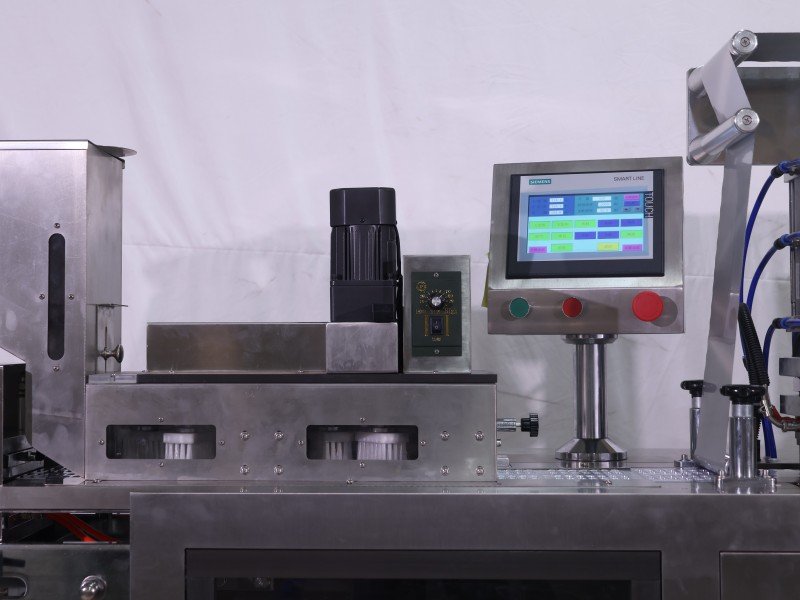
Understanding DPP Blister Packaging Machines
What “DPP” Means in Practice
The DPP designation typically refers to the machine’s forming area capacity and configuration. Common models include DPP-80, DPP-150, DPP-180, DPP-250, DPP-260, and DPP-350, with numbers generally indicating maximum forming width in millimeters. A DPP-80, for example, offers a maximum forming area of approximately 90×115 mm and produces around 2,000 plates per hour, making it suitable for small pharmaceutical producers and clinics. At the other end, a DPP-260 can achieve up to 10,800 plates per hour with a forming area of 250×110 mm, serving medium to high-volume production.
The Three Material Formats: PVC, Alu-PVC, and Alu-Alu
The choice of packaging material is the single most consequential decision in specifying a pharmaceutical blister packaging machine. The material determines not only the machine configuration — forming method, sealing temperature, tooling design — but also the drug product‘s stability throughout its shelf life, and must be coordinated with every linked pharmaceutical production machine to sustain consistent line operation.
Material Comparison Table
| Parameter | PVC (Thermoforming) | Alu-PVC (Thermoforming) | Alu-Alu (Cold Forming) |
|---|---|---|---|
| Forming Method | Heat thermoforming | Heat thermoforming | Mechanical cold forming (stamping) |
| Barrier – Moisture | Basic | Moderate (PVDC coating improves) | Near-zero MVTR |
| Barrier – Oxygen | Low | Moderate | Near-zero OTR |
| Barrier – Light | Transparent (no protection) | Transparent (no protection) | Complete opacity |
| Cost | Lowest | Moderate | Highest |
| Product Visibility | Clear | Clear | Opaque |
| Typical Application | Stable APIs, OTC drugs | Moderately hygroscopic APIs | Highly moisture/oxygen/light-sensitive APIs |
| Machine Compatibility | Standard DPP | Standard DPP | DPP with cold-forming capability |
PVC — The Industry Baseline
PVC (polyvinyl chloride) is the most commonly used forming material for blister pack production. It is cost-efficient, lightweight, and easy to thermoform. For stable formulations that do not require extraordinary barrier protection, PVC remains the economical choice. Studies indicate that PVC blisters have the lowest climate impact compared to aluminum alternatives. However, PVC offers only basic moisture protection — and for hygroscopic APIs that draw moisture out of the air, PVC is often insufficient.
Alu-PVC — The Compromise Solution
Alu-PVC packaging combines a PVC forming web with an aluminum lidding foil. For products that need moderate barrier enhancement, PVDC coating can be applied to the PVC film, raising moisture barrier performance. This configuration offers a balance between cost and protection. Moisture-sensitive active ingredients often require pre-treatment on equipment such as the vacuum dryer before packing to preserve stability. In Europe, PVC-alu and PVC-PVDC-alu blister packs hold approximately 95% market share, reflecting their widespread acceptance for the majority of solid-dose products.
Alu-Alu — The High-Barrier Standard
Alu-Alu (cold-form foil) packaging uses aluminum for both the forming web and the lidding foil. Unlike thermoformed blisters that use heat to shape cavities, Alu-Alu uses mechanical pressure at room temperature — a critical advantage for heat-sensitive drugs. The multi-layer structure typically comprises an OPA outer layer (puncture resistance), an aluminum core (absolute barrier), and a PVC inner layer (sealability).
The barrier performance of Alu-Alu is near-absolute: near-zero Moisture Vapor Transmission Rate (MVTR) and Oxygen Transmission Rate (OTR). This makes it the primary choice for biologics, highly active compounds, and any drug product where even moisture or oxygen exposure over 24 months would cause degradation. The trade-off is higher material cost — the multi-layer composite cold-form foil is significantly more expensive than standard PVC or PVDC films — and complete opacity, meaning patients cannot see the product inside.
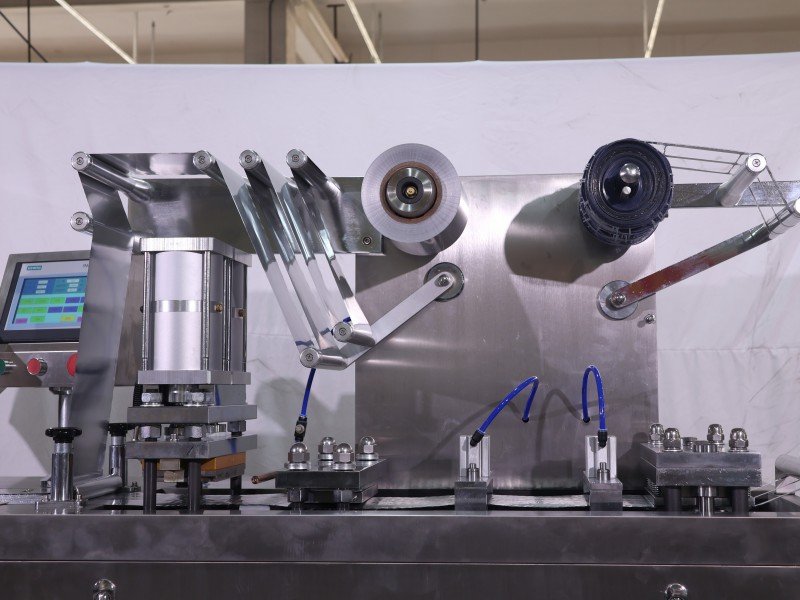
The Three-Station Process: Forming, Sealing, and Punching
Every pharmaceutical blister packaging machine executes three core operations in sequence. Understanding each station‘s function and critical parameters is essential for proper machine selection and troubleshooting.
Station 1 — Forming
Forming creates the cavities that will hold each tablet, capsule, or softgel. The forming method depends entirely on the material:
Thermoforming (PVC and Alu-PVC): The forming film is heated to its softening point (typically 120–200°C), then vacuum or compressed air draws the softened material into cavity molds. Three-stage heating systems with strict temperature control (±2.5°C) reduce film shrinkage and ensure uniform cavity definition.
Cold Forming (Alu-Alu): The aluminum laminate is mechanically stamped into shape using pressure at room temperature. No heat is applied, eliminating the risk of heat damage to sensitive APIs. Cold forming requires greater forming force and different tooling than thermoforming.
Critical forming parameters include forming depth (typically up to 12–16 mm for thermoforming, 10–12 mm for cold forming), forming area, and heating zone temperature profile.
Station 2 — Sealing (Filling and Sealing)
After forming, products are fed into each cavity — typically via vibratory feeders, counting systems, or specialized feeding mechanisms. The lidding foil (usually aluminum, though paper and laminates are also used) is then heat-sealed over the filled cavities.
Sealing quality depends on three interdependent variables:
Temperature: Too low, and the heat-seal coating does not fully melt, resulting in insufficient adhesion. Too high, and materials can be damaged.
Pressure: Insufficient pressure leads to weak or incomplete seals.
Dwell time: The duration during which heat and pressure are applied must be sufficient for the seal to form.
In well-calibrated systems, servo-controlled sealing rollers deliver precise sealing and print registration control.
Station 3 — Punching
The final station punches individual blister cards from the continuous formed-and-sealed web. Punching operations can be configured for single-track, twin-track, or three-track formats. Edge-to-edge blister punching improves packaging yield by minimizing material waste. Punch frequency varies widely: DPP-80 machines typically run at 10–35 punches per minute, while high-speed models can achieve 60–100 punches per minute for aluminum-plastic formats. For highly hygroscopic pharmaceuticals, upstream processing using equipment such as the freeze dryer ensures adequate moisture removal before products enter the blister packaging workflow.
8 Must-Check Parameters Before Buying a Pharmaceutical Blister Packaging Machine
Selecting a pharmaceutical blister packaging machine requires evaluating more than output speed. Based on industry commissioning experience across multiple regions, here are eight parameters that procurement engineers and production directors must verify before issuing a purchase order.
Parameter 1 — Forming Area and Depth
The maximum forming area determines how many cavities fit across the web width and how large each cavity can be. Forming depth dictates the maximum tablet or capsule size the machine can accommodate.
For DPP-80: ~90×115 mm, up to 26 mm depth
For DPP-260: ~250×110 mm, up to 15 mm depth
For high-speed systems: up to 276×220 mm
Buyer‘s check: Confirm your largest product’s dimensions plus adequate clearance for product feeding and sealing.
Parameter 2 — Material Compatibility
Not every pharmaceutical blister packaging machine handles every material. Verify that the machine supports:
Your primary forming material (PVC, PVDC-coated PVC, Aclar, cold-form aluminum)
Your lidding material (push-through foil, child-resistant foil, peelable paper)
The material thickness range your operation requires
Some machines support both thermoforming and cold-forming with quick changeover between material types. Others are optimized for one format and perform poorly with the other.
Parameter 3 — Output Speed (Plates per Hour)
Output speed must be specified in plates per hour — not just cycles per minute — because plate size varies. Common benchmarks:
| Machine Model | Output (Plates/Hour) | Typical Application |
|---|---|---|
| DPP-80 | ~2,000 | Small pharma, clinics |
| DPP-150 | 1,200–4,200 | Medium pharma, multiple SKUs |
| DPP-180 | 6,000–14,000 sheets/hour | Alu-Alu pharma products |
| DPP-260 | ~10,800 | Medium to high-volume production |
Parameter 4 — Sealing Temperature Range and Control Precision
Sealing temperature directly impacts package integrity. Look for:
Temperature range sufficient for your materials (typically 120–200°C for thermoforming)
Control precision within ±2.5°C or better
Independent zone control for different heating sections
Parameter 5 — Changeover Time and Tooling Design
For multi-product facilities, changeover speed is a critical productivity factor. Evaluate:
Quick-change tooling systems (mold plates with clamping mechanisms)
Recipe-based HMI controls for rapid parameter adjustment
Time required for full format change (target: under 30 minutes for experienced operators)
Parameter 6 — Feeding System Compatibility
The feeding system must handle your specific product form — tablets, capsules, softgels, or other solid doses. Key considerations:
Feeding accuracy (target: 99.5% or better)
Ability to handle different product sizes without damage
Integration with vision inspection systems for missing or broken tablet detection
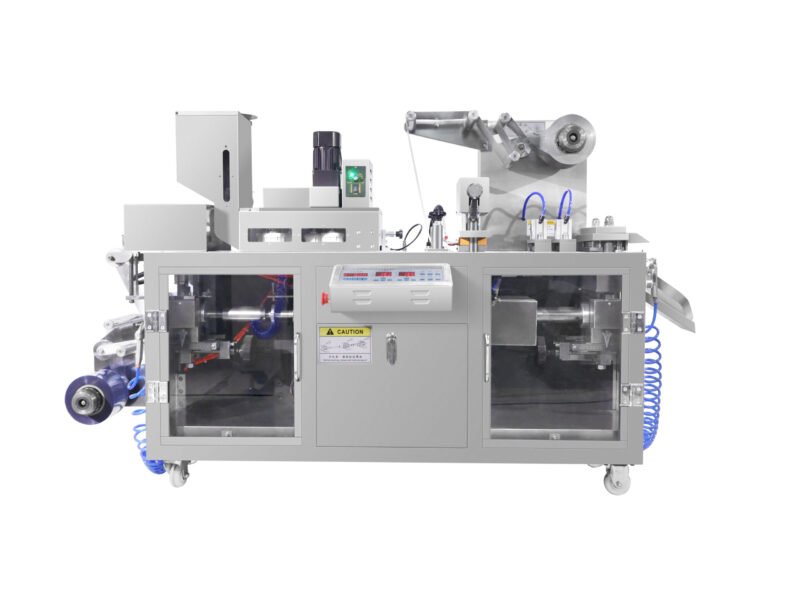
Parameter 7 — Validation Documentation Readiness
A pharmaceutical blister packaging machine that passes a CE audit but ships without an IQ/OQ/PQ protocol package is not GMP-ready. Regulatory auditors during WHO GMP inspections audit the validated system, not individual machines in isolation. Verify that the supplier provides:
Installation Qualification (IQ) documentation
Operational Qualification (OQ) protocols
Performance Qualification (PQ) support
cGMP-compliant change-part documentation
Parameter 8 — Total Cost of Ownership (Not Just Unit Price)
The most expensive mistake in pharmaceutical equipment procurement is not overpaying for the machine — it‘s specifying the wrong machine class entirely. Evaluate:
Material waste rates (edge-to-edge punching minimizes waste)
Energy consumption (typical DPP machines: 20–24 kW for high-speed models)
Maintenance frequency and spare parts availability
Training and commissioning costs
Downtime impact of format changeovers
Common Mistakes in Pharmaceutical Blister Packaging Machine Selection
Based on field audits and commissioning records, here are the most frequent errors buyers make — and how to avoid them.
Choosing Material Before Confirming Stability Data
The choice between PVC, PVDC, Aclar, and Alu-Alu is not aesthetic — it‘s stability data. Yet many buyers select packaging material based on cost or precedent rather than formal stability studies. One comparative study found that PVC-type blisters were excluded from packaging options for a particular drug product, while aluminum/aluminum cold-formed blisters were selected to ensure product stability throughout shelf life.
Avoid: Conduct formal stability studies under ICH conditions before finalizing material selection. Do not assume that “what we used before” is adequate for a new formulation.
Sizing the Machine by Nameplate Speed Alone
The most fundamental error in blister machine sizing is treating nameplate units per minute as the primary specification. Actual sustained output is always lower than theoretical maximum due to material feeding interruptions, changeovers, maintenance, and quality checks.
Avoid: Base your capacity requirement on sustained output over a full shift — not peak speed. Add 20–30% headroom for future SKU expansion and compliance demands.
Overlooking Validation Documentation
A machine that works perfectly in the supplier‘s factory can fail a site audit if the validation documentation is incomplete. The hidden trap: standalone machines rarely ship with the cGMP-compliant change-part documentation and IQ/OQ packages that regulators actually audit. This gap costs an average of 6–12 weeks in remediation.
Avoid: Before issuing your URS, map your entire packaging line as one validated system, not a collection of machines. Specify IQ/OQ/PQ documentation as a contractual deliverable.
FAQ
Can the same pharmaceutical blister packaging machine handle both PVC thermoforming and Alu-Alu cold forming?
Yes, many DPP-series machines support both formats with appropriate tooling and parameter adjustments. However, changeover between thermoforming and cold forming requires more than a simple setting change — it typically involves更换 forming stations or major tooling components. Machines that handle both formats efficiently are available, but buyers should verify sustained output in both modes, not just maximum speed in the preferred format.
How do I determine whether my product needs PVC, Alu-PVC, or Alu-Alu packaging?
The determination must be based on formal stability studies under ICH conditions. Hygroscopic APIs that draw moisture out of the air need Alu-Alu. Light-sensitive APIs need Aclar or aluminum. Stable formulations can use PVC because it is cheap and works fine. No shortcut replaces stability data — the choice between materials is not aesthetic; it‘s stability data.
What is the typical validation documentation required for a pharmaceutical blister packaging machine?
Regulatory auditors require a complete validation package including Installation Qualification (IQ), Operational Qualification (OQ), and Performance Qualification (PQ) protocols and reports. Additionally, cGMP-compliant change-part documentation must be available for every tooling component that contacts the product or packaging material. Machines that ship without these documents are not GMP-ready, regardless of their CE certification. The validation gap can delay market launch by 6–12 weeks.