


Choosing the right industrial tablet press is an important decision for pharmaceutical manufacturers planning batch production. The machine must do more than produce tablets at a specified speed. It needs to work reliably with the formulation, support the required batch size, provide suitable compression performance, and fit the facility’s GMP and cleaning procedures.
A machine with a high theoretical output may not always be the most suitable choice. Actual production depends on powder characteristics, tablet dimensions, tooling, operating parameters, changeover requirements, and planned downtime.
For this reason, manufacturers should evaluate an industrial tablet press as part of the complete production process rather than as an isolated piece of equipment. Capacity, material compatibility, GMP requirements, compression performance, tooling flexibility, maintenance, and total cost should all be considered before purchase.
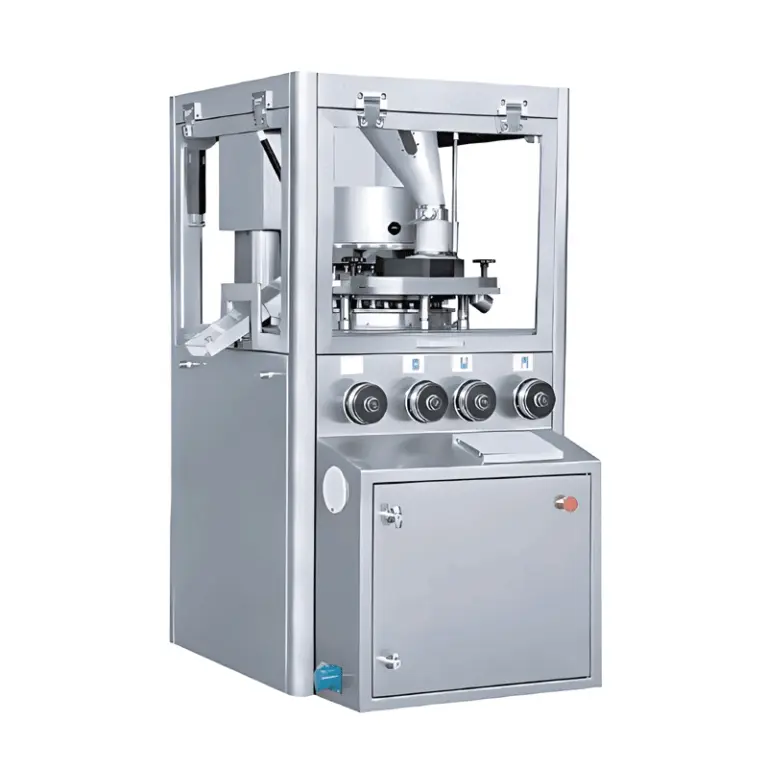
Industrial Tablet Press Selection Starts With Production Requirements
The first step in selecting an industrial tablet press is to define the production requirements. Batch size and annual demand provide a starting point, but they should not be the only factors considered.
Manufacturers should determine the required tablet output, expected operating hours, number of production batches, product portfolio, and potential future capacity requirements. These factors help establish an appropriate operating range for the machine. Upstream equipment, such as a pulverizer machine used for particle-size reduction, should also be considered when evaluating the overall production process.
Selecting a press that is significantly larger than necessary may increase investment, space requirements, and operating complexity. On the other hand, selecting a machine with insufficient capacity can limit production and create unnecessary scheduling pressure.
ndustrial Tablet Press Capacity and Batch Size
Machine capacity is often expressed as tablets per hour. However, theoretical capacity and practical production capacity are not necessarily the same.
Theoretical output is affected by factors such as turret speed, number of stations, and the number of tablets produced per compression cycle. Actual output can be lower because of formulation characteristics, feeding stability, machine adjustments, quality checks, cleaning, tooling changes, and planned downtime.
Before selecting an industrial tablet press, manufacturers should therefore estimate capacity under realistic operating conditions.
A practical evaluation can follow these steps:
- Define the required batch size and annual production volume.
- Estimate available production hours and planned downtime.
- Determine the desired operating speed for the formulation.
- Compare practical output with current and future production requirements.
- Confirm that the machine can operate within a stable range rather than continuously at maximum speed.
This approach provides a more realistic basis for capacity selection.
Industrial Tablet Press Capacity Comparison
| Selection factor | Moderate-capacity machine | Higher-capacity machine |
|---|---|---|
| Production scale | Moderate batches | Large batches |
| Station capacity | Generally lower | Generally higher |
| Space requirement | Usually lower | Usually higher |
| Initial investment | Generally lower | Generally higher |
| Changeover | Often simpler | May require more planning |
| Future expansion | Limited to moderate | Greater capacity potential |
The exact output of an industrial tablet press depends on its technical configuration and the product being manufactured. Therefore, capacity should always be confirmed against actual formulation and tablet specifications.
Industrial Tablet Press Feeding and Process Control
The feeding system has a direct influence on die filling and tablet weight consistency. A formulation with poor flow characteristics may require more careful control than a free-flowing material.
An industrial tablet press should provide appropriate control over filling depth, turret speed, compression force, and other relevant operating parameters.
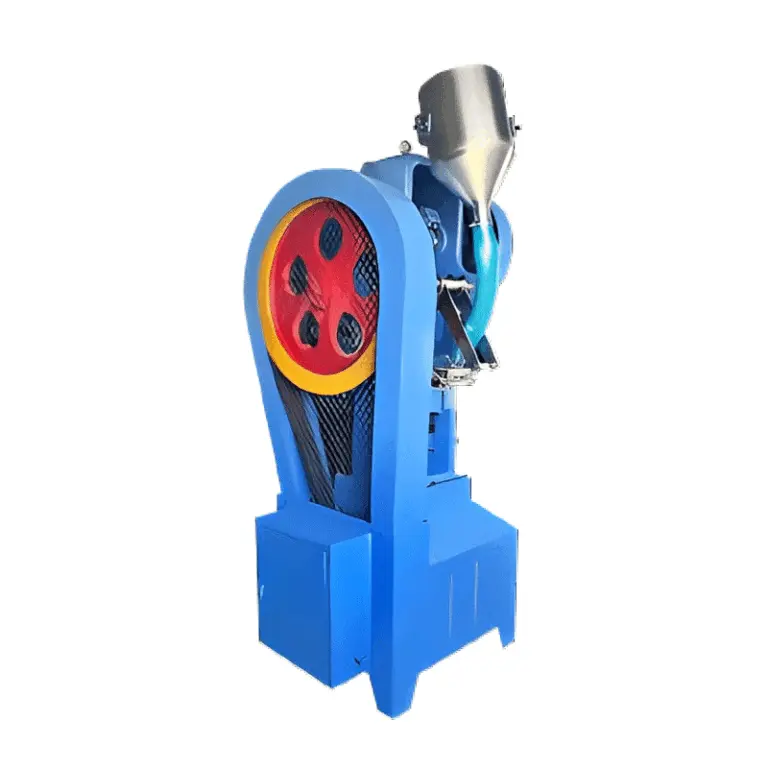
Process control becomes particularly important as production speed increases. Stable feeding and repeatable compression conditions can help reduce variation during batch production. Compared with a single punch tablet press machine, an industrial tablet press may provide more advanced control and monitoring functions for continuous batch production.
In addition, manufacturers should consider whether the machine provides suitable monitoring of critical process parameters. Automation can improve consistency, but it should support an established and understood manufacturing process rather than replace formulation development.
Industrial Tablet Press In-Process Monitoring
In-process monitoring helps manufacturers identify changes before they result in significant quantities of nonconforming tablets.
Depending on the product and established specifications, manufacturers may monitor:
- Tablet weight
- Tablet thickness
- Tablet hardness
- Tablet appearance
- Compression force
- Production speed
The specific testing program should be established according to the product, process, and quality system.
Industrial Tablet Press Material Compatibility Matters
Material compatibility is another major consideration when selecting an industrial tablet press. Powder behavior can affect feeding, compression, tablet quality, and production stability. It may also influence downstream processes, such as the performance requirements of a tablet coating machine.
Two formulations with the same target tablet weight can behave very differently during compression. Powder flow, particle size, moisture, bulk density, compressibility, and lubrication can all influence machine performance.
Industrial Tablet Press and Powder Properties
Before purchasing an industrial tablet press, manufacturers should understand the physical properties of the formulations that will be processed.
Important characteristics include:
- Powder flowability
- Particle-size distribution
- Bulk and tapped density
- Moisture content
- Compressibility
- Compactibility
- Lubrication characteristics
- Segregation tendency
Poor powder flow can affect die filling and contribute to tablet weight variation. Excessive cohesion may also increase the possibility of sticking or other compression-related problems.
A powder tablet press may be appropriate for controlled powder compression applications, but the final equipment choice should still be based on the specific formulation and production requirements.
Industrial Tablet Press Materials and Product Contact Surfaces
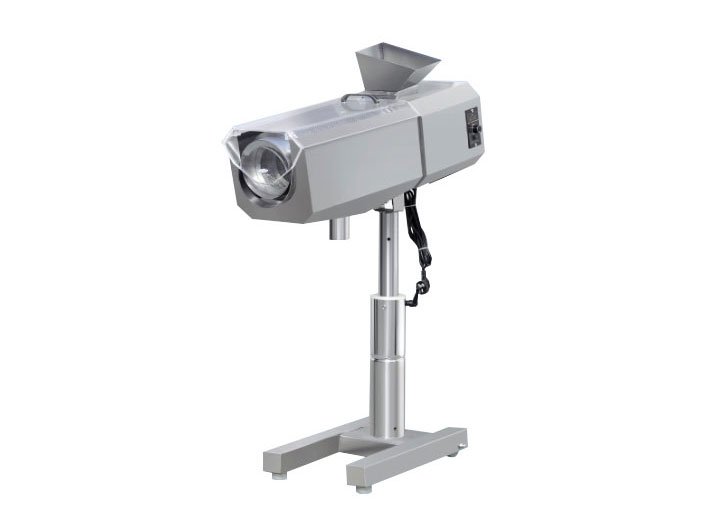
Product-contact materials should also be considered during equipment selection. Components exposed to pharmaceutical materials should be suitable for the product and the cleaning environment. This consideration should also extend to connected equipment, such as a tablet deduster, where product-contact surfaces may affect cleaning and material compatibility.
Manufacturers should evaluate the material and surface condition of product-contact parts as well as the accessibility of those areas for inspection and cleaning.
Key considerations include:
- Compatibility with the formulation
- Corrosion resistance
- Surface finish
- Cleaning-agent compatibility
- Resistance to the intended operating environment
- Accessibility for inspection
Appropriate material selection can support cleaning effectiveness and help reduce the risk of contamination or corrosion during repeated batch production.
Industrial Tablet Press GMP Compliance Requirements
GMP considerations should be incorporated into equipment selection from the beginning of the project. An industrial tablet press used for pharmaceutical production should support controlled operation, cleaning, maintenance, documentation, and traceability.
The exact requirements depend on the applicable regulatory framework, product, facility, and manufacturing process. However, equipment should generally be suitable for its intended use and designed to support consistent and controlled manufacturing.
Industrial Tablet Press Equipment Design for GMP
GMP-oriented equipment evaluation should cover more than production capacity.
Manufacturers should review:
- Product-contact materials
- Equipment surface condition
- Cleaning accessibility
- Prevention of powder accumulation
- Cross-contamination controls
- Safety systems and interlocks
- Maintenance accessibility
- Operating parameter controls
- Documentation and traceability
An industrial tablet press that is difficult to clean or inspect may increase production downtime and create additional operational challenges.
Equipment design should therefore be considered together with the site’s cleaning procedures, maintenance program, and quality requirements.
Industrial Tablet Press Qualification and Documentation
Documentation is another important part of equipment procurement.
Depending on the project, manufacturers may require equipment specifications, drawings, manuals, material documentation, testing records, and qualification-related documents.
Qualification activities should be defined according to the equipment’s intended use and the facility’s quality system. Installation qualification and operational qualification may form part of the overall qualification strategy where applicable.
For regulated production, an industrial tablet press should therefore be evaluated based on both mechanical performance and the supplier’s ability to provide appropriate technical and quality documentation.
Industrial Tablet Press Performance Differences Between Models
Different industrial tablet press models can provide significantly different performance even when their basic operating principle is similar.
A proper comparison should include capacity, compression capability, feeding performance, tooling flexibility, automation, changeover requirements, and maintenance.
Industrial Tablet Press Model Comparison
| Performance area | Standard configuration | Higher-performance configuration |
|---|---|---|
| Production capacity | Moderate | High |
| Number of stations | Lower | Higher |
| Compression capability | Standard | Broader operating range |
| Feeding control | Standard | More advanced |
| Tooling flexibility | Standard | Broader options |
| Automation | Basic | More extensive |
| Changeover | Relatively simple | May require more planning |
| Cleaning access | Standard | May provide enhanced access |
These categories are general. Actual specifications should always be confirmed using technical documentation and, where appropriate, production testing.
A higher-capacity industrial tablet press is not automatically more suitable. A manufacturer producing multiple products may place greater value on tooling flexibility, cleaning efficiency, or changeover time than on maximum theoretical output.
Industrial Tablet Press Compression Performance
Compression capability should match the formulation and tablet specifications.
Compression force affects tablet formation, but tablet quality also depends on powder properties, lubrication, filling consistency, turret speed, and other process variables.
Manufacturers should review:
- Maximum compression force
- Normal operating compression range
- Pre-compression capability
- Tablet diameter range
- Tablet thickness range
- Turret speed
- Punch and die compatibility
- Compression-force monitoring
The objective is not simply to select the machine with the highest compression force. The selected industrial tablet press should provide an appropriate operating range for the products that will actually be manufactured.
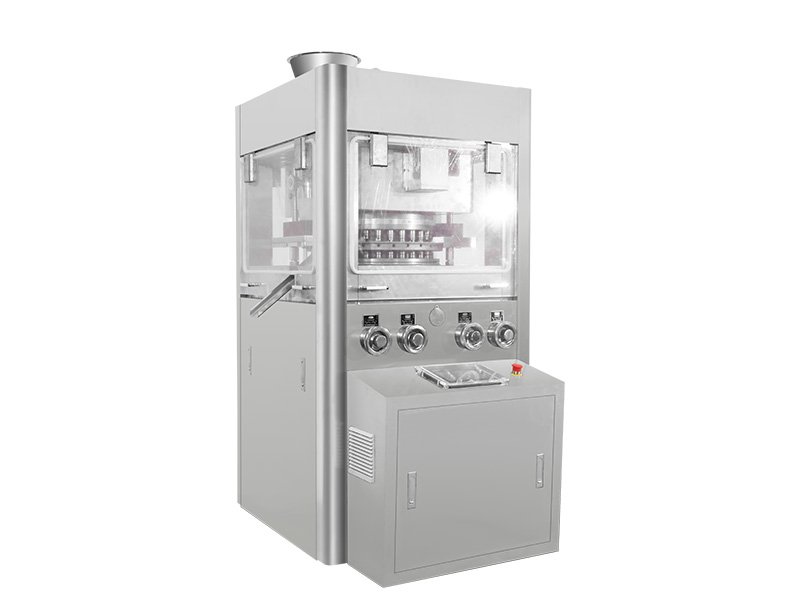
Industrial Tablet Press Tooling Flexibility
Tooling compatibility becomes especially important when one machine will produce multiple tablet formats.
Before purchasing an industrial tablet press, manufacturers should confirm:
- Punch and die standards
- Maximum tablet diameter
- Maximum tablet thickness
- Tablet shape options
- Embossing requirements
- Tooling changeover procedure
- Tooling storage requirements
- Tooling identification procedures
Tooling should be handled carefully during removal, cleaning, inspection, and storage. Damaged or incorrectly installed punches and dies can affect tablet quality and machine performance.
Industrial Tablet Press Cleaning and Maintenance Considerations
Cleaning and maintenance should be evaluated before purchasing an industrial tablet press because these activities directly affect production availability and GMP control.
A machine should provide reasonable access to product-contact areas and components requiring routine inspection. Difficult-to-access areas can increase cleaning time and complicate inspection.
Manufacturers should assess:
- Product-contact component removal
- Cleaning accessibility
- Inspection visibility
- Lubrication requirements
- Wear-part replacement
- Tooling maintenance
- Preventive maintenance intervals
- Spare-part requirements
- Operator and maintenance training
The cleaning procedure should be compatible with the formulation and the facility’s established cleaning strategy.
Maintenance requirements should also be considered when comparing different models. A machine with slightly higher initial cost may have different lifecycle requirements from a simpler configuration.
Industrial Tablet Press Final Selection for Batch Production
Selecting an industrial tablet press for batch production requires a balance between production capacity, formulation characteristics, GMP requirements, machine performance, tooling flexibility, cleaning, and lifecycle cost.
Capacity should be based on realistic production conditions rather than maximum theoretical output. Material selection should consider powder behavior and product-contact requirements. GMP evaluation should include equipment design, cleaning, documentation, and qualification.
At the same time, manufacturers should compare different models based on the actual needs of their product portfolio. Compression capability, feeding stability, tooling flexibility, changeover requirements, and maintenance can all influence long-term production performance.
The most appropriate industrial tablet press is therefore the configuration that matches the complete manufacturing process. Before making the final purchase decision, manufacturers should review technical specifications, formulation data, production requirements, quality-system expectations, and qualification needs together.
FAQ
How much capacity should an industrial tablet press have?
Capacity should be determined from batch size, annual production demand, operating hours, formulation behavior, planned downtime, and future production requirements rather than maximum output alone.
Why are material properties important when selecting an industrial tablet press?
Powder flow, particle size, moisture, density, compressibility, and lubrication can affect die filling and compression performance. These properties should be evaluated before selecting the feeding and compression configuration.
What GMP factors should be checked before buying an industrial tablet press?
Manufacturers should review product-contact materials, cleanability, contamination-control features, maintenance access, process controls, equipment documentation, and qualification requirements applicable to the intended manufacturing process.