


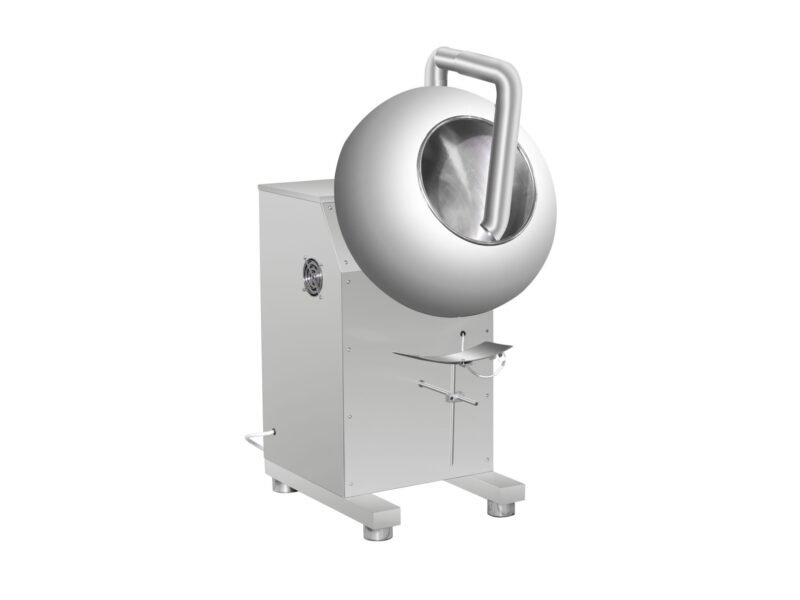
Selecting the right tablets manufacturing machine is an important decision for pharmaceutical and nutraceutical manufacturers planning batch production. A machine that appears suitable based only on rated output may not provide the required performance once formulation properties, tooling, cleaning procedures, and production controls are considered. The selection should also account for downstream equipment requirements, such as a tablet coating machine, when coated tablets are part of the final production process.
The selection process should therefore look beyond basic production speed. A suitable tablets manufacturing machine needs to match the expected batch size, tablet specifications, material characteristics, manufacturing environment, and applicable GMP requirements. Equipment configuration, contact-part materials, compression capability, feeding performance, automation, and cleaning accessibility can all influence production reliability.
For manufacturers comparing different models, the objective is not simply to purchase the machine with the highest nominal capacity. The more useful approach is to identify the equipment configuration that provides an appropriate balance between output, product quality, operational control, maintenance requirements, and future production needs.
Define Production Capacity Before Choosing A Tablets Manufacturing Machine
Production capacity is usually one of the first specifications reviewed when selecting a tablets manufacturing machine. However, rated output should not be treated as the same as guaranteed production output.
The theoretical capacity of a tablet press can be influenced by factors such as the number of tooling stations, turret speed, and the number of tablet layers or production cycles. Actual output can be lower because of formulation characteristics, machine adjustments, rejected tablets, cleaning, tooling changes, inspections, and unplanned stoppages.
For batch production, manufacturers should first estimate the required batch quantity and production schedule. This provides a more realistic basis for equipment selection.
Compare Rated Output With Actual Batch Requirements
A basic capacity assessment can consider:
- Required tablets per batch
- Number of batches per shift or production day
- Target operating hours
- Expected changeover and cleaning time
- Acceptable production losses
- Future capacity requirements
For example, a manufacturer producing several medium-sized batches may not benefit from selecting the largest available tablets manufacturing machine if frequent product changes make its theoretical capacity difficult to use efficiently.
Conversely, a high-volume product with relatively long production runs may justify a higher-speed machine with a larger tooling capacity.
Consider Production Speed And Turret Configuration
Different tablets manufacturing machine models can have substantially different production capacities. A higher turret speed may increase theoretical output, but it can also make feeding, powder flow, compression consistency, and machine control more demanding.
The number of stations is another important consideration. A machine with more stations can potentially produce more tablets per revolution, depending on the tooling configuration and operating speed.
| Selection factor | Why it matters in batch production |
|---|---|
| Turret speed | Influences theoretical production rate |
| Number of stations | Affects tablets produced per revolution |
| Tablet size | Larger tablets may require different tooling and operating conditions |
| Compression force | Determines whether the machine can handle the formulation |
| Feeding system | Influences consistent die filling |
| Changeover design | Affects downtime between batches |
| Automation | Can improve process monitoring and repeatability |
Capacity should therefore be evaluated together with the formulation and intended operating conditions rather than considered as an isolated number.
Match Tablets Manufacturing Machine Materials With Product Requirements
Material selection is another important part of choosing a tablets manufacturing machine. Product-contact components must be appropriate for the formulation, cleaning method, operating environment, and applicable pharmaceutical manufacturing requirements.
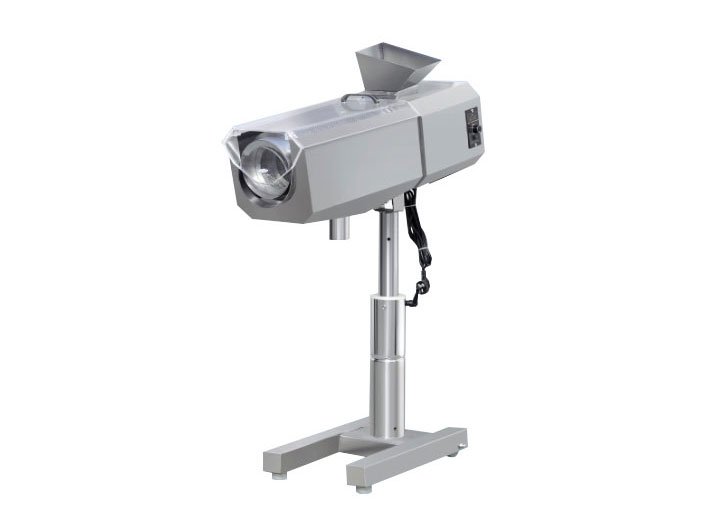
Stainless steel is widely used for pharmaceutical processing equipment because it can provide corrosion resistance, durability, and cleanable surfaces. However, the appropriate grade and surface finish should be determined according to the actual application and manufacturer’s specifications. These considerations also extend to downstream equipment such as a tablet deduster, where product-contact surfaces should support effective cleaning and routine pharmaceutical production requirements.
Evaluate Product-Contact Components
Parts that contact powder or tablets can include the hopper, feeder, tooling area, dies, punches, and other components within the product pathway.
When reviewing a tablets manufacturing machine, manufacturers should confirm:
- Which components are product-contact parts.
- What materials are used for those components.
- Whether the materials are compatible with the formulation and cleaning agents.
- Whether surface finishes support effective cleaning.
- Whether replacement parts can be identified and maintained through documented procedures.
Material compatibility becomes particularly important when formulations contain moisture-sensitive, abrasive, acidic, or otherwise reactive ingredients.
Consider Cleaning And Surface Design
A tablets manufacturing machine used for pharmaceutical production should be designed with cleaning requirements in mind. Product residues can accumulate around difficult-to-access areas, especially when powder has poor flow characteristics or electrostatic behavior.
Smooth and accessible product-contact surfaces can simplify cleaning and inspection. Equipment design should also minimize unnecessary gaps, dead areas, and locations where powder can accumulate.
The exact cleaning procedure depends on the product, equipment design, cleaning agents, and validated site procedures. Manufacturers should therefore assess the machine together with their own cleaning strategy rather than assuming that one cleaning method is appropriate for every application.
Check Compression Performance Of A Tablets Manufacturing Machine
Compression performance is central to tablets manufacturing machine selection because different formulations can behave very differently during tablet formation.
Powder flow, particle-size distribution, moisture content, bulk density, lubrication, compressibility, and formulation design can affect die filling and compression behavior.
A machine suitable for one formulation may not automatically provide the same performance with another formulation.
Evaluate Force, Filling And Tablet Quality
Important compression-related specifications may include maximum compression force, precompression capability, filling depth, turret speed, and tooling compatibility.
Manufacturers should consider how these parameters relate to the required tablet specifications, including:
- Tablet weight
- Thickness
- Hardness
- Friability
- Appearance
- Disintegration performance
These quality attributes should be controlled according to the product’s established specifications and applicable regulatory requirements.
A tablets manufacturing machine should provide sufficient adjustment range to support the intended formulation without operating continuously at the edge of its mechanical or process limits.
Compare Different Machine Models By Application
Not every tablets manufacturing machine is designed for the same production environment. Smaller configurations may be suitable for development, pilot production, or relatively limited batch volumes, while higher-capacity rotary systems can be designed for continuous commercial production.
The comparison should include more than maximum output.
| Machine characteristic | Smaller production configuration | Higher-capacity production configuration |
|---|---|---|
| Typical application | Development or smaller batches | Larger commercial batches |
| Production capacity | Lower | Higher |
| Footprint | Generally smaller | Generally larger |
| Tooling capacity | More limited | Greater |
| Changeover requirements | Often simpler | May require more planning |
| Automation | Basic to moderate | Moderate to advanced |
| Investment | Generally lower | Generally higher |
Review GMP Requirements When Selecting A Tablets Manufacturing Machine
GMP compliance should be considered from the beginning of equipment selection. Pharmaceutical manufacturers are expected to use suitable equipment and establish controlled procedures for manufacturing, cleaning, maintenance, and inspection.
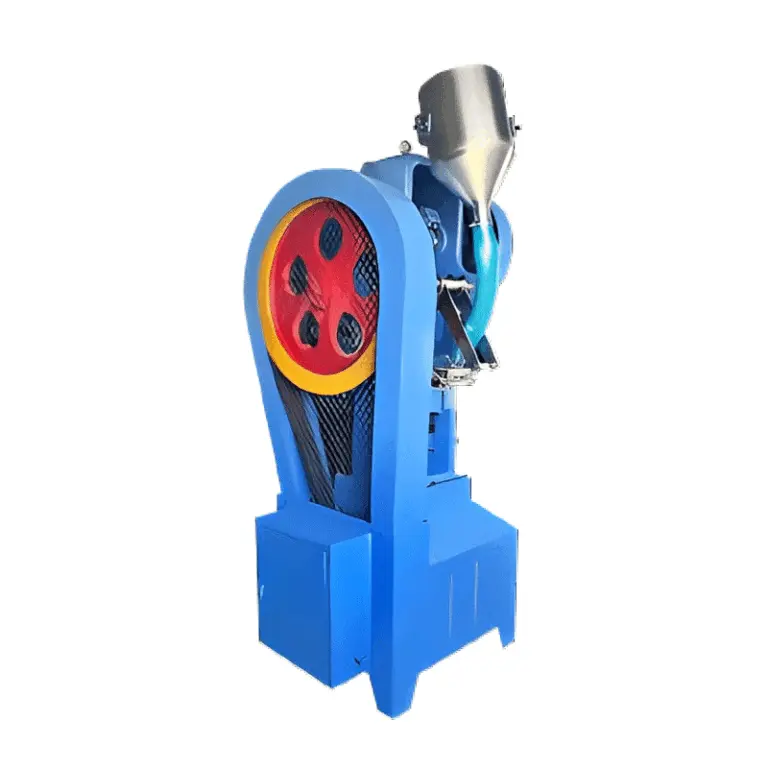
A tablets manufacturing machine should therefore be evaluated as part of the wider pharmaceutical manufacturing system. A tablet press is one of the key processing units within this system and should be assessed alongside supporting equipment, cleaning procedures, maintenance controls, and documented operating practices.
Focus On Equipment Design And Cleanability
Good equipment selection should support controlled manufacturing conditions. Product-contact surfaces should be suitable for cleaning, while equipment construction should allow appropriate inspection and maintenance.
Manufacturers should also consider whether the machine can be integrated into existing procedures for:
- Cleaning and sanitation
- Preventive maintenance
- Calibration
- Equipment identification
- Change control
- Deviation management
- Documentation and records
The specific GMP requirements applicable to a facility depend on the jurisdiction, product, manufacturing process, and regulatory framework.
Consider Qualification And Documentation
Equipment procurement should include documentation needed for installation, operation, maintenance, and qualification activities.
Depending on the project, manufacturers may request documentation such as equipment specifications, material information, operating manuals, drawings, certificates, test records, and relevant qualification support.
For a new tablets manufacturing machine, procurement teams should establish documentation expectations before finalizing the purchase. This can reduce delays during installation and qualification.
Compare Automation Features Across Tablets Manufacturing Machine Models
Automation can influence both production consistency and operator workload. Modern tablets manufacturing machine configurations may include systems for monitoring compression force, tablet weight, machine speed, alarms, and other operating parameters. Similar considerations may apply to downstream equipment, such as a capsule polisher machine, where automated controls can help maintain consistent operation and reduce routine operator intervention.
However, automation should be selected according to actual process requirements.
Evaluate Process Monitoring And Control
A suitable control system may help operators monitor important production parameters and respond to abnormal conditions.
When comparing models, manufacturers can examine whether the system provides:
- Operator access control
- Parameter setting and recording
- Alarm management
- Production data monitoring
- Recipe or product parameter management
- Integration with site-level systems where required
The value of these functions depends on the manufacturing environment and the company’s data-management strategy.
Balance Automation With Maintenance Requirements
More automation does not automatically mean lower total operating effort. Sensors, control components, and automated systems also require inspection, maintenance, calibration, and appropriate documentation.
Manufacturers should therefore evaluate automation as part of the complete equipment lifecycle.
Build A Practical Selection Checklist For Tablets Manufacturing Machine
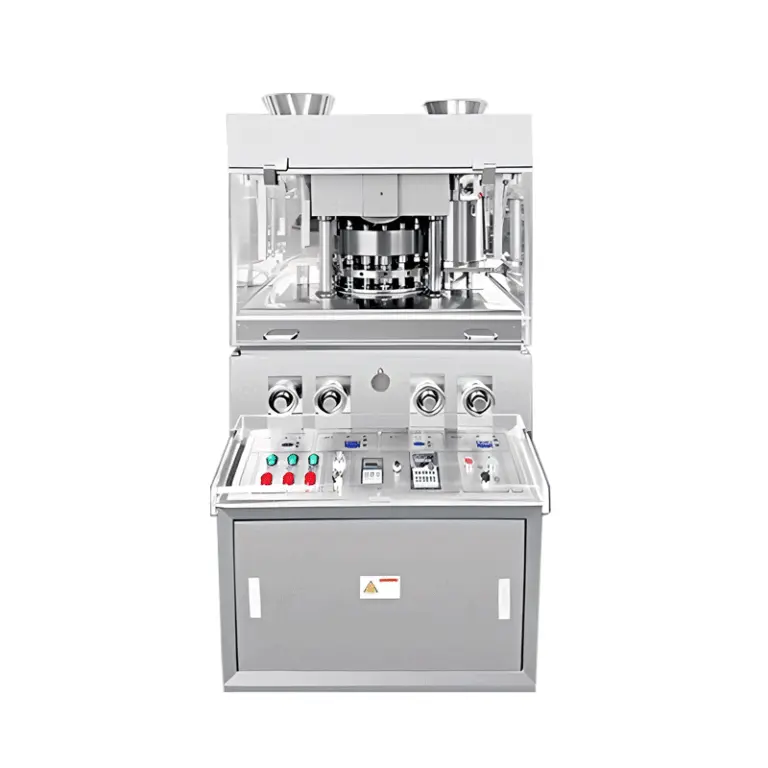
Before selecting a tablets manufacturing machine, procurement and engineering teams should compare technical requirements against actual production conditions. For batch production, a rotary tablet press machine may be considered when continuous compression, higher output, and consistent production performance are required.
A useful evaluation process can follow these steps:
- Define the required batch size and annual production volume.
- Identify tablet dimensions, formulation characteristics, and required compression performance.
- Establish material, surface-finish, and cleaning requirements.
- Review GMP, qualification, documentation, and facility requirements.
- Compare capacity, tooling configuration, feeding performance, automation, and changeover design.
- Conduct technical discussions or trials where formulation behavior is uncertain.
- Evaluate maintenance, spare parts, training, and lifecycle requirements before final selection.
This process can help prevent a common procurement mistake: selecting equipment according to one attractive specification while overlooking the wider manufacturing system.
Final Considerations For Choosing A Tablets Manufacturing Machine
Selecting a tablets manufacturing machine for batch production requires a balanced assessment of capacity, formulation characteristics, materials, compression performance, GMP requirements, automation, cleaning, and lifecycle support.
Different machine models can provide different combinations of output, tooling capacity, feeding configuration, control functions, and maintenance accessibility. Therefore, the most suitable configuration depends on the actual manufacturing process rather than on one specification alone.
Before purchasing a tablets manufacturing machine, manufacturers should confirm technical requirements with equipment suppliers, review applicable regulatory expectations, and evaluate the machine against actual formulation and production conditions. Where necessary, formulation trials and factory testing can provide additional evidence for the final equipment decision.
A tablets machine or tablets making machine should ultimately be considered as one component of a controlled manufacturing process. Careful equipment selection can help manufacturers establish reliable batch production while supporting product quality, cleaning procedures, maintenance activities, and GMP-based operational controls.
FAQ
What capacity should a tablets manufacturing machine have for batch production?
The required capacity depends on batch size, production schedule, tablet specifications, operating hours, changeover time, and expected production losses. Rated output should not be treated as actual output.
Which materials should be considered when selecting a tablets manufacturing machine?
Manufacturers should review the materials and surface finishes of product-contact components and confirm their suitability for the formulation, cleaning agents, corrosion conditions, and applicable manufacturing requirements.
Why is GMP compliance important when choosing a tablets manufacturing machine?
GMP considerations affect equipment design, cleanability, maintenance, documentation, qualification, and process control. Equipment should be suitable for the intended manufacturing process and facility procedures.