


When a pharmaceutical or nutraceutical manufacturer commits capital to a dosator capsule filling machine, the procurement decision is only the beginning. The real value—and the real risk—lies in what happens between the machine’s arrival at your factory and the moment your quality department signs off on final performance qualification. Unlike tamping-pin systems that build powder slugs through multiple compression stages, the dosator capsule filling machine uses a hollow cylinder to plunge directly into the powder bed and draw a measured volume into the tube. This fundamental difference in dosing mechanics demands a distinct set of procurement acceptance standards, precision validation protocols, and factory audit checkpoints.
This guide establishes a comprehensive framework for evaluating a dosator capsule filling machine before and after shipment. We will examine the critical acceptance criteria for fill weight accuracy, outline the factory acceptance test (FAT) and site acceptance test (SAT) procedures specific to dosator technology, and identify the GMP audit points that regulators and internal quality teams will scrutinize. Whether you are procuring your first automated filler or expanding an existing encapsulation line, these standards will help you verify that the machine delivered matches the performance promised—and that your factory is ready to operate it in full regulatory compliance.
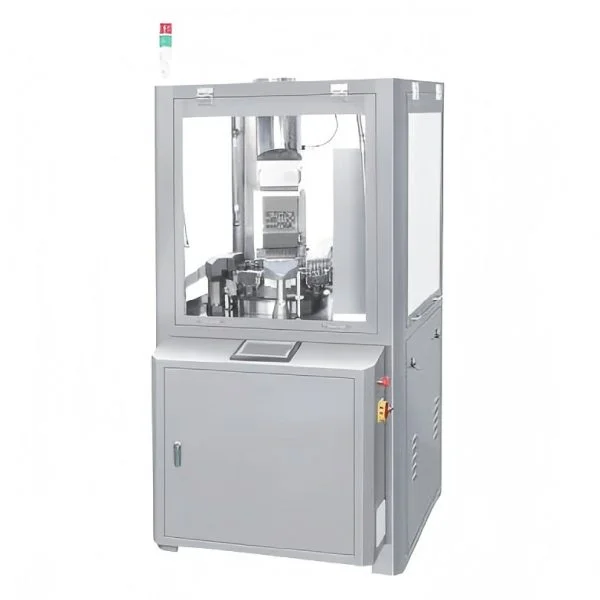
Understanding the Dosator Capsule Filling Machine Dosing Principle
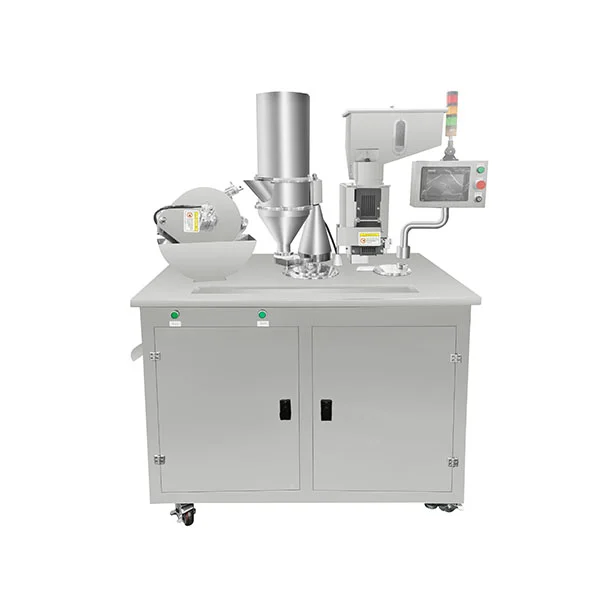
Before establishing acceptance criteria, procurement teams must understand how the dosator capsule filling machine actually meters powder. In a dosator system, a hollow tube—the dosator nozzle—dips into a fluidized or gravity-fed powder bed and collects a set volume of powder. The tube then moves over the open capsule body and inserts the powder slug inside. Each cycle repeats the same motion, so the system depends on a steady powder bed and consistent powder flow. The same dosator dosing principle is often found in semi-automatic capsule filling machines as well, though these require manual placement of empty capsule bodies and removal of filled units, whereas fully automated versions handle all steps without operator intervention.
How Dosator Differs from Tamping Pin Systems
The dosator capsule filling machine executes a single compression step per cycle, in contrast to tamping-pin systems that build the slug gradually through multiple stations. This makes the dosator particularly well-suited for cohesive, sticky, or low-dose formulations where a stable slug must be formed from minimal material. Micro-dose products work better with dosators because the volume can be defined with precision. However, the dosator is more sensitive to powder bed density variations—research has shown that density variations within the powder feed bed are a primary cause of weight variation in dosator-type machines. This sensitivity can also lead to minor surface powder adhesion on filled capsules, making a capsule polisher machine a necessary downstream addition to ensure clean, dust-free final products, particularly in GMP-regulated environments.
Implications for Acceptance Testing
This sensitivity means that acceptance testing for a dosator capsule filling machine must place extraordinary emphasis on powder bed consistency, feed rate stability, and environmental conditions. Unlike tamping-pin systems, which can compensate for some powder variability through staged compression, the dosator’s single-pass capture makes it vulnerable to fluctuations in bulk density, hopper level, and humidity. Your procurement acceptance standards must therefore include protocols that deliberately challenge the machine at extreme operating points—low and high hopper levels, speed ramps, and defined humidity ranges—to verify performance under worst-case conditions.
Precision Acceptance Standards for Dosator Capsule Filling Machine Procurement
The core of any procurement acceptance protocol for a dosator capsule filling machine is a set of measurable, objective criteria for fill weight accuracy. These standards must be defined before the machine is built, written into the User Requirements Specification (URS), and verified during FAT, SAT, and performance qualification (PQ).
Fill Weight Tolerance and Accuracy Limits
Industry benchmarks for capsule filling machines typically require fill weight within ±5% of target during design qualification. However, for a properly configured dosator capsule filling machine, tighter tolerances are expected during operational qualification and performance qualification. Typical acceptance criteria for commissioning validation specify individual capsule weight within ±2–3% of target, with batch average within target ±1–2%.
For the dosator capsule filling machine specifically, dosing accuracy of ≤±3% is a common specification. Under GMP requirements for ordinary drugs, the accuracy error range of the metering device is usually within ±3% to ±5%. For potent compounds or products with extremely high dosage requirements, the margin of error may be even tighter—within ±1% to ±2%.
Relative Standard Deviation (RSD) as the Primary Precision Metric
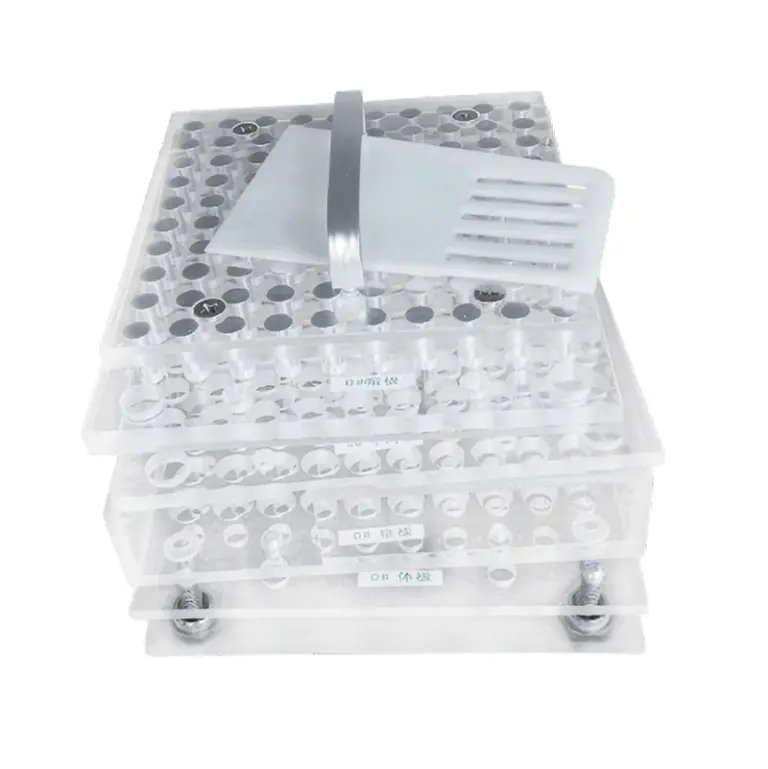
Weight variation alone does not capture the full picture of a dosator capsule filling machine’s precision. The relative standard deviation (RSD) of fill weights across a sample batch is the industry’s preferred metric for assessing consistency. PQ acceptance criteria for capsule fillers typically require fill weight RSD under 2% for powders, with RSD under 4% acceptable for pellets. Capsule weight uniformity—typically expressed as RSD of 1.5–4.5%—is collectively determined by equipment condition (approximately 40% of variability) and other factors including powder properties and operating parameters. By contrast, a manual capsule filling machine rarely achieves RSD below 3-5% due to operator-dependent tamping force and powder distribution, making the dosator system the clear choice for applications demanding superior batch-to-batch consistency.
Reject Rate and Batch Yield
A dosator capsule filling machine that achieves excellent fill weight accuracy but generates excessive rejects is not delivering value. Acceptance criteria should include a reject rate below 2%. Batch yield should reach 98% or higher across three consecutive batches during PQ. These metrics ensure that the machine not only fills accurately but does so reliably over sustained production runs.
The following table summarizes key precision acceptance standards for a dosator capsule filling machine:
| Acceptance Parameter | Typical Industry Standard | Validation Phase |
|---|---|---|
| Individual fill weight tolerance | ±2–3% of target | OQ / PQ |
| Batch average deviation | ±1–2% of target | OQ / PQ |
| RSD (powders) | ≤ 2% | PQ |
| RSD (pellets) | ≤ 4% | PQ |
| Reject rate | < 2% | FAT / OQ / PQ |
| Batch yield | ≥ 98% (3 consecutive batches) | PQ |
| Dosing accuracy (general) | ≤ ±3% | DQ / FAT |
Factory Acceptance Test Standards for Dosator Capsule Filling Machine
The factory acceptance test (FAT) is the procurement team’s first opportunity to verify that the dosator capsule filling machine meets the approved URS before it leaves the supplier’s facility. A useful FAT is a controlled comparison between the approved URS and the machine that will actually ship. It is not a showroom demonstration and it does not replace site qualification.
What the FAT Must Prove
For a dosator capsule filling machine, the FAT must answer one commercial question: does the completed machine match the purchased scope closely enough to release it for shipment? This means more than switching on the motor. The buyer should be able to confirm the machine identity and options, run the agreed capsule and fill-material challenge, inspect the product and reject paths, challenge relevant controls, and formally assess every deviation.
European Commission GMP Annex 15 identifies FAT as an appropriate stage for confirming equipment against the URS or functional specification at the vendor site before installation. It also allows justified FAT tests to support later qualification when transport and installation cannot affect the tested function.
Critical FAT Tests for Dosator Precision
For the dosator capsule filling machine, the following tests should be mandatory during FAT:
Fill weight accuracy test using the agreed production powder or a justified surrogate, sampled at defined intervals across the rated speed range
Speed verification to confirm that the machine achieves its rated output while maintaining fill weight specifications
Reject rate measurement under sustained operation, with rejects documented and categorized
PLC functionality and control system verification, including alarm responses and interlock testing
Changeover evaluation if multiple capsule sizes or formulations are specified
Do not accept “machine reaches catalog speed” as the only performance criterion. Define sustained good-capsule output, the agreed product or surrogate, capsule format, sampling method, allowable defects, fill-weight evaluation, stops and adjustments. A high instantaneous counter reading can hide rejects, interruptions, or an unstable dosing process.
Freezing the FAT Protocol
Before the FAT date, freeze the protocol. The protocol should identify who supplies the test capsules and fill material, how much is available, how the machine will be configured, which instruments will be used, who may approve deviations, and what evidence must be delivered. If product shipment is difficult, agree on a representative material and document why it is suitable.
The following table outlines the essential inputs for a dosator capsule filling machine FAT protocol:
| Protocol Input | What to Define | Why It Matters |
|---|---|---|
| URS traceability | Requirement ID, test step, expected result, evidence location | Prevents requirements from disappearing inside a generic demonstration |
| Machine configuration | Model, serial identity, dosing principle, capsule sizes, options, utilities, control version | Proves that the tested equipment is the equipment intended to ship |
| Test material | Capsule supplier and size, fill material or justified surrogate, lot identity, available quantity | Capsule separation and dosing behavior depend on actual input materials |
| Operating points | Approved setpoints, sustained run conditions, challenge conditions | Separates a controlled test from an improvised run |
| Sampling and methods | Sample locations, quantities, test instruments, calculations, acceptance rules | Makes the result reproducible and reviewable |
| Deviation route | Classification, owner, due date, retest rule, shipment effect | Stops unresolved problems from being hidden in meeting notes |
Site Acceptance Testing for Dosator Capsule Filling Machine: Bridging FAT and PQ
The site acceptance test (SAT) is performed after installation at the customer’s site to confirm that the dosator capsule filling machine works correctly in the actual production environment. While FAT proves the machine at the supplier’s facility, SAT verifies that nothing was compromised during shipping and installation. SAT also validates the machine’s integration with downstream equipment such as a tablet deduster, which removes surface dust and loose powder from filled capsules before packaging, ensuring that the entire encapsulation line operates as a cohesive system.
Critical SAT Checks
For a dosator capsule filling machine, SAT should include:
Utility verification—power voltage, pneumatic pressure, compressed air quality, vacuum, and environmental conditions (temperature, humidity)
Machine leveling and alignment verification
Integration testing with upstream and downstream equipment (e.g., powder feeder, capsule polisher, metal detector)
Safety and interlock testing
Product sample runs to verify throughput, dosing accuracy, and changeover performance
A common bottleneck during SAT is not the dosator capsule filling machine itself, but the cleanroom infrastructure supporting it. Verify that your utilities match the machine’s requirements before the SAT begins.
Documenting SAT Results
SAT documentation should include:
All test results with raw data, not just pass/fail statements
Deviations observed and corrective actions taken
Sign-off by both supplier representatives and the buyer’s quality team
A clear decision on whether the machine is ready for operational qualification
Conclusion
Procuring a dosator capsule filling machine is not a transaction—it is a risk management exercise. The acceptance standards you define, the tests you perform, and the documentation you retain determine whether the machine becomes a reliable production asset or a source of batch failures and regulatory observations. Start with a measurable URS. Demand a powder-trial FAT with your actual formulation. Execute proper IQ, OQ, and PQ. And remember: regulators audit your validation, not your machine’s passport.
By following the procurement acceptance standards outlined in this guide—precision limits of ±2–3% for individual fill weights, RSD below 2% for powders, reject rates under 2%, and batch yields above 98%—you establish a defensible baseline for equipment performance. By conducting thorough FAT and SAT protocols and maintaining rigorous GMP audit readiness, you ensure that your dosator capsule filling machine delivers consistent, compliant production from day one.
FAQ
What is the difference between a dosator capsule filling machine and a tamping-pin capsule filling machine in terms of acceptance testing?
The dosator capsule filling machine performs a single compression step per cycle and is more sensitive to powder bed density variations. Acceptance testing for dosator systems must therefore place greater emphasis on powder bed stability, hopper level consistency, and environmental control. Tamping-pin systems, which build slugs through multiple compression stages, are more forgiving of powder variability but require different tooling validation.
Can I use a surrogate material for FAT if my actual API is too expensive or difficult to ship?
Yes, but the surrogate must be justified and documented. The surrogate should match the actual powder’s flow properties, bulk density, particle size distribution, and moisture sensitivity as closely as possible. Document why the surrogate is suitable and acknowledge any limitations in the FAT report.
How many capsules should be sampled during PQ for a dosator capsule filling machine?
Industry practice typically requires sampling 50–100 capsules per test point for statistical confidence during commissioning validation. For PQ, three consecutive batches are generally required, with sampling protocols defined in the approved PQ protocol. The sample size should be sufficient to calculate mean, standard deviation, RSD, and range with statistical significance.