


In pharmaceutical and nutraceutical manufacturing, the capsule filling machine working process represents one of the most critical production sequences. These precision-engineered systems transform raw powder formulations into accurately dosed, consistently sealed capsules—delivering the medications, supplements, and vitamins that millions of people rely on daily.
Modern capsule filling machines, particularly fully automatic capsule filling machines, execute a complex series of operations with remarkable speed and accuracy. High-output systems can achieve production rates ranging from 42,000 to over 150,000 capsules per hour, depending on model configuration. Fill weight accuracy typically falls within ±1% to ±4.5% of target weight.
Understanding the capsule filling machine working process is essential for production managers, quality assurance professionals, and maintenance engineers who need to optimize output, maintain consistency, and troubleshoot issues efficiently. This article provides a comprehensive station-by-station breakdown of the complete operational cycle.

Capsule Filling Machine Working Process Overview
The capsule filling machine working process follows a logical sequence that can be broken down into five core stages: capsule feeding and orientation, cap-body separation, powder filling and dosing, capsule locking and closing, and finished product ejection.
A fully automatic capsule filling machine typically operates on a rotary turntable or intermittent motion system, where capsules progress through multiple stations in a synchronized cycle. The turntable rotates incrementally, moving capsules from one station to the next, while each station performs a specific function.
Before examining each stage in detail, it is useful to understand the two parallel material flows that occur simultaneously:
Capsule flow – Empty capsules travel through orientation, separation, closing, and discharge
Powder flow – Fill material is conditioned, metered, and transferred into the capsule bodies
The table below summarizes the primary stages and their functions in a typical capsule filling machine working process:
| Stage | Primary Function | Critical Success Factors |
|---|---|---|
| Capsule Feeding & Orientation | Load empty capsules, align body-down | Consistent capsule feed, proper orientation mechanism |
| Cap-Body Separation | Split capsule caps from bodies using vacuum | Vacuum pressure stability, mechanical alignment |
| Powder Filling & Dosing | Meter and transfer precise powder dose | Dosing disc calibration, powder flow properties |
| Capsule Locking & Closing | Rejoin caps to filled bodies | Alignment precision, locking pressure |
| Finished Product Ejection | Discharge filled capsules, reject defects | Ejector rod condition, sensor accuracy |
Step 1 – Capsule Feeding and Orientation in the Capsule Filling Machine Working Process
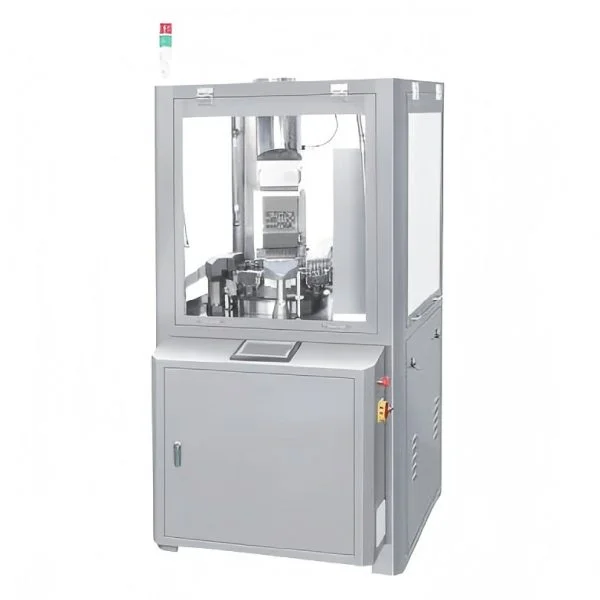
The capsule filling machine working process begins at the feeding station, where empty, pre-assembled capsules are loaded into the machine’s hopper.
Capsule Loading
Empty hard gelatin or HPMC capsules are poured into the feed hopper, which stores them and regulates their flow into the machine. From the hopper, capsules travel down feed tubes toward the orientation mechanism.
Orientation Mechanism
The orientation stage is critical because capsules must enter the machine with the body (the longer, larger-diameter section) pointing downward and the cap (the shorter section) pointing upward. Proper orientation ensures that when separation occurs, the capsule body remains in the lower segment while the cap is retained in the upper segment.
Modern automatic capsule filling machines use several orientation methods:
Horizontal fork mechanisms that guide capsules into correct alignment
Vibratory feeders that gently shake capsules into position
Mechanical guides and channels that physically orient each capsule
A capsule presence sensor typically confirms that each position is occupied before the cycle proceeds.
Step 2 – Cap-Body Separation in the Capsule Filling Machine Working Process
After orientation, the capsule filling machine working process proceeds to the separation station, where the capsule cap is separated from the body.
The Separation Mechanism
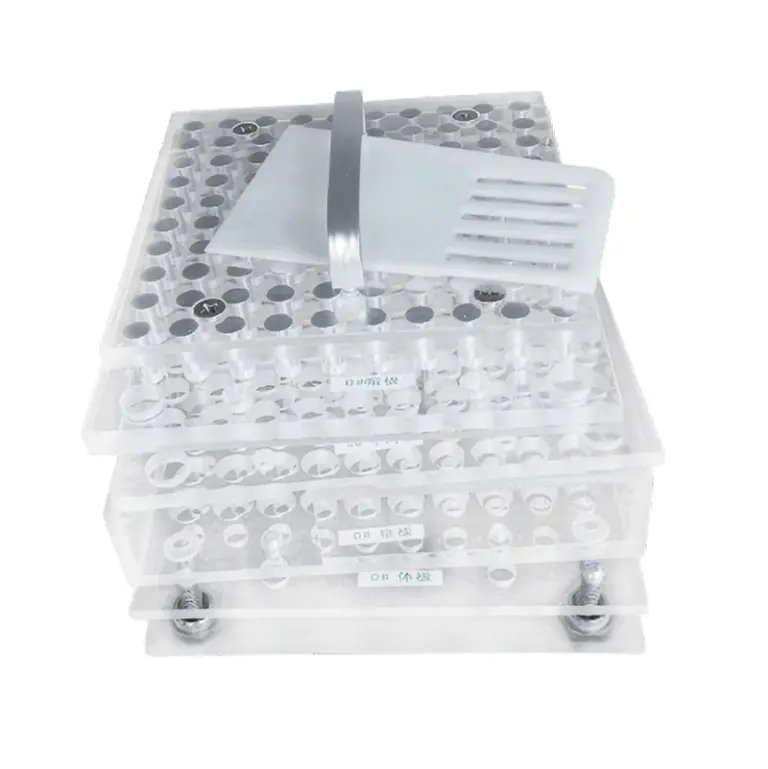
The separation process relies on a combination of mechanical support and vacuum application. A vacuum is applied from below, gently pulling the capsule body downward while the cap is held in an upper segment. This creates a clean separation, leaving the capsule body open and ready to receive powder. In contrast, a manual capsule filling filler requires operators to separate each capsule by hand—a time-consuming step that introduces variability; however, automated systems streamline this operation, ensuring uniform separation and higher throughput while reducing operator fatigue.
Dual-Path Material Flow
Following separation, the capsule components follow different paths through the machine:
Capsule bodies travel onward in body bushes or bushings on a conveyor belt, moving toward the dosing station
Capsule caps are transferred via an idling wheel to the joining and closing unit, where they await the filled bodies
Common Separation Issues
Separation is one of the most failure-prone stages in the capsule filling machine working process. Common problems include: capsules failing to separate due to insufficient vacuum pressure; partial splits that later manifest as closing defects; and capsule shell damage from mechanical misalignment. On a semi-automatic capsule filling machine, where vacuum levels and mechanical alignments often rely on manual adjustments or operator intervention, these issues can arise more frequently if standard protocols are not strictly followed. Regular monitoring of vacuum pressure, cleaning of suction ports, and inspection of separation bores help maintain reliable separation performance.
Step 3 – Powder Filling and Dosing in the Capsule Filling Machine Working Process
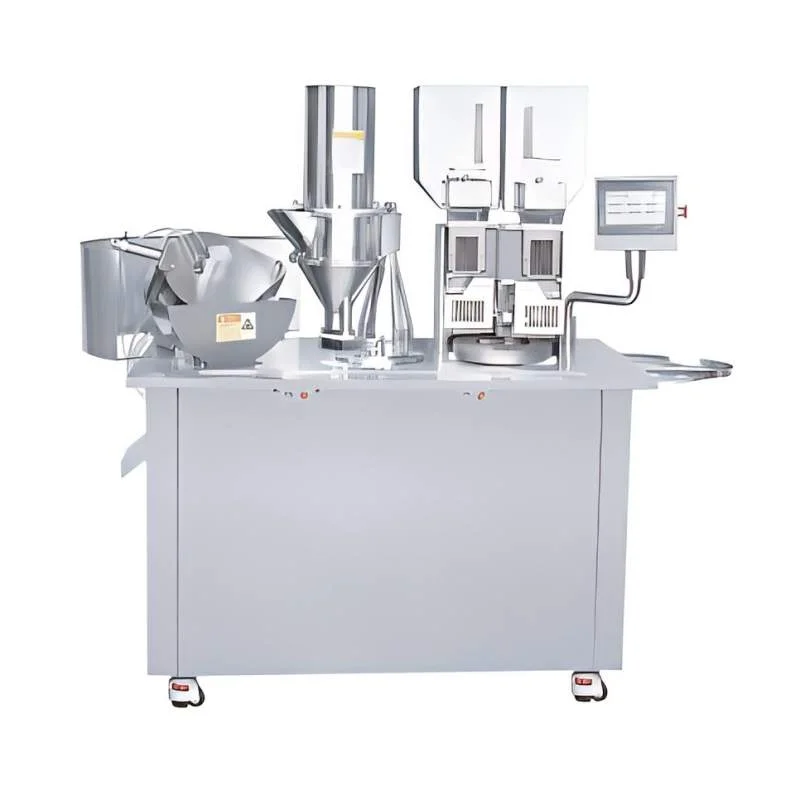
The filling station is the heart of the capsule filling machine working process, where precision dosing occurs. This is where the active pharmaceutical ingredients (APIs) and excipients are metered into the empty capsule bodies.
Two Primary Dosing Architectures
The capsule filling machine working process typically employs one of two dosing methods:
1. Dosing Disc with Tamping Pins
This is the most common and reliable method in high-speed automatic capsule filling machines. The dosing disc contains multiple holes that rotate through a powder bed. Tamping pins then compact the powder into repeatable plugs or “slugs” inside the dosing bores through multiple tamping stages. Each tamping gradually increases powder weight and density. Finally, the compacted powder slug is transferred into the empty capsule body.
2. Dosator System
The dosator uses a dosing tube or nozzle to capture and transfer a powder charge. A hollow tube with a plunger picks up powder from the powder bed and ejects it into the capsule body.
The Tamping Process in Detail
In a dosing disc system, the filling sequence typically involves multiple substations:
Powder is loaded into the powder hopper
The dosing disc rotates, bringing empty bores under the powder bed
First tamping pin pre-compresses powder into the bore
Subsequent tamping pins progressively compact the powder
The final tamping pin transfers the compacted slug into the capsule body
Factors Affecting Dosing Accuracy
Several variables influence dosing consistency in the capsule filling machine working process:
Powder flow properties (bulk density, compressibility, flowability)
Powder bed height and stability
Tamping pin wear and adjustment
Humidity and static charge
Hopper level stability
Fill weight accuracy for modern automatic capsule filling machines typically ranges from ±1% to ±4.5% of target weight. Some high-precision systems achieve even tighter tolerances through gravimetric dosing mechanisms.
Quality Control During Filling
In-process checks during the capsule filling machine working process should include:
Regular weight testing of 20–30 capsules
Monitoring reject patterns for signs of drift
Checking for powder leakage or bridging
Step 4 – Capsule Locking and Closing in the Capsule Filling Machine Working Process
Once the capsule bodies are filled, the capsule filling machine working process moves to the closing station, where the separated caps are rejoined to the filled bodies.
The Closing Mechanism
The capsule caps, which have been held in an upper segment throughout the process, are brought into alignment with the filled bodies. A locking mechanism applies controlled pressure to telescope the cap over the body, creating a securely closed capsule.
The closing process must achieve two objectives:
Secure locking – The cap must be firmly engaged with the body to prevent accidental opening
No damage – Excessive pressure can crack or deform the capsule shell
Locking Integrity
Locking integrity depends on several factors:
Alignment precision between caps and bodies
Cleanliness of the cap-body interface (powder contamination can cause loose locks)
Capsule shell quality and moisture content
Locking station pressure settings
Common locking defects include:
Capsules that won’t close properly
Loose locks that may separate during packaging
Deformation or concavity of caps or bodies
Post-close leakage
Key Technical Parameters in the Capsule Filling Machine Working Process
Understanding the technical specifications that define the capsule filling machine working process helps manufacturers select appropriate equipment and set realistic production expectations—critical considerations whether operating a standard powder-dosing system or a specialized full-automatic liquid capsule filling machine, where parameters such as nozzle precision, viscosity control, and sealing temperature become equally decisive for output consistency and fill-volume accuracy.
Typical Performance Specifications
| Parameter | Typical Range |
|---|---|
| Output speed | 24,000 – 360,000 capsules/hour |
| Fill weight accuracy | ±1% – ±4.5% |
| Applicable capsule sizes | 000# to 5# |
| Vacuum requirement | 0.03–0.05 MPa |
| Dust extraction | 160–180 m³/h |
Conclusion
The capsule filling machine working process is a sophisticated sequence of precisely coordinated operations that transforms empty capsules into accurately dosed, reliably sealed pharmaceutical products. From orientation and separation to filling, locking, and ejection, each stage plays an essential role in product quality and production efficiency.
Modern automatic capsule filling machines achieve remarkable throughput—often exceeding 150,000 capsules per hour—while maintaining fill weight accuracy within ±1% to ±4.5%. Understanding the step-by-step breakdown of the capsule filling machine working process enables manufacturers to optimize performance, troubleshoot issues effectively, and maintain consistent product quality.
Whether you are selecting new equipment, training operators, or improving existing processes, a thorough understanding of each stage in the capsule filling machine working process is essential for success in pharmaceutical and nutraceutical manufacturing.If you want to know more about capsule filling machine, please read What Is A Capsule Filler Machine.
FAQ
What is the difference between a dosing disc system and a dosator system in the capsule filling machine working process?
The dosing disc with tamping pins uses a rotating disc with holes that pass through a powder bed; multiple tamping pins progressively compact the powder into slugs before transfer. The dosator system uses a dosing tube with a plunger that captures a powder charge directly from the powder bed and ejects it into the capsule body. Dosing disc systems are more common in high-speed automatic capsule filling machines.
What causes weight variation during the capsule filling machine working process?
Weight variation typically results from dosing disc wear, inconsistent powder flow properties, unstable powder bed height, fluctuating hopper levels, or tamping pin wear. Poorly flowing powders with high dose formulations are particularly susceptible to weight variability. Regular calibration and monitoring of powder behavior help maintain consistency.
How can I tell if my capsule filling machine working process needs maintenance?
Key indicators include rising reject rates, increasing weight variation, frequent capsule separation failures, unusual machine noise, and visible powder buildup or wear on components. Regular 20–30 capsule weight tests and trend monitoring provide objective data for maintenance decisions.