


In the highly regulated pharmaceutical industry, the accuracy and reliability of packaging operations directly impact product safety, regulatory compliance, and brand reputation. At the heart of modern pharmaceutical packaging lines stands the pharmaceutical labeling machine—a sophisticated piece of equipment that ensures every vial, ampoule, carton, and bottle carries the correct information in the right position. With global labeling and coding machinery market valued at USD 3.3 billion in 2024 and projected to reach USD 5.1 billion by 2032, the demand for precision labeling solutions continues to accelerate. This article examines the four primary labeling configurations for pharmaceutical containers—round bottles, square bottles, ampoules, and cartons—along with their accuracy standards, throughput capabilities, and emerging traceability integrations.
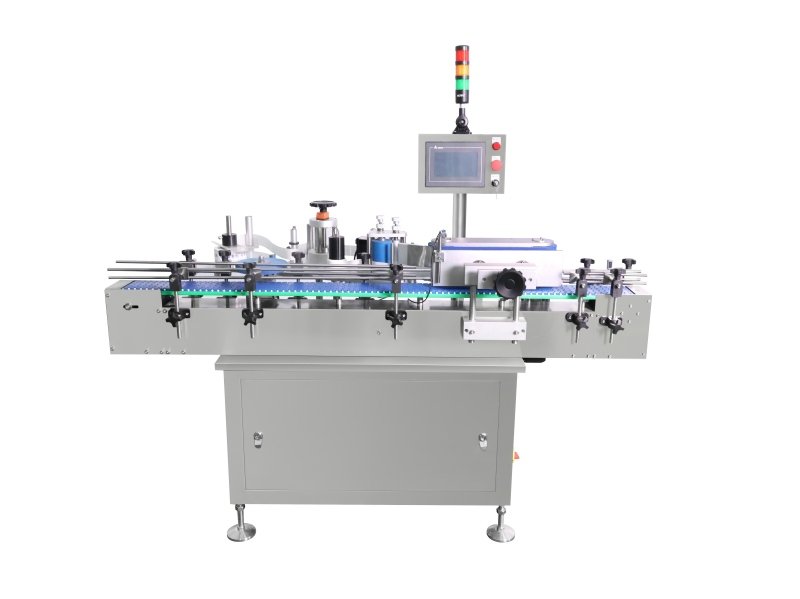
Understanding the Pharmaceutical Labeling Machine Landscape
A pharmaceutical label printing machine is engineered to meet stringent cGMP standards, typically constructed from stainless steel (SS 304 or SS 316) to support hygienic pharmaceutical environments. These machines operate with servo-driven controls, PLC-based automation, and touch-screen HMIs that enable precise label placement while accommodating frequent format changes. The global pharmaceutical labeling machine market continues to expand, driven by the growing need for efficient and accurate labeling processes and rising focus on packaging efficiency.
The performance of any pharmaceutical labeling machine is defined by two critical metrics: labeling accuracy and throughput speed. Leading configurations achieve accuracy tolerances of ≤±0.5mm, with some high-speed systems reaching up to 600 bottles per minute. However, these specifications vary significantly across container types, as each presents unique handling and labeling challenges.
Four Primary Labeling Configurations
1. Round Bottle Labeling
Round bottles represent the most common container format in pharmaceutical packaging, ranging from small oral liquid bottles to larger syrup containers. The pharmaceutical labeling machine configuration for round bottles typically employs a wrap-around labeling mechanism that applies self-adhesive labels completely around cylindrical surfaces.
Key technical parameters:
Speed range: 100–300 bottles per minute for standard configurations, with some high-speed systems reaching up to 480 bottles per minute
Accuracy: ±0.5mm to ±1mm depending on system sophistication
Container compatibility: Diameter 10–100mm; Height 20–260mm
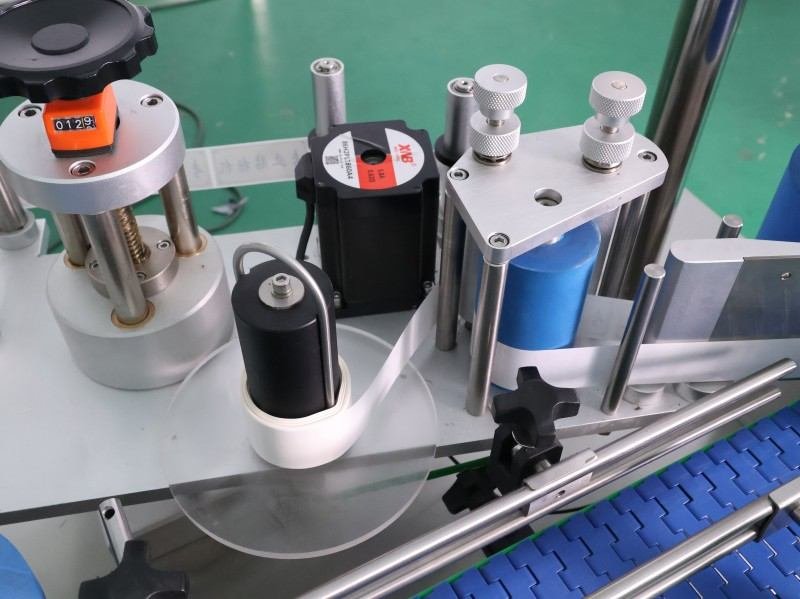
High-performance round bottle labelers incorporate servo-driven label dispensing heads with diamond-coated rollers that provide strong friction and excellent wear resistance, ensuring consistent precision over long production runs. Some systems achieve speeds up to 250 bottles per minute while maintaining reliable, consistent labeling across a wide range of applications.
2. Square and Rectangular Bottle Labeling
Square and rectangular bottles present unique challenges due to their flat surfaces and corner geometries. Unlike round containers that can be rotated for wrap-around application, square bottles typically require front-and-back or multi-panel labeling approaches. Proper sequencing with upstream equipment such as the desiccant inserting machine ensures bottles arrive at the labeling station in the correct orientation without disruptions.
Key technical parameters:
Speed range: 50–200 bottles per minute depending on label count and container size
Accuracy: ±0.5mm to ±1.5mm
Configuration: Double-sided or multi-panel labeling heads
The pharmaceutical labeling machine for square bottles often employs separate motor controls for each labeling station to ensure fast and stable label supply. Advanced systems can handle aspect ratios up to 1.3 with dispensing accuracy of ±1.5mm. For high-volume pharmaceutical production, automatic double-side labeling machines can process flat and square containers at speeds of 100–300 containers per minute.
3. Ampoule Labeling
Ampoules represent one of the most delicate container types in pharmaceutical packaging. These small-diameter glass containers require gentle handling to prevent breakage while maintaining high-speed throughput. The pharmaceutical labeling machine designed for ampoules must balance precision with fragility.
Key technical parameters:
Speed range: 300–600 bottles per minute
Accuracy: ≤±0.5mm
Container size: Diameter 10–32mm; Height 20–90mm
Broken bottle rate: As low as 1/200,000
High-speed ampoule labelers incorporate servo motors to drive bottle pulling wheels into brackets with accurate and stable motion. Some systems achieve speeds up to 500 bottles per minute with labeling accuracy of ±0.5mm. Advanced ampoule labeling machines feature gentle container handling to prevent breakage, with PLC-controlled systems coordinating container feeding, label dispensing, and pressing operations. When equipped with vision inspection systems, these machines can achieve 99.99% labeling pass rates.
4. Carton (Box) Labeling
Secondary packaging—specifically carton labeling—represents a distinct application for the pharmaceutical labeling machine. Carton labelers apply tamper-evident seals, vignette labels, or informational labels to pharmaceutical boxes, often integrating with serialization and track-and-trace systems.
Key technical parameters:
Speed range: Up to 400 cartons per minute
Accuracy: ±1.5mm
Label types: Tamper-evident seals, vignette labels, informational labels
Carton size range: A=25–150mm, B=10–100mm, C=50–210mm
Pharmaceutical carton labeling machines feature positive transport systems for cartons, using toothed belts to ensure fail-safe operation. These systems can apply labels on both lateral sides of cartons, on top surfaces only, or on multiple surfaces simultaneously. The AP400 series, built specifically for pharmaceutical applications in accordance with cGMP standards, reaches output speeds of up to 400 cartons per minute. These machines can print and verify tracking codes including 1D/2D barcodes and Data Matrix codes on different parts of the carton.
Performance Comparison: Accuracy and Throughput
| Container Type | Typical Speed Range | Labeling Accuracy | Key Considerations |
|---|---|---|---|
| Round Bottles | 100–480 BPM | ±0.5mm – ±1mm | Wrap-around application; servo-driven dispensing |
| Square Bottles | 50–200 BPM | ±0.5mm – ±1.5mm | Multi-panel labeling; front/back configurations |
| Ampoules | 300–600 BPM | ≤±0.5mm | Gentle handling required; breakage rate < 1/200,000 |
| Cartons/Boxes | Up to 400 CPM | ±1.5mm | Tamper-evident seals; positive transport systems |
QR Code and Traceability Integration
Modern pharmaceutical labeling machine systems increasingly integrate QR code and 2D barcode printing capabilities to meet evolving traceability mandates. With regulatory requirements tightening globally—including the upcoming reform of EU pharmaceutical legislation—the ability to print and verify variable data directly on labels has become essential.
Integration capabilities include:
Printing technologies: Ink-jet, thermal-transfer, laser, and hot-foil overprinting units capable of printing barcodes, alphanumeric codes, and 2D codes (Data Matrix)
Verification systems: Vision inspection systems that verify label accuracy, including placement and printed data
Serialization support: Integration with track-and-trace systems for item-level serialization
Leading pharmaceutical labeling machine configurations support the generation of two-dimensional codes such as barcodes and QR codes necessary for individual product management. Laser coding solutions can create accurate text, graphics, and 2D QR and Data Matrix codes on a wide range of substrates including plastic and glass.
The integration of QR code traceability offers several operational benefits:
Enhanced supply chain visibility – Each unit receives a unique identifier that can be tracked throughout the distribution network
Rapid recall response – Affected batches can be quickly identified and isolated
Counterfeit prevention – Authentication codes help verify product legitimacy
Regulatory compliance – Meets DSCSA and EU FMD serialization requirements
Modern packaging machine systems can be equipped with inline hot stamp printers or serialization-capable thermal transfer or laser printers to support variable data and regulated labeling requirements. As core auxiliary configurations of a professional packaging machine, optional inspection systems verify label accuracy, while reject systems remove containers with out-of-tolerance labels.
Conclusion
FAQ
What is the typical labeling accuracy for pharmaceutical labeling machines?
Most pharmaceutical labeling machines achieve accuracy within ±0.5mm to ±1mm, depending on the container type and machine configuration. Ampoule and vial labelers typically achieve ≤±0.5mm accuracy, while carton labelers may operate at ±1.5mm.
Can a pharmaceutical labeling machine handle multiple container types?
Yes, many modern pharmaceutical labeling machines are designed with modular configurations and tool-free changeover capabilities. However, significant differences in container size and shape may require dedicated labeling heads or substantial changeover time. Some systems can accommodate container diameters from 16mm to 50mm with frequent format changes.
How does QR code integration work on pharmaceutical labeling machines?
QR code integration typically involves equipping the labeling machine with a printing unit (ink-jet, thermal-transfer, or laser) that applies variable 2D codes directly onto labels. Vision inspection systems verify code readability and accuracy, while reject systems remove containers with defective codes. The system can integrate with ERP and MES systems for end-to-end traceability.