


In the high-stakes world of parenteral drug manufacturing, product quality is not merely a competitive advantage—it is a regulatory imperative. Injectable products, by virtue of their direct delivery into the bloodstream, carry inherent risks that demand uncompromising quality control. The presence of visible particles, container closure defects, or even microscopic leaks can trigger product recalls, regulatory citations, and—most critically—patient harm.
The pharmaceutical visual inspection machine has emerged as the cornerstone of modern quality assurance, evolving far beyond simple optical scanning into an integrated inspection ecosystem. Today’s advanced systems combine three essential quality control functions—automated visual inspection (AVI) for particle detection, high-voltage leak detection (HVLD) for container closure integrity, and sophisticated imaging algorithms—into a unified platform that delivers 100% inspection of every unit. This integrated approach addresses the full spectrum of defect categories mandated by USP <790> Visible Particulates in Injections, USP <1790> Visual Inspection of Injections, and the European Pharmacopoeia (Ph. Eur. 2.9.20 and 5.17.2).
Regulatory Framework: The Foundation of Pharmaceutical Visual Inspection
Compendial Requirements Across Major Pharmacopoeias
The regulatory basis for visual inspection of parenteral products rests on multiple compendial chapters that, taken together, establish both mandatory requirements and best-practice guidance.
USP <790> Visible Particulates in Injections establishes the minimum enforceable expectations for 100% inspection of finished parenteral products. As stated in the chapter, “All products intended for parenteral administration must be visually inspected for the presence of particulate matter”. Particulate matter is defined as “extraneous mobile undissolved particles, other than gas bubbles, unintentionally present in the solutions”—examples include fibers, glass, metal, elastomeric materials, and precipitates. The chapter specifies that injectable drug products must be “essentially free” from visible particulates, meaning no more than the specified number of units may contain such contaminants.
USP <1790> Visual Inspection of Injections provides comprehensive guidance on designing, qualifying, and operating visual inspection processes. This chapter acknowledges that visual inspection is a “probabilistic process,” and the specific detection probability varies with dosage form, particle characteristics (size, shape, color, density), and container design. For automated systems, USP <1790> requires extensive validation demonstrating equivalence or superiority to manual inspection, including sensitivity studies using test particles and ongoing performance monitoring.
European Pharmacopoeia requirements are articulated through Ph. Eur. 2.9.20 (Particulate Contamination: Visible Particles) and Ph. Eur. 5.17.2 (Recommendations on the Control of Particulate Contamination). These chapters, together with EU GMP Annex 1 (sections 8.30-8.33), mandate 100% visual inspection of sterile injectable products and specify requirements for inspection conditions, operator qualification, and system validation.
FDA Enforcement and Industry Alignment
The Three Pillars of Modern Pharmaceutical Visual Inspection
1. AI-Powered Automated Visual Inspection (AVI)
The evolution from manual visual inspection (MVI) to automated visual inspection represents one of the most significant quality improvements in pharmaceutical manufacturing. While manual inspection remains the regulatory reference method—with 86% of survey respondents still employing it—the industry is rapidly adopting automated solutions. Currently, 49% of manufacturers employ fully automated visual inspection systems, reflecting a sustained trend toward automation.
Modern AVI systems deploy high-resolution cameras—some configurations use up to 12 cameras capturing multiple images per container from different angles—combined with sophisticated lighting to visualize particles that might otherwise remain hidden. High-powered LED strobe lighting “freezes” product motion to produce sharp images, enabling detection of particles as small as 40-100 microns.
Artificial intelligence and deep learning have transformed AVI capability. Traditional rule-based machine vision methods often struggle to distinguish between genuine defects and normal product variations, leading to high false rejection rates. Deep learning addresses this challenge by enabling the system to learn relevant features from example images, increasing detection accuracy while simultaneously reducing false rejects.
The practical benefits are substantial. A pharmaceutical manufacturer implementing deep learning-based inspection reported that the technology enables detection rates that match or exceed human inspection capability, particularly for challenging defect types such as foreign particles in ampoules where bubbles are difficult to distinguish from contaminants. The system’s ability to analyze images from multiple angles is particularly valuable, as particles may be visible in some orientations but not others.
Key applications of AI-powered AVI include:
Detection of visible particles (fibers, glass, metal, elastomeric materials, precipitates)
Container surface defect identification (scratches, cracks, cosmetic defects)
Fill level verification
Closure and seal inspection
Label and print quality verification
2. Container Closure Integrity Testing (CCIT) and Leak Detection
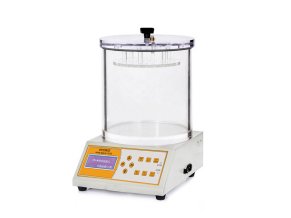
Container closure integrity is equally critical to product quality as particle detection. A container with a microscopic leak can compromise sterility, allowing microbial ingress that renders the product unsafe for administration. The leak tester machine pharmaceutical category encompasses multiple deterministic technologies validated under USP <1207> for container closure integrity testing (CCIT).
High-Voltage Leak Detection (HVLD) has emerged as a preferred method for liquid-filled parenteral containers. As referenced in USP <1207>, HVLD is a sensitive, non-destructive technology that exploits the electrical conductivity of liquid drug products packaged in non-conductive containers. A high-frequency voltage potential is applied to the container via electrodes, and the discharge current is measured. If a defect exists—such as a pinhole, micro-crack, stopper leak, or non-visible leak under crimping—the resistance differential and change in current flow indicate the presence of a seal defect.
HVLD offers several advantages:
Non-destructive and non-invasive testing
No contamination risk, as electrodes do not contact the product
Applicable to glass vials, ampoules, pre-filled syringes, IV bags, and BFS containers
Compliant with USP <1207> deterministic method requirements
Other deterministic CCIT methods include vacuum decay, pressure decay, mass extraction, and laser-based headspace analysis. These methods provide objective, reproducible data rather than subjective pass/fail outcomes, aligning with USP <1207> principles. Deterministic techniques are now preferred under USP <1207> due to their sensitivity and objectivity.
3. Particle Detection and Classification
| Defect Category | Inspection Method | Regulatory Reference |
|---|---|---|
| Visible particles (fibers, glass, metal, elastomers, precipitates) | AVI with high-resolution cameras, multiple angles, AI/deep learning | USP <790>, USP <1790>, Ph. Eur. 2.9.20 |
| Container closure defects (pinholes, micro-cracks, seal failures) | HVLD, vacuum decay, pressure decay, mass extraction | USP <1207> |
| Surface defects (scratches, cracks, cosmetic defects) | AVI with specialized lighting and imaging | USP <1790> |
| Fill level and closure inspection | AVI with volumetric analysis | USP <1790>, EU GMP Annex 1 |
| Label and print quality | OCR/OCV, barcode verification | 21 CFR Part 11, serialization requirements |
Market Trends and Industry Adoption
Growing Market Demand
The pharmaceutical inspection machines market reflects the industry’s accelerating investment in quality automation. The market grew from USD 1.06 billion in 2024 to USD 1.15 billion in 2025 and is projected to reach USD 1.66 billion by 2030, representing a compound annual growth rate (CAGR) of 7.72%. The global vision inspection system market specifically is valued at USD 1.51 billion in 2025, with expected growth to USD 2.6 billion by 2034 at a CAGR of 8.1%.
Key Drivers of Adoption
Several factors are accelerating the adoption of advanced Pharmaceutical Visual Inspection Machines:
Regulatory pressure – Heightened expectations from the FDA, EMA, and other regulatory bodies
Patient safety imperative – Zero-defect manufacturing as an industry standard
Labor shortages and skill gaps – Difficulty in recruiting and retaining qualified manual inspectors
Data integrity requirements – Need for electronic records and audit trails under 21 CFR Part 11
AI technology maturity – Deep learning now delivers reliable, validated inspection performance
Technology Trends
The market is witnessing significant shifts toward AI-augmented inspection systems that not only detect flaws but also learn from production data to improve accuracy over time. This evolution extends beyond the core inspection unit to encompass the entire production line, where seamless interoperability with peripheral auxiliary machines—such as automated feeders, precision conveyors, vacuum dryer, and high-speed rejection modules—is critical for maximizing overall equipment effectiveness. Cloud-based monitoring for remote validation, predictive analytics for maintenance, and integration with enterprise-level data platforms are becoming standard features.
Conclusion
The Pharmaceutical Visual Inspection Machine has evolved from a simple optical inspection device into a sophisticated, integrated quality assurance platform that combines AI-powered visual inspection, deterministic leak detection, and comprehensive particle analysis. This three-pillar approach—AI vision, leak testing, and particle inspection—addresses the full spectrum of quality requirements mandated by USP, EP, and FDA regulations, providing manufacturers with the confidence that every unit meets the highest standards of safety and quality.
As regulatory expectations continue to tighten and AI technology matures, the role of automated inspection in pharmaceutical manufacturing will only grow. Manufacturers that invest in advanced Pharmaceutical Visual Inspection Machines—and validate them rigorously against compendial requirements—position themselves for operational excellence, regulatory compliance, and—most importantly—patient safety.
FAQ
What is the difference between USP and USP ?
USP <790> establishes the mandatory minimum requirements for visible particulate inspection of injectable products, specifying acceptance criteria and the requirement that products be “essentially free” from visible particulates. USP <1790> provides comprehensive best-practice guidance on designing, qualifying, and operating visual inspection processes, including recommendations for automated system validation, operator training, and inspection of difficult-to-inspect products.
How does HVLD leak testing work and when should it be used?
High-Voltage Leak Detection (HVLD) is a non-destructive, deterministic CCIT method referenced in USP <1207>. It applies a high-frequency voltage potential to liquid-filled containers made of non-conductive materials; the discharge current is measured to detect seal defects, pinholes, micro-cracks, or leaks. HVLD is particularly suitable for liquid-filled parenteral containers including glass vials, ampoules, pre-filled syringes, IV bags, and BFS containers, and is preferred when non-destructive, high-sensitivity leak detection is required.
What validation is required for an automated visual inspection system?
Automated visual inspection system validation must demonstrate equivalence or superiority to manual inspection. Key validation elements include sensitivity studies using test particles for each defect category, Knapp or modified Knapp tests for performance comparison, Probability of Detection (PoD) analysis, false rejection rate assessment, and ongoing performance monitoring with periodic requalification. The ECA Visual Inspection Guide Version 5.0 provides detailed validation protocols aligned with current regulatory expectations.