


A powder tablet press is equipment designed to compress prepared powders or granulated materials into solid tablets. It is commonly used when manufacturers need to convert a free-flowing or suitably processed material into a defined tablet shape and size.
Unlike equipment used for liquids or semi-solid products, a powder tablet press relies on controlled mechanical compression. The material is placed into a die cavity and compressed between punches. The resulting tablet can then move to inspection, dedusting, coating, packaging, or other downstream processes.
A powder tablet press can be used in pharmaceutical development, health supplement production, laboratory testing, and selected food or chemical applications. The actual suitability depends on the characteristics of the raw material and the requirements of the finished tablet.
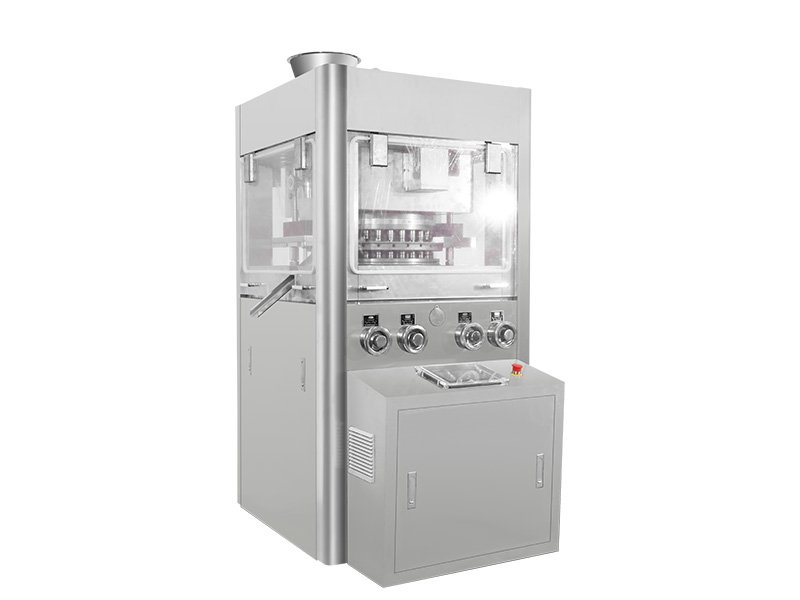
What Materials Can a Powder Tablet Press Handle
A powder tablet press is mainly intended for materials that can be prepared to achieve appropriate flowability and compressibility. Raw powders do not always have suitable characteristics in their original condition, so manufacturers may use processes such as blending, granulation, drying, or lubrication before compression.
Common material categories may include pharmaceutical formulations, nutritional ingredients, mineral powders, botanical ingredients, and selected food-grade materials. However, simply being a powder does not mean a material can be compressed successfully.
Important material characteristics include:
- Particle size and distribution
- Bulk density
- Moisture content
- Powder flowability
- Compressibility
- Cohesiveness
- Lubrication characteristics
FDA guidance for oral solid dosage manufacturing highlights the importance of material properties and process parameters in achieving consistent tablet production. Powder characteristics can influence die filling, tablet weight, compression behavior, and finished-product quality.
Typical Powder Materials for Tablet Production
| Material category | Possible applications | Key consideration |
|---|---|---|
| Pharmaceutical powders | Solid dosage formulations | Flow, compressibility, dose uniformity |
| Vitamin and mineral powders | Health supplements | Density and formulation consistency |
| Botanical ingredients | Herbal or nutritional tablets | Moisture and flow characteristics |
| Food-grade powders | Selected compressed food products | Food safety and material suitability |
The specific formulation should always be evaluated before selecting a powder tablet press. Laboratory compression trials can help determine whether the material can form tablets with acceptable characteristics.
How Is a Powder Tablet Press Used for Small-Batch Production
A powder tablet press can be particularly useful during product development and small-batch manufacturing. Before committing to full-scale production, manufacturers may need to evaluate a formulation, test different tablet dimensions, or establish suitable compression parameters. For these early-stage trials, a single punch tablet machine can offer a practical setup for producing limited quantities while allowing operators to adjust key compression conditions.
A smaller production setup can provide a practical environment for this work. A tablet press machine used at this stage may allow operators to adjust filling depth, compression force, tooling, and production speed according to the formulation and test objectives.
A typical small-batch development process may follow these steps:
- Prepare and blend the raw materials.
- Check powder flow and other relevant properties.
- Select suitable punches and dies.
- Set the initial filling and compression parameters.
- Produce a trial batch.
- Check tablet weight, dimensions, appearance, and mechanical properties.
- Adjust the formulation or machine parameters when necessary.
This approach allows manufacturers to identify formulation or compression problems before moving to larger production equipment.
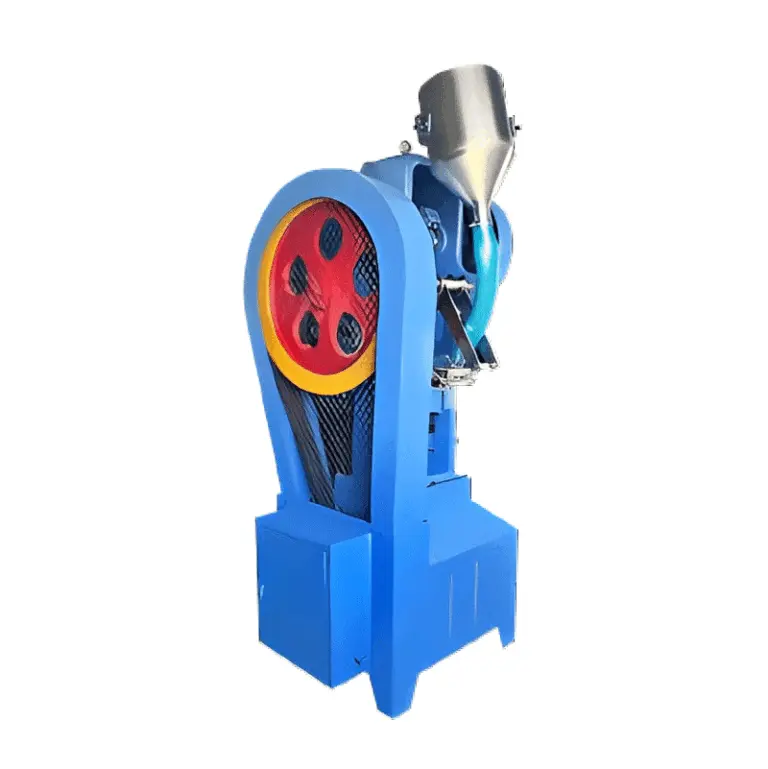
What Are the Basic Features of a Powder Tablet Pres
The basic design of a powder tablet press depends on its production scale and intended application. However, most systems require controlled material feeding, accurate die filling, compression, and tablet ejection.
A typical powder tablet press may include a material hopper, feeding mechanism, dies, upper and lower punches, compression components, and tablet discharge section.
Key features may include:
- Adjustable compression force
- Controlled filling depth
- Interchangeable tooling
- Stable powder feeding
- Adjustable production speed
- Accessible cleaning areas
- Basic monitoring and control functions
For small-scale applications, flexibility can be more important than maximum production capacity. A machine that allows convenient tooling changes and parameter adjustments may be more useful for formulation development than equipment designed only for high-volume output.
FAQ
What materials can a powder tablet press compress?
It can compress suitable pharmaceutical, nutritional, mineral, botanical, food-grade, and other powders when their flow and compressibility characteristics are appropriate.
Is a powder tablet press suitable for small-batch production?
Yes. It can be useful for laboratory trials, formulation development, pilot production, and other small-batch applications where manufacturers need flexible parameter adjustment.
What is the most important factor when selecting a powder tablet press?
Material properties and finished-tablet requirements should be evaluated first. Production capacity, tooling, compression force, feeding performance, cleaning, and applicable quality requirements should then be considered.