


Selecting the right capsule filling machine size is one of the most consequential purchasing decisions a pharmaceutical or nutraceutical manufacturer can make. Unlike many capital equipment purchases where “bigger is better,” a capsule filling machine that is oversized for your typical batch volume can be just as damaging to your bottom line as one that is undersized.
The challenge is twofold. First, you must match the machine’s capsule filling machine size compatibility to your product portfolio—are you filling size 00 supplements, size 0 pharmaceuticals, or size 3 pediatric doses? Second, you must align the machine’s production capacity with your batch planning cycle—how many capsules do you need per batch, per shift, and per year?
This guide provides a systematic framework for navigating both dimensions of the capsule filling machine size selection process, ensuring that your procurement decision delivers optimal total cost of ownership and production flexibility.
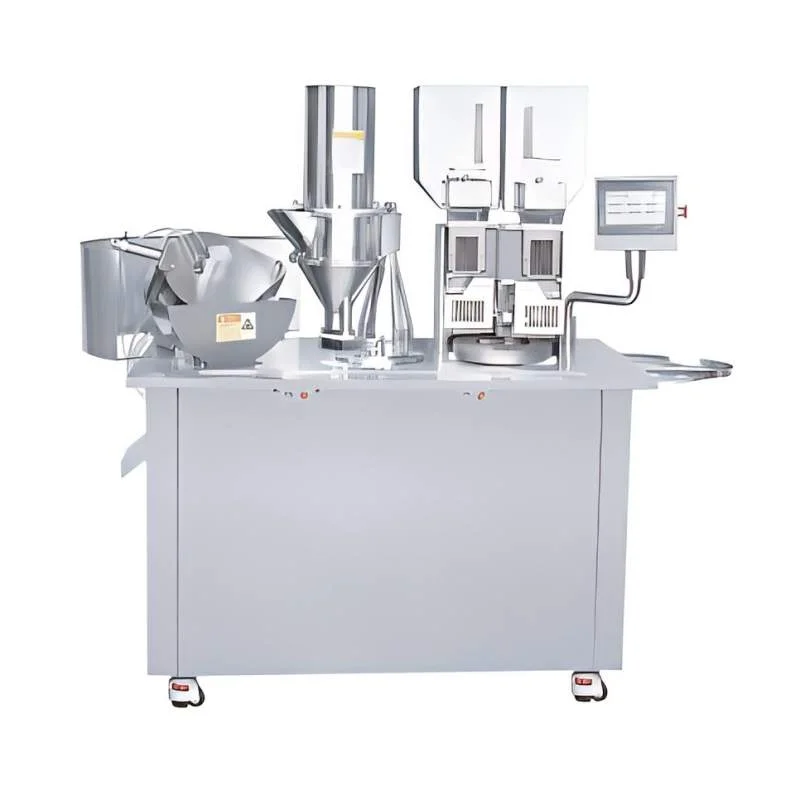
Understanding Standard Capsule Sizes for Capsule Filling Machine Size Selection
Before evaluating any capsule filling machine size option, buyers must understand the standard capsule size spectrum and its implications for machine compatibility. Hard gelatin and HPMC capsules are manufactured to rigid dimensional specifications dictated by global pharmacopoeias. The numbering system runs inversely to size: the larger the number, the smaller the capsule. This size nomenclature applies uniformly across all equipment types, from high-speed automatic systems down to a manual capsule filling filler used in clinical trial settings.
Standard hard capsules range from size 000 (largest, approximately 1.37 mL volume) down to size 5 (smallest, approximately 0.13 mL). Most commercial pharmaceutical products use sizes 0, 1, or 2.
The table below provides a comprehensive reference for standard capsule dimensions and volumetric capacities:
| Capsule Size | Volume Capacity (mL) | External Diameter (mm) | Locked Length (mm) | Typical Fill Weight Range (mg) |
|---|---|---|---|---|
| 000 | 1.37 | 9.91 | 26.1 | 800 – 1,100 |
| 00 | 0.95 | 8.53 | 23.3 | 600 – 950 |
| 0 | 0.68 | 7.65 | 21.7 | 400 – 680 |
| 1 | 0.50 | 6.91 | 19.4 | 300 – 500 |
| 2 | 0.37 | 6.35 | 18.0 | 220 – 370 |
| 3 | 0.30 | 5.82 | 15.9 | 180 – 300 |
| 4 | 0.21 | 5.31 | 14.3 | 120 – 210 |
| 5 | 0.13 | 4.91 | 11.1 | 80 – 130 |
When evaluating a capsule filling machine size for your operation, confirm that the supplier offers change parts (dosing discs, tamping pins, segment plates, and capsule body and cap holders) for every capsule size you currently produce—and any sizes you may add in the future. Most versatile automatic capsule filling machine models support sizes from 000 down to 5.
A critical insight from industry experts: selecting the correct capsule filling machine size is not merely about mechanical clearance. It represents a strict physical calculation matching your formulation‘s precise tap density with the capsule’s fixed geometric volume. If your raw formulation tap density drops from 0.75 g/mL to 0.45 g/mL due to raw material variation, a target 500 mg dose will no longer fit inside a standard size 0 shell.
Calculating Production Capacity Requirements for Capsule Filling Machine Size Decisions
The most common error in capsule filling machine size selection is dividing annual volume by operating hours and calling it done. That calculation ignores batch size, yield loss, changeover windows, and preventive maintenance downtime. This oversight is particularly acute when evaluating a semi-automatic capsule filling machine, because operator dexterity and manual intervention introduce greater variability than fully automated systems, making it essential to base capacity planning on measured batch cycle times rather than theoretical maximum speeds.
A more accurate approach uses the following formula:
Required hourly output = (Annual volume / Operating hours per year) × (1 + Yield loss %) × Changeover penalty factor
For example, a nutraceutical manufacturer needing 50 million capsules per year with 4,000 operating hours, 5% yield loss, and two changeovers per day costing 45 minutes each will require approximately 18,000 capsules per hour—not the 12,500 capsules per hour that a simple division would suggest.
Industry best practice recommends targeting a capsule filling machine that runs at 65-80% of its rated capacity during peak demand. A machine running flat-out has no buffer for material variability, unexpected stoppages, or rush orders.
The table below maps typical production volumes to appropriate capsule filling machine size and automation levels:
| Production Volume | Recommended Machine Type | Typical Output Range (capsules/hour) | Typical Application |
|---|---|---|---|
| < 50,000 capsules/year | Manual or Semi-automatic | 2,000 – 10,000 | R&D, clinical trials, startups |
| 50,000 – 5 million/year | Semi-automatic | 10,000 – 30,000 | Growing brands, small-batch production |
| 5 – 50 million/year | Medium-speed Automatic | 42,000 – 92,000 | Established manufacturers |
| > 50 million/year | High-speed Automatic | 150,000 – 360,000 | Large-scale commercial production |
When calculating your true capacity needs, consider these additional factors:
Batch frequency – How many changeovers do you perform per day or week? A machine rated at 150,000 capsules per hour with 4-hour changeovers delivers less effective output than a 100,000-capsule-per-hour machine with 30-minute changeovers if you run multiple SKUs.
Future growth – Today’s size 0 capsule may turn into a size 00 double dose next quarter. Quick-change tooling and recipe recall keep that swap to minutes, not hours.
Material characteristics – Low-density botanicals (< 0.30 g/cm³) swirl and refuse to settle, while dense mineral mixes (> 1.0 g/cm³) can scrape dosing tubes if tamp pressure is set too high.
Matching Capsule Size to Machine Configuration for Capsule Filling Machine Size Optimization
Not all capsule filling machine size configurations are created equal. This is particularly evident with full-automatic capsule filling machines, where the relationship between capsule size and machine throughput is inverse and nonlinear. A machine’s rated maximum output—often quoted in brochures—is typically based on the smallest capsules the machine can run.
For example, an automatic capsule filling machine rated at 150,000 capsules per hour may achieve that speed only with size 2 or 3 capsules. The same machine running size 00 capsules may deliver 120,000–130,000 capsules per hour—a meaningful reduction that must be factored into production planning.
The throughput reduction occurs because:
Larger capsules require more filling material per dose
Larger capsules have fewer die holes per dosing disc
Larger capsules require longer filling and sealing cycles
When evaluating a capsule filling machine size for your specific capsule portfolio, request the supplier to provide actual output data for each capsule size you intend to run—not just the theoretical maximum.
Changeover Considerations
If your production plan involves multiple capsule sizes, changeover capability becomes a critical factor in capsule filling machine size selection.
Single-station machines typically require 15–30 minutes for changeover between capsule sizes and have a minimum economical batch size of 10,000–30,000 capsules
Double-station machines may require 45–90 minutes for changeover and have a minimum economical batch size of 80,000–150,000 capsules
For manufacturers running multiple SKUs with batch sizes under 200,000 capsules, a single-station architecture often delivers lower total cost per batch despite lower maximum speed.
Key questions to ask potential capsule filling machine suppliers:
What is the changeover time between size 00 and size 3?
Are change parts included in the quotation, or are they additional?
Can the machine store recipe parameters for different capsule sizes?
What is the cleaning time between different product runs?
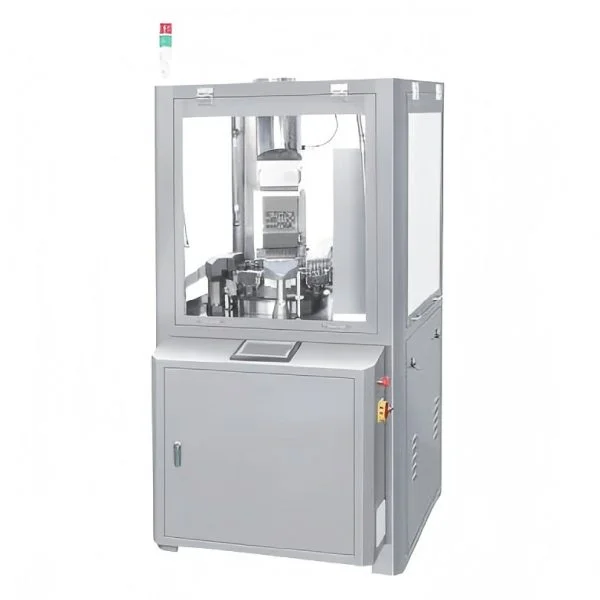
Batch Planning Integration for Capsule Filling Machine Size Selection
Your batch planning methodology should drive your capsule filling machine size decision, not the other way around. A machine that is perfectly sized for your largest annual production volume may be grossly inefficient for your typical batch size. This principle applies equally to a full-automatic liquid capsule filling machine, where extended cleaning and sterilization cycles between batches make oversized equipment particularly costly for small-to-medium runs.
The minimum economical batch size is a critical metric often overlooked in capsule filling machine size selection. For a single-station machine with 3–12 filling segments, the minimum economical batch size is typically 10,000–30,000 capsules. For a double-station machine with 25–54 segments, that threshold rises to 80,000–150,000 capsules.
If your typical batch is 50,000 capsules and you purchase a double-station machine designed for 450,000 capsules per hour, you will incur:
Higher changeover costs per batch
Greater material loss during changeover (200–500 capsules vs. 50–150 capsules)
Longer cleaning times (90–150 minutes vs. 30–60 minutes)
Higher capital investment (2–3× higher)
A structured approach to capsule filling machine size selection should follow these steps:
Define your production planning horizon – What is your typical batch size? What is your maximum batch size? What is your annual volume?
Map your capsule size portfolio – List every capsule size you currently produce and any you plan to add in the next 3–5 years.
Calculate effective hourly output – Use the formula provided earlier, incorporating yield loss and changeover penalties.
Determine automation level – Match the machine tier to your sustained output: manual for R&D and small batches, semi-automatic for growing production, automatic for steady higher volume.
Evaluate changeover requirements – If you run multiple SKUs, prioritize machines with quick-change tooling and recipe recall.
Request physical powder testing – Always mandate physical powder testing during the User Requirements Specification (URS) phase and demand Factory Acceptance Testing (FAT) verification with your actual formulation.
FAQ
How does capsule size affect the actual output of a capsule filling machine?
The rated maximum output quoted by suppliers is typically based on the smallest capsules the machine can run (e.g., size 2 or 3). Running larger capsules such as size 00 or 0 will reduce actual output by 10-20% because larger capsules require more filling material, have fewer die holes per dosing disc, and require longer filling cycles. Always request actual output data for each capsule size you intend to run.
What is the minimum economical batch size for different types of capsule filling machines?
Single-station machines typically have a minimum economical batch size of 10,000–30,000 capsules, while double-station machines require 80,000–150,000 capsules to be cost-effective. If your typical batch is under 80,000 capsules, a single-station machine will usually deliver lower total cost per batch despite lower maximum speed.
Can one capsule filling machine handle multiple capsule sizes?
Most versatile automatic capsule filling machine models support sizes from 000 down to 5. However, changing between capsule sizes requires swapping change parts (dosing discs, tamping pins, segment plates, and capsule body and cap holders).