


The nutraceutical industry has expanded the use of compressed solid dosage forms because tablets are convenient to handle, transport, package, and consume. A pill compression machine, also commonly referred to as a tablet press, plays an important role in this production process by converting prepared powder or granulated blends into tablets with controlled dimensions, weight, and mechanical strength.
Although the basic compression principle is similar to pharmaceutical tablet manufacturing, nutraceutical formulations can present different processing challenges. Vitamins, minerals, botanical powders, amino acids, proteins, and other nutritional ingredients may have different particle sizes, densities, flow characteristics, moisture levels, and compressibility. These differences can directly affect the performance of a pill compression machine.
For manufacturers, selecting
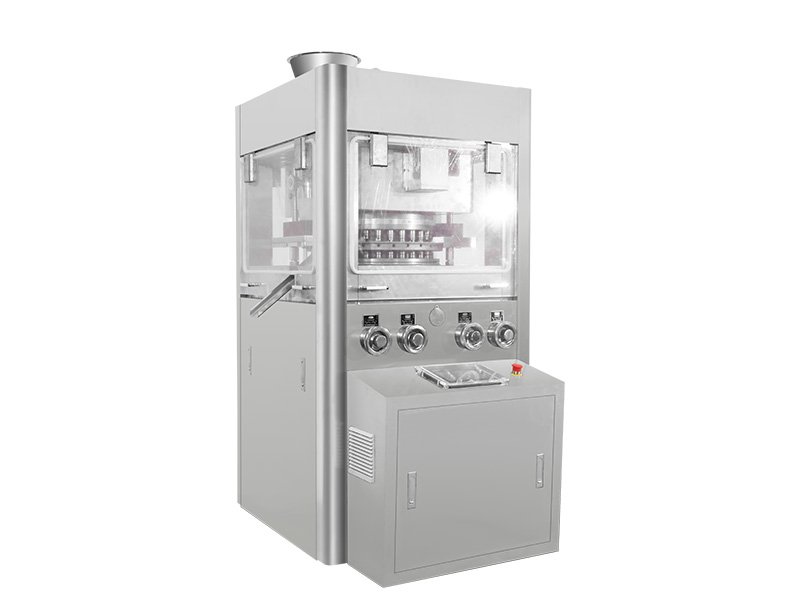
Pill Compression Machine Applications In Nutraceutical Production
A pill compression machine is commonly used to produce nutritional tablets in different sizes, shapes, and formulations. Depending on the formulation and equipment configuration, the machine can process blends containing vitamins, minerals, botanical ingredients, excipients, binders, and other nutritional components.
The production process generally begins with raw-material preparation. Ingredients are weighed according to the formulation, processed as necessary, blended, and transferred to the compression stage. The pill compression machine then fills the die cavity, applies compression force, and ejects the finished tablet.
Typical nutraceutical applications include:
- Vitamin and mineral tablets
- Botanical and herbal tablets
- Amino-acid tablets
- Nutritional supplement tablets
- Effervescent or specialty tablet formulations
- Chewable nutritional tablets
The exact formulation determines whether direct compression, dry granulation, wet granulation, or another preparation approach is appropriate.
A pill compression machine should therefore be selected according to the physical characteristics of the intended formulation rather than based only on maximum production capacity.
Pill Compression Machine Production Workflow
A typical workflow can be summarized as follows:
- Receive and identify raw materials.
- Weigh ingredients according to the approved formulation.
- Sieve, mill, or otherwise prepare materials when required.
- Blend the ingredients uniformly.
- Transfer the prepared blend to the compression system.
- Set the pill compression machine according to approved parameters.
- Compress and eject tablets.
- Perform in-process quality checks.
- Transfer acceptable tablets to downstream processing and packaging.
The actual process may vary according to the product and manufacturing method.

Pill Compression Machine Raw Material Compatibility
Raw-material characteristics have a major influence on compression performance. A pill compression machine can provide stable mechanical operation, but it cannot compensate for every formulation problem.
Nutraceutical ingredients can differ considerably in density and flowability. For example, some fine powders may have poor flow and tend to bridge or form agglomerates, while certain crystalline materials may flow more easily but have different compression behavior.
Before production, manufacturers should evaluate the characteristics of the complete blend rather than considering only individual ingredients.
Important properties include:
| Raw-material property | Why it matters |
|---|---|
| Particle size | Influences flow and packing |
| Bulk density | Affects die filling and tablet weight |
| Moisture | Can influence adhesion and compressibility |
| Flowability | Supports stable powder feeding |
| Compressibility | Influences tablet strength |
| Cohesion | Can affect feeding and air release |
| Lubricity | Influences ejection and tooling interaction |
Pill Compression Machine Powder Flow Requirements
Powder flow is particularly important because the die must receive a relatively consistent amount of material during every compression cycle.
Poor flow can lead to irregular die filling, which may result in tablet weight variation. It can also create inconsistent powder levels in the feed system and increase the likelihood of production interruptions.
A pill compression machine should therefore be tested with representative material before commercial production whenever possible.
Factors that can affect flow include:
- Particle size distribution
- Particle shape
- Bulk density
- Moisture content
- Electrostatic behavior
- Proportion of fine particles
- Ingredient segregation
If a nutraceutical formulation has poor flow, manufacturers may need to modify the formulation or granulation process instead of relying solely on machine adjustments.
Pill Compression Machine Feeding Stability
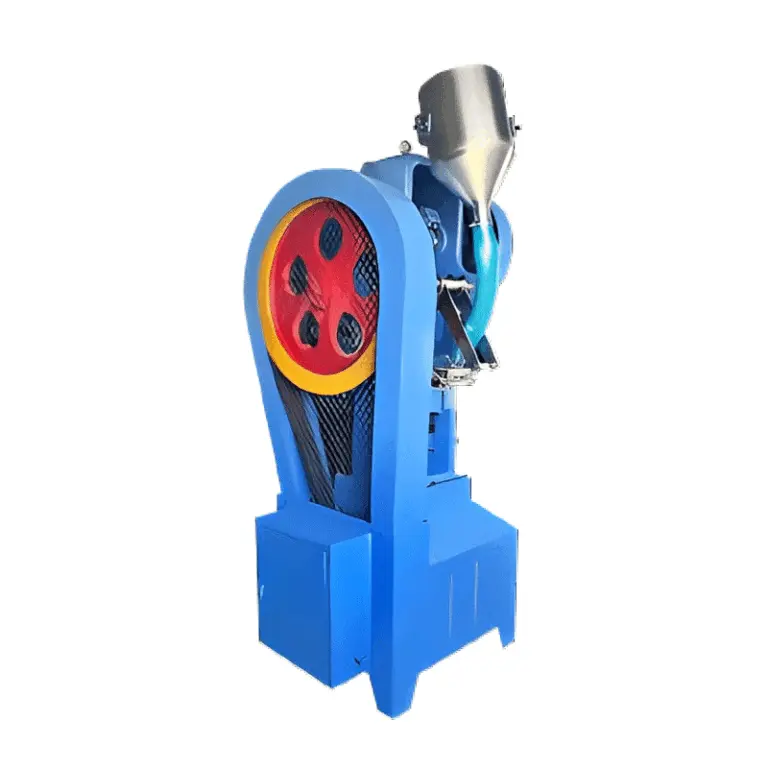
The feeding system should provide consistent powder movement into the die cavities. Feed-frame design, feeder speed, hopper level, and powder characteristics can all influence feeding stability. These factors are also relevant when operating a single punch tablet press machine, where stable powder filling is important for consistent tablet weight and quality.
Increasing machine speed may increase theoretical output, but it may also make feeding problems more visible. Therefore, the operating speed should be selected a
Pill Compression Machine Compression Force Control
Compression force determines how strongly the powder particles are consolidated into a tablet. A pill compression machine must provide sufficient force to produce tablets with acceptable mechanical strength while avoiding excessive compression.
If compression force is too low, tablets may be soft or fragile. They may break during dedusting, coating, transportation, or packaging.
If compression force is excessive, other problems can occur, including:
- Capping
- Lamination
- Slow disintegration
- Increased tooling stress
- Unwanted changes in tablet thickness
Compression force should therefore be optimized rather than simply maximized.
The appropriate setting depends on the formulation, tablet size, tooling, target hardness, and other quality requirements.
Pill Compression Machine Pre-Compression
Pre-compression can be useful for removing trapped air and preparing the powder bed before the main compression stage, particularly in a rotary tablet press machine where multiple compression cycles occur continuously.
This can be particularly relevant for formulations containing fine nutritional powders or materials that tend to retain air.
A controlled pre-compression setting may improve tablet consistency, but excessive force can introduce additional compression-related problems. The correct setting should be established through formulation and process development.
Pill Compression Machine Tablet Weight Control
Tablet weight is one of the key in-process characteristics in nutraceutical tablet production.
A pill compression machine controls tablet weight primarily through die filling and fill-depth adjustment. Stable powder flow and consistent feeding are therefore essential.
Weight control should not rely only on the machine’s initial setup. Operators should perform appropriate in-process checks throughout the batch according to the manufacturer’s quality system and applicable regulatory requirements.
When variation appears, the investigation should consider both equipment and material factors.
For example, gradual weight changes may indicate changing powder levels or feeding conditions, while variation associated with particular stations may suggest tooling or mechanical issues.
A practical troubleshooting sequence is:
- Confirm the measured weight variation.
- Check powder level and feeder operation.
- Review fill-depth settings.
- Check machine speed.
- Inspect punches and dies.
- Review powder flow and segregation.
- Make a controlled adjustment within the approved range.
- Recheck tablet weight and other relevant attributes.
This approach reduces the risk of correcting a formulation problem through unnecessary machine adjustments.
Pill Compression Machine Defect Prevention
| Defect | Possible cause | Initial area to review |
|---|---|---|
| Capping | Air entrapment or compression conditions | Pre-compression and speed |
| Lamination | Poor bonding or trapped air | Compression and formulation |
| Soft tablets | Insufficient bonding | Compression force |
| Weight variation | Unstable die filling | Feeding and powder flow |
| Sticking | Adhesive formulation or moisture | Punch surface and formulation |
| Picking | Material in punch engraving | Tooling and powder condition |
| Chipping | Ejection or weak tablet structure | Tooling and ejection |
Pill Compression Machine Equipment Selection
Choosing a pill compression machine requires consideration of both current production requirements and future product development.
The machine should provide an appropriate operating range for the intended formulation. Important selection criteria include station configuration, turret speed, compression-force capability, feeding performance, tooling compatibility, cleaning requirements, and control functions. For manufacturers handling different formulations or tablet specifications, multifunctional automatic rotary tablet pressing equipment may provide greater flexibility during production and product development.
Capacity should also be calculated carefully.
Theoretical production capacity can be estimated from the number of stations, turret speed, and number of tablets produced per compression cycle. Actual production will generally be lower because of setup, sampling, cleaning, adjustments, rejects, maintenance, and other production activities.
For this reason, customers should compare effective capacity rather than relying only on a maximum tablets-per-hour specification.
Pill Compression Machine GMP and Nutraceutical Quality Controls
Although nutraceutical products may be regulated differently from pharmaceutical medicines depending on the market, manufacturers still need appropriate controls to ensure product quality and consistency.
In the United States, FDA’s dietary supplement cGMP framework requires manufacturers to establish specifications and maintain controls for production and process operations. These requirements make process consistency and documented quality controls important considerations for equipment selection and operation.
A pill compression machine should therefore be incorporated into a controlled manufacturing process rather than treated as an isolated production unit.
Equipment qualification, operating procedures, cleaning procedures, maintenance records, and in-process controls should be appropriate to the manufacturer’s quality system and regulatory obligations.
FAQ
What types of ingredients can a pill compression machine process?
Depending on the machine and formulation, it can process blends containing vitamins, minerals, botanical powders, amino acids, excipients, binders, and other nutritional ingredients. Flowability and compressibility should be evaluated before production.
How can tablet weight variation be reduced?
Check powder flow, feeder performance, hopper level, fill depth, turret speed, and tooling condition. Formulation segregation or poor flow may also need to be investigated.
Is higher compression force always better for nutraceutical tablets?
No. Higher force may increase tablet strength but can also contribute to capping, lamination, excessive hardness, or slower disintegration. Compression should remain within the established process range.